
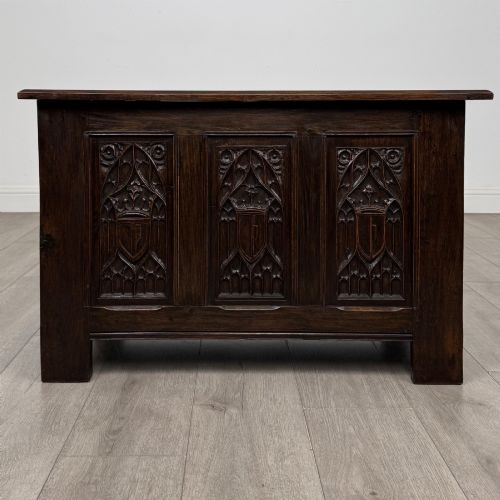
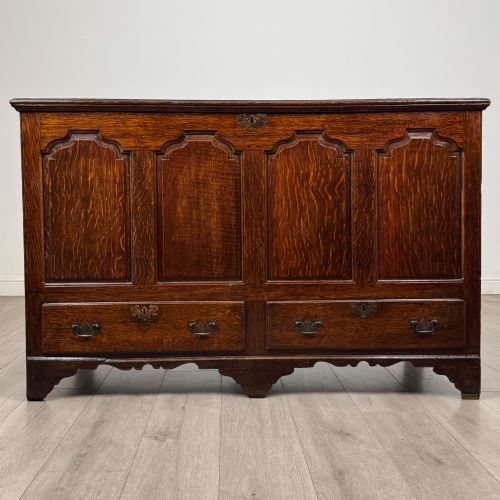
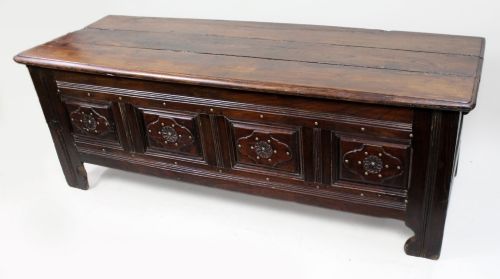
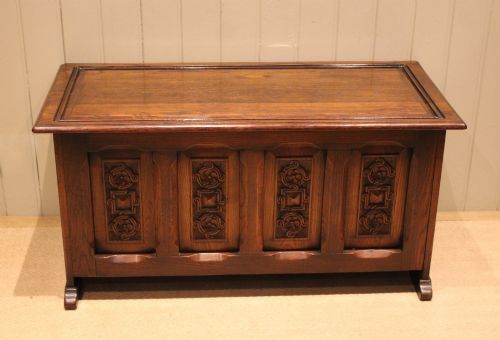
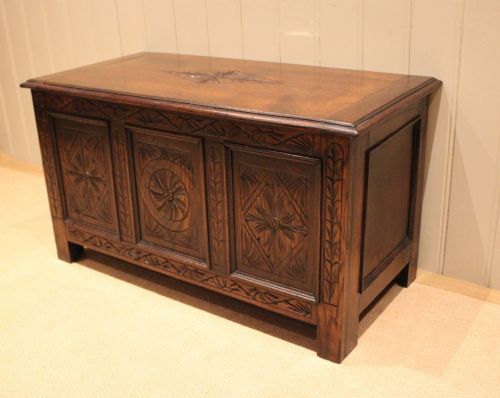
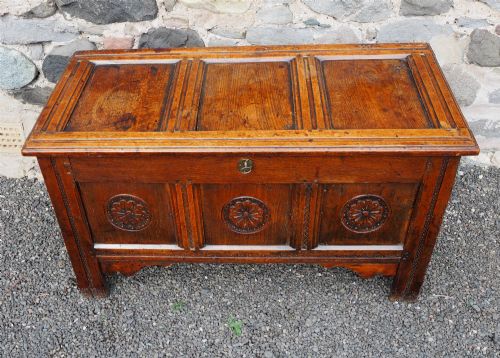
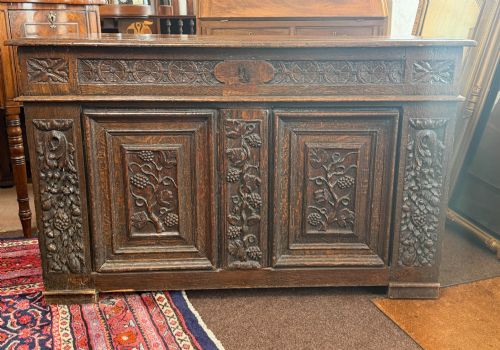
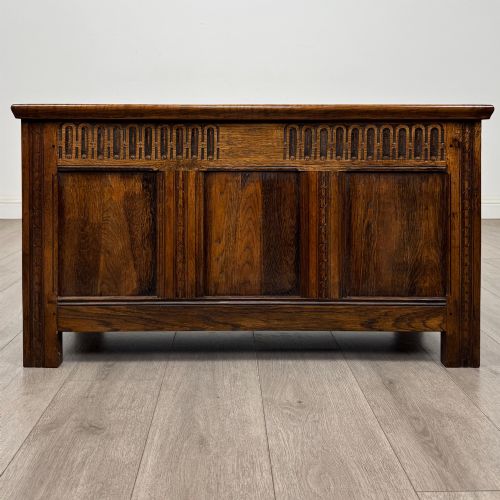


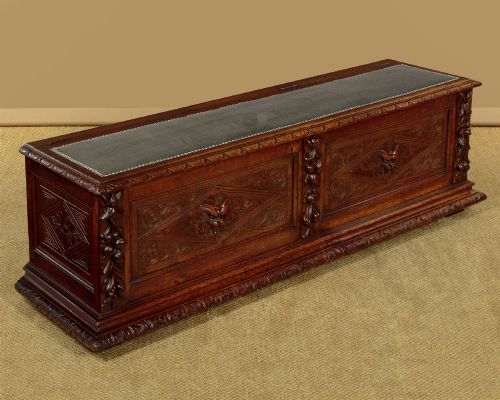
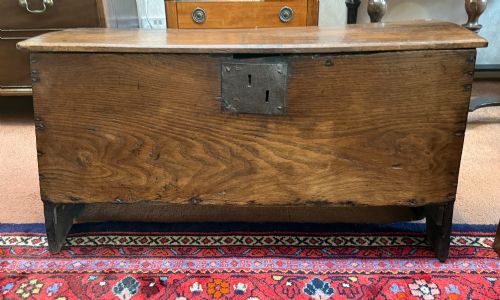
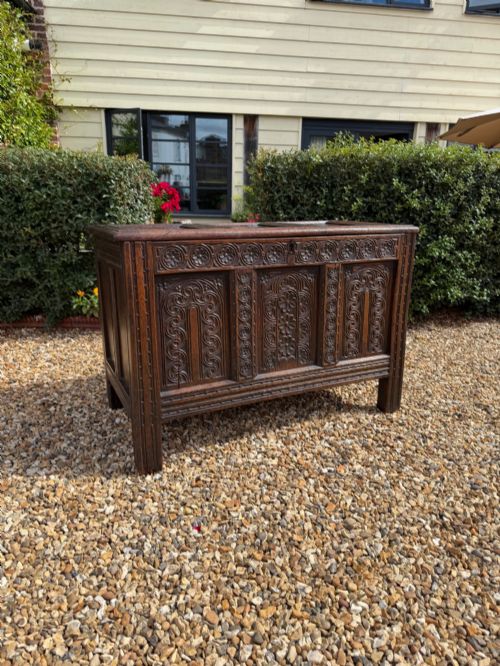
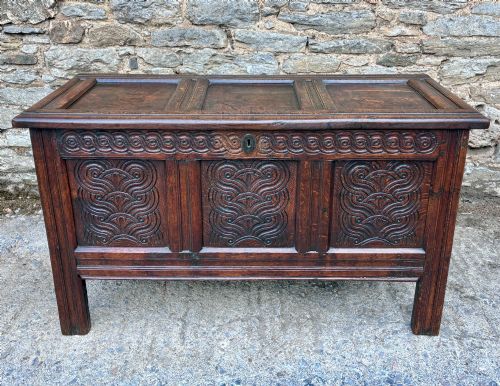
Dark Oak Coffer Trunk
A dark oak coffer trunk brings centuries of utility and timber character into a room, offering robust storage built to last.
Dark Oak Coffer Trunk
A dark oak coffer trunk represents heavy-duty domestic storage spanning from the sixteenth century through the Georgian era and into twentieth-century revivals.
The pieces appearing on this page take the form of coffers, storage chests, blanket boxes, and mule chests constructed primarily in oak.
Buyers seeking this phrase encounter sturdy vessels originating from English, Welsh, French, and Flemish workshops, often displaying deep patination from age and use.
What varies in quality
The standard of timber selection and the depth of the natural patina dictate the visual presence of a piece.
The crispness of hand-carved detailing and the integrity of the original joints distinguish exceptional examples from simpler vernacular boxes.
Several Welsh examples carry the affectionate designation coffer bach, meaning little coffer.
The Dark Oak Coffer Trunk Glossary
- Coffer
- A large wooden chest traditionally used for storing valuables, documents, or textiles. These boxes sit low and feature hinged lids.
- Mule chest
- A storage chest fitted with one or more drawers beneath the main compartment. This form emerged as domestic storage needs evolved.
- Panelling
- A method of framing thin wooden boards within a grooved outer framework to prevent warping. This technique defines seventeenth-century case furniture.
- Patina
- The deep surface sheen and colour developed by timber over centuries of handling, polishing, and exposure to light.
Dark Oak Coffer Trunk: Frequently Asked Questions
What is a dark oak coffer trunk used for?
These robust chests served historically for storing household valuables, garments, and documents securely.
Today, they function effectively as living room coffee tables, blanket boxes at the foot of a bed, or hallway storage.
How do I date a dark oak coffer trunk?
Examining the construction methods provides the clearest indication of age, as seventeenth-century pieces rely on pegged frame-and-panel joints.
Tool marks, hinge types, and regional stylistic carvings also help narrow down the period of manufacture.
What is the difference between a coffer and a chest?
The terms are often used interchangeably, though a coffer traditionally implies a more heavily constructed box intended for valuables or travel.
Many examples featuring flat lids and sturdy oak framing span both definitions across different centuries.
Where were these coffers made?
Makers across England, Wales, France, and Flanders produced these storage pieces using locally sourced regional timbers.
Welsh examples often include specific regional traits like small drawers beneath the main box.