
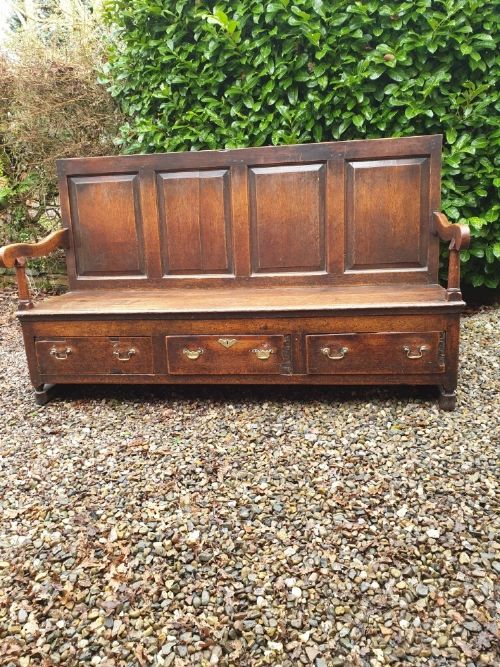
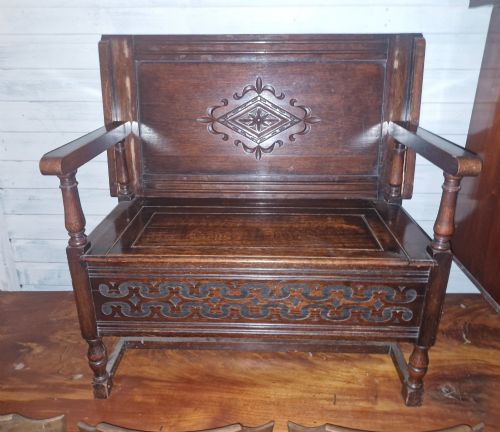
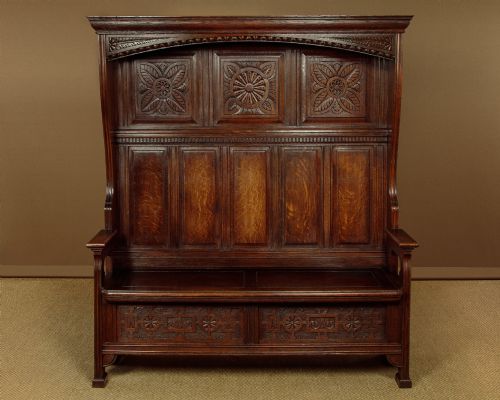
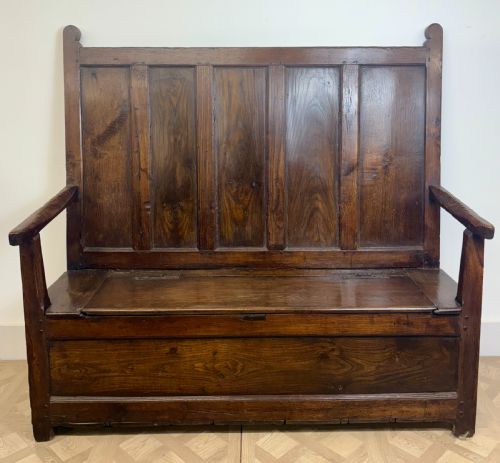
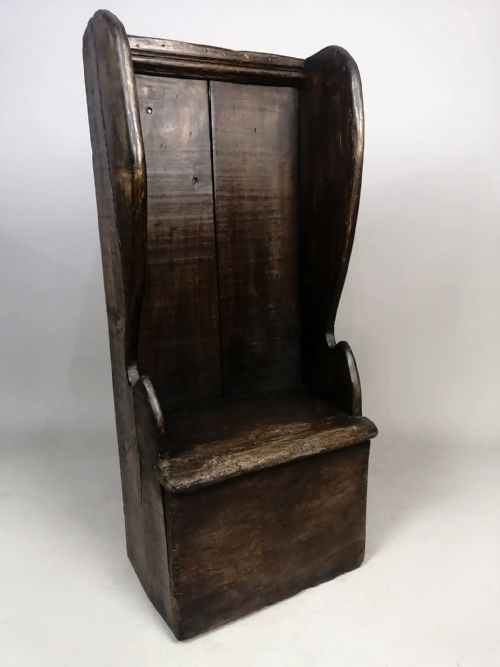
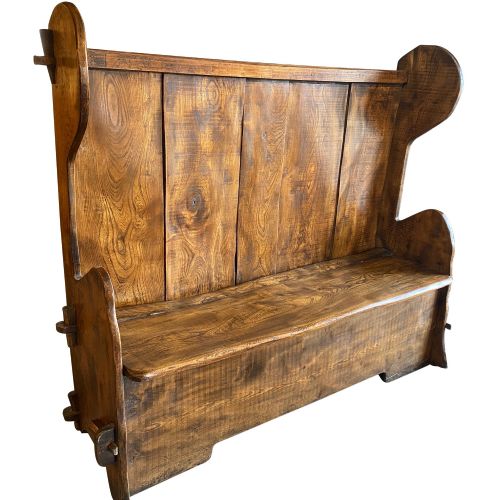
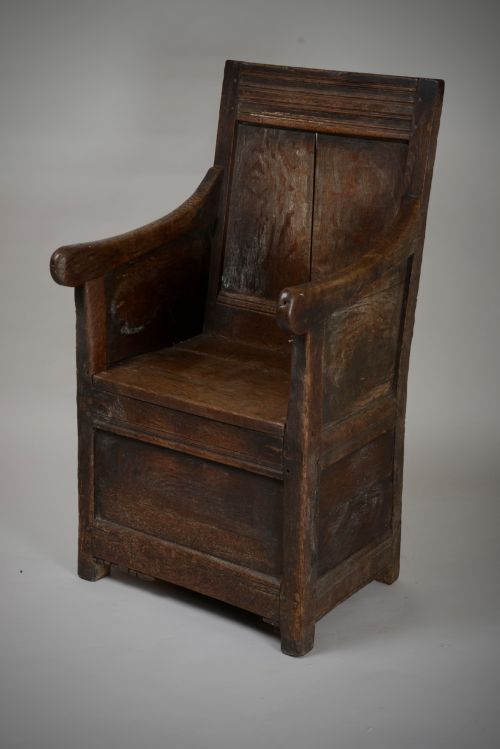
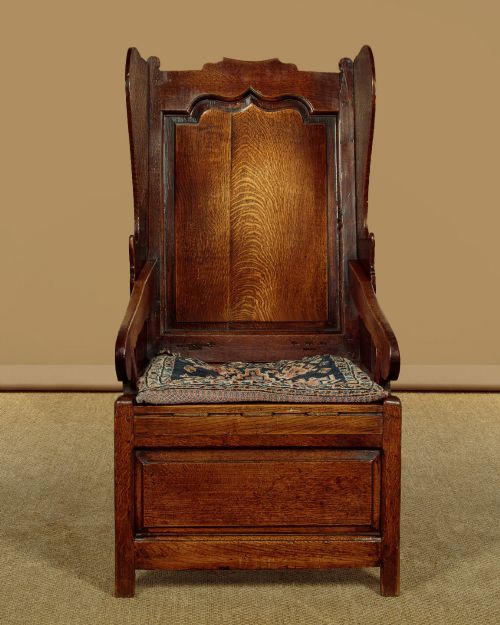
Dark Oak Box Seat
A dark oak box seat combines sturdy regional seating with hidden interior storage for halls and living spaces.
Dark Oak Box Seat
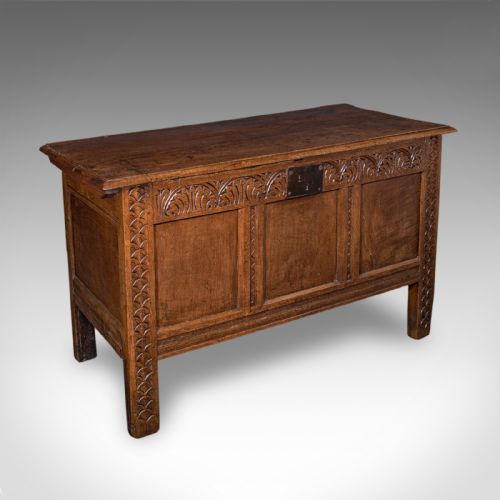
Buyers seeking a dark oak box seat examine substantial country furniture designed for communal seating and storage, spanning centuries of domestic life. The selection centres on settles, hall benches, and enclosed armchairs with hinged lids or lift-up seats.
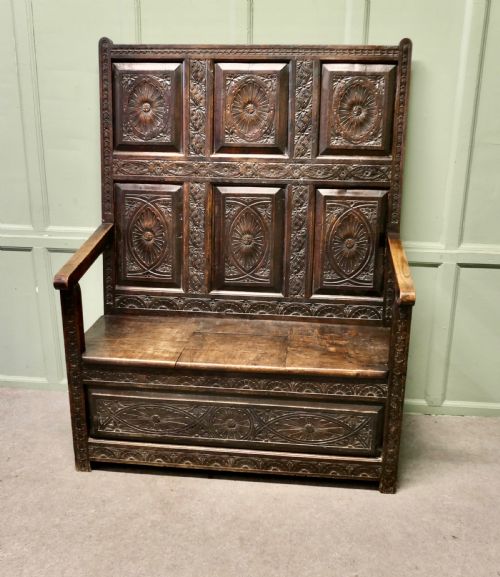
Examples range from early seventeenth-century enclosed armchairs and North Country pieces to eighteenth-century Welsh settles and nineteenth-century hall benches. These forms originated in drafty rooms where high backs and enclosed bases kept out cold air while holding household linens or personal items.
Materials and Construction
Makers relied principally on solid oak, supplemented by structural timbers such as ash, elm, fruitwood, and walnut for secondary framing or contrasting panels. Surfaces display natural grain patterns shaped with hand tools and held together by traditional joinery.
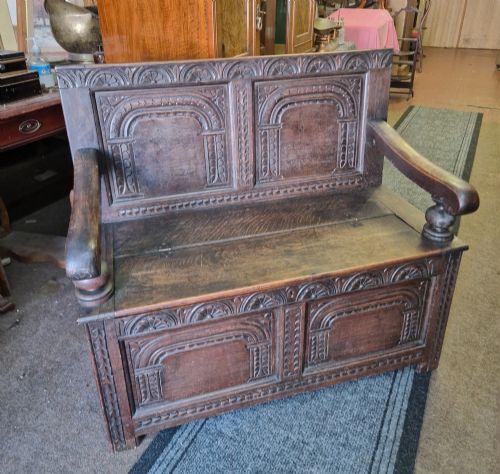
Workshops integrated iron hinges, brass fittings, and occasional leather elements to secure lift-up lids and hinged flaps on commode chairs or monks benches. Carving, panel-back construction, and pegged joints define the structural integrity of these items.
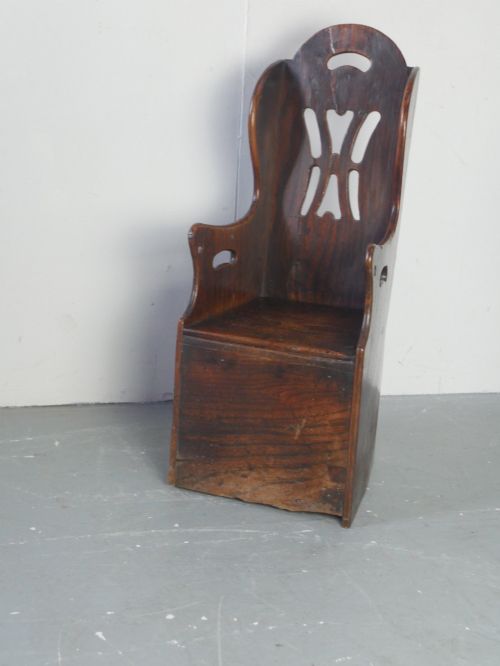
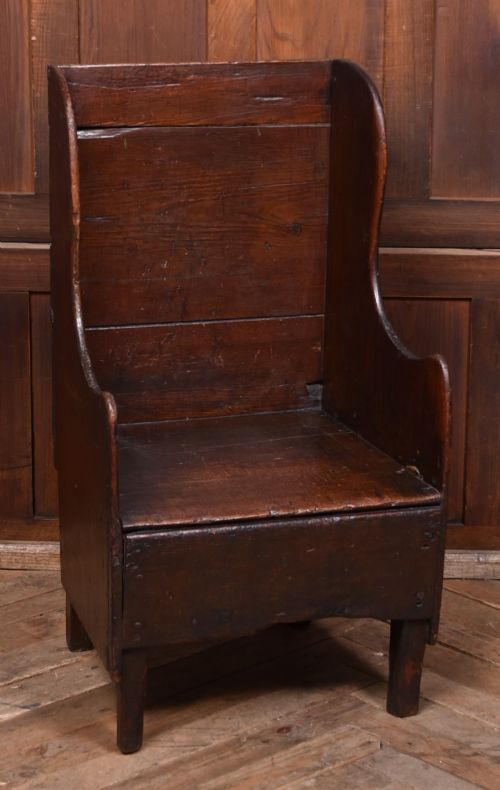
Early agricultural workers kept warm by tucking their legs into sheep-filled lambing chairs while minding newborn lambs.
Assessment of Quality
Quality rests upon the integrity of the timber, the depth of period carving, and the retention of original structural components like bases and lids. Pieces displaying crisp panel work and uncompromised proportions hold greater distinction.
The relationship between secondary woods, such as ash or elm, and the primary oak frame influences the character of regional examples. Alterations to hinges, feet, or lift-up compartments separate untouched survivals from heavily restored iterations.
The Dark Oak Box Seat Glossary
- Settle
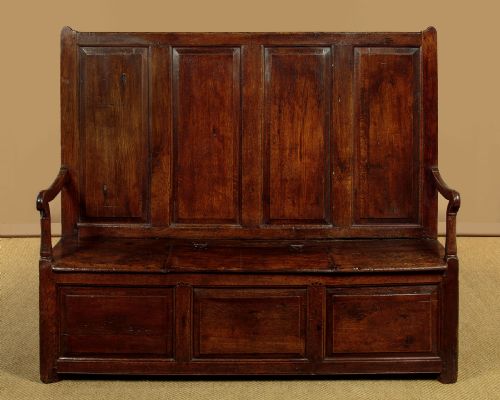
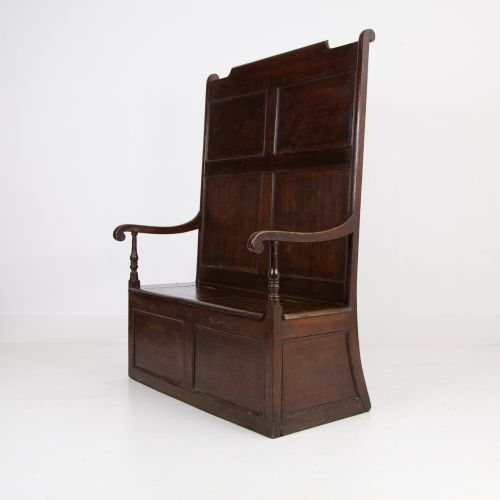
- A wooden bench with a high back, solid arms, and a box seat base. It provided sheltered seating near hearths in early homes.
- Lambing chair
- An enclosed armchair featuring high wings and a box compartment beneath the seat to protect against draughts. They often incorporate elm or fruitwood construction.
- Coffer
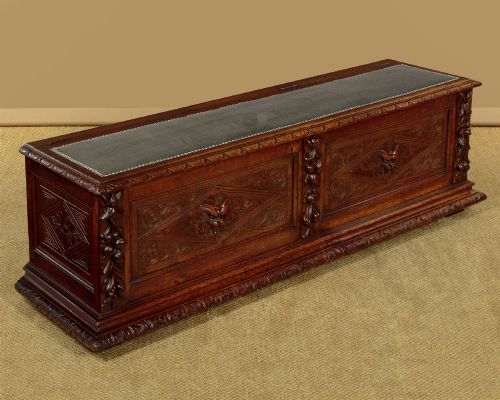
- A large wooden chest with a hinged lid used for storing linens and valuables. Many double as window seats or benches in historical settings.
- Commode chair
- An enclosed seat fitted with an interior cavity or chamber pot housing, dating from the seventeenth and eighteenth centuries.
- Monks bench
- A convertible piece of furniture featuring a folding top that transforms a table into a bench with a box seat.
Dark Oak Box Seat: Frequently Asked Questions
How do I use a hall bench today?
A hall bench serves as practical entryway seating with the added advantage of interior storage for shoes, scarves, and daily accessories. Their narrow profiles suit hallways and bay windows.
Placing one in a corridor or living area offers an authentic period focal point alongside everyday utility.
What is the difference between a settle and a lambing chair?
A settle accommodates multiple people on a long bench format with a high panelled back and box base. In contrast, a lambing chair is an enclosed armchair designed for a single occupant.
Lambing chairs typically feature wrap-around wings and a hooded top to trap heat from a fire.
How can I date an oak box seat?
Dating relies on examining the construction methods, tool marks, timber selection, and stylistic details such as panel carving. Seventeenth-century examples often display pegged joints and enclosed arm frames.
Later Victorian and revival pieces from the nineteenth and twentieth centuries exhibit machine-sawn elements or different proportions compared to early Georgian and Jacobean work.