

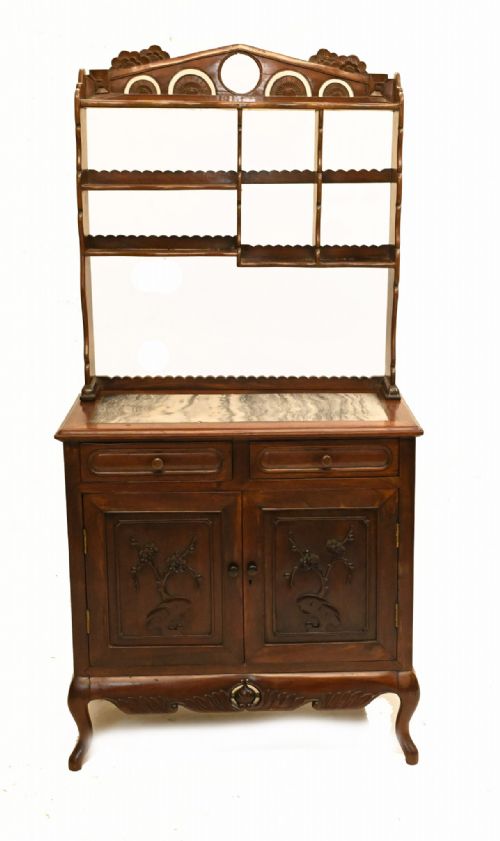
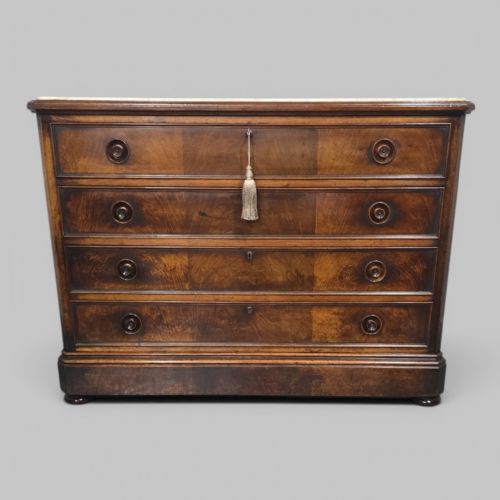

Dark Marble Top Cabinets
Dark marble top cabinets bring grounded weight and cool stone surfaces to bedside tables, commodes, and chiffoniers.
Dark Marble Top Cabinets
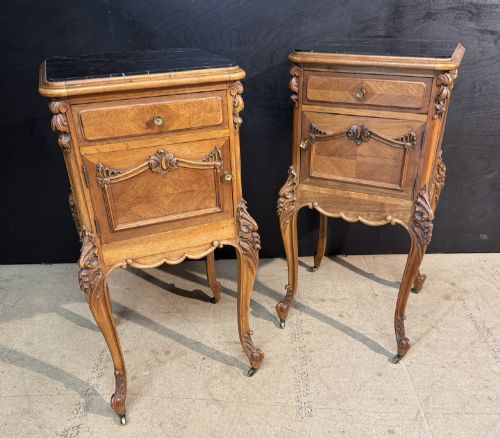
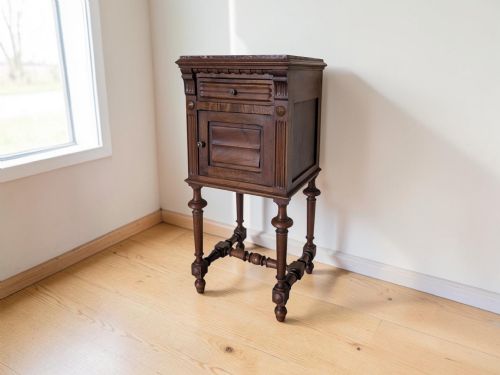
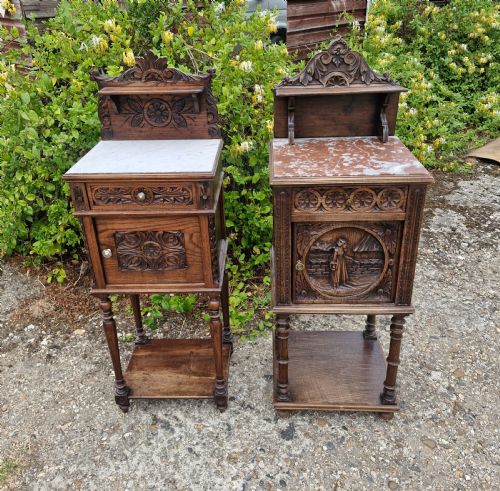
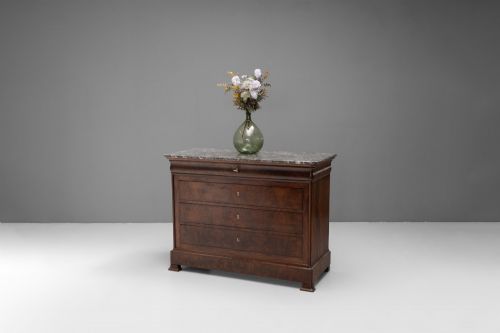
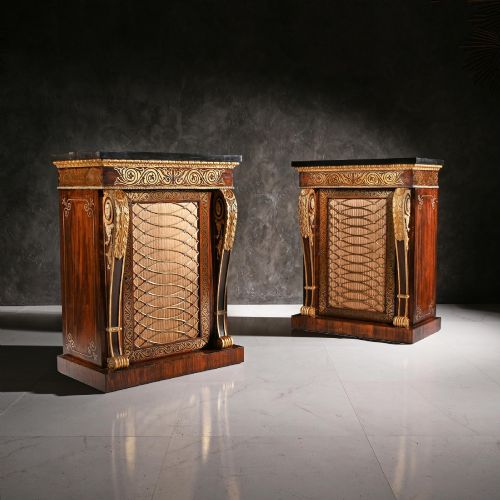
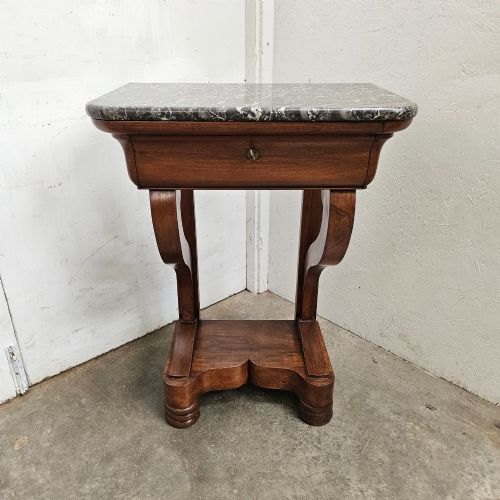
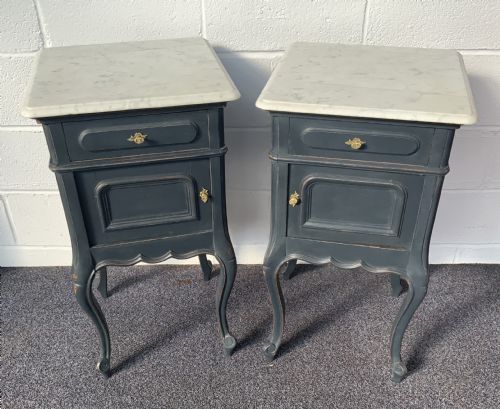
Dark marble top cabinets encompass a range of storage forms, from French bedside tables and nightstands to larger commodes, chiffoniers, and washstands. When exploring dark marble top cabinets, a buyer encounters pieces primarily originating from the nineteenth century, alongside Regency, Victorian, and Georgian examples.
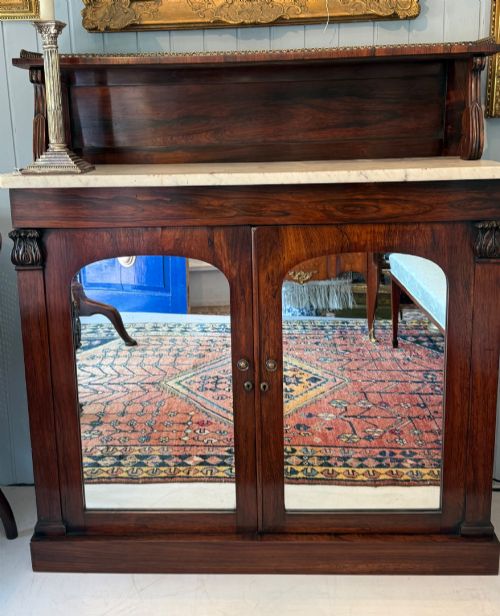
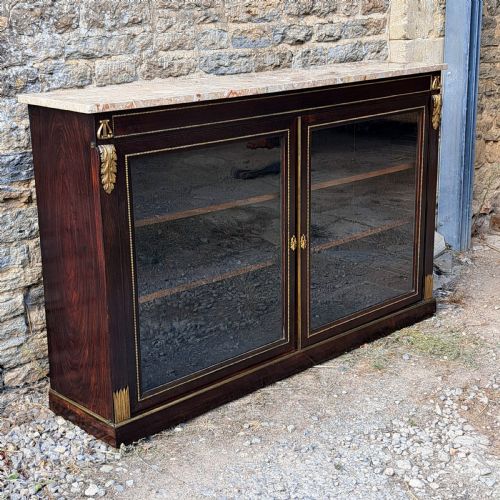
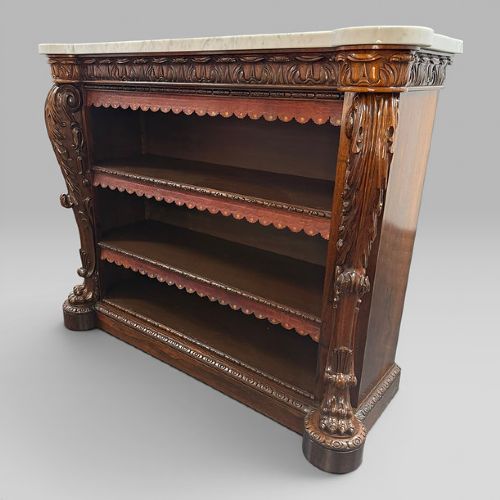
The selection leans heavily toward French walnut, mahogany, and rosewood bodies paired with contrasting dark stone surfaces. Forms vary from compact bedside chests to open bookcases and side cabinets outfitted with marble slabs.
Materials and construction
Cabinet makers utilised dense hardwoods such as mahogany, walnut, rosewood, oak, and softwood carcasses covered in rich veneer. These timber structures support heavy polished stone surfaces, occasionally secured with brass or ormolu mounts and glass elements.
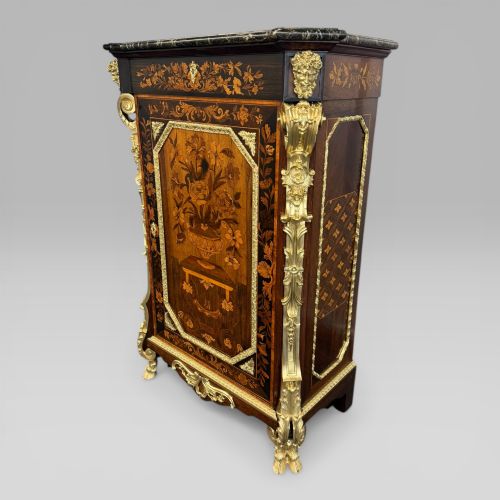
Surface decoration relies on natural timber grain, parquetry, marquetry, and mother of pearl inlay, combined with the cool, smooth texture of fitted marble tops.
Assessing quality and craftsmanship
Quality rests in the selection of timber veneers, the precision of parquetry or marquetry, and the integration of the stone top with the wooden base. Superior examples display refined carving, intact brass or ormolu mounts, and stable drawer construction without timber shrinkage.
The weight, depth of colour, and finish of the marble slab relative to the cabinet proportions distinguish finer workshop output from standard utility furniture.
Louis Constantin Le Gaigneur·Edward Holmes Baldock·Gillows
The Dark Marble Top Cabinets Glossary
- Chiffonier
- A low cabinet or sideboard, frequently fitted with shelves or a drawer above enclosed cupboards. Nineteenth century examples in rosewood or mahogany often feature marble tops.
- Commode
- A decorative chest of drawers or low cabinet originating in French furniture design. These pieces often stand on short legs and carry heavy marble surfaces.
- Ormolu
- Gilded bronze mounts used to decorate furniture frames and corners. This technique adds metallic contrast to dark timber and stone.
- Marquetry
- Inlaid patterns formed from different coloured woods fitted into a timber ground. Craftspeople utilise this technique on cabinet doors and tabletops.
- Tambour
- A flexible shutter made of narrow vertical strips of wood glued to canvas. This construction allows sliding doors on small bedside tables and nightstands.
Dark Marble Top Cabinets: Frequently Asked Questions
What rooms suit dark marble top cabinets?
Bedside tables and nightstands fit comfortably beside a bed, providing a sturdy surface that resists moisture from glasses or lamps. Larger commodes and chiffoniers suit living spaces or hallways where timber grain and stone surfaces draw the eye.
The cool touch of stone combined with warm timber tones creates a balanced anchor point in both traditional and eclectic interiors.
How do I care for a marble top?
Wipe the stone surface regularly with a soft, damp cloth using mild, neutral soap. Avoid acidic cleaners, citrus, and vinegar, which etch polished marble surfaces.
Using coasters and mats protects the stone from persistent moisture rings and potential scratches from heavy decorative objects.
Are these cabinets purely French in origin?
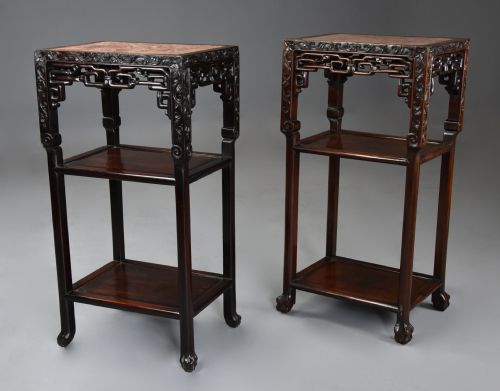
While many nineteenth century bedside chests and commodes originate from French workshops, the selection also includes English Regency and Victorian pieces, plus Chinese hardwood furniture.
Craft traditions varied by region, resulting in distinct joining techniques and carving styles across European and Asian workshops.
How can I distinguish nineteenth century pieces?
Examine the interior drawer construction, timber shrinkage patterns, and the weight and polish of the marble slab. Nineteenth century examples often show hand cut dovetails and natural patina on both the timber and stone.
Matched pairs and specific stylistic indicators like French Empire or Arts and Crafts details help narrow down the exact period.