



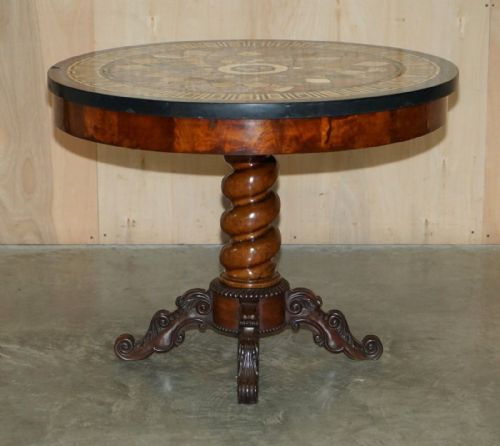


Dark Marble Centre Table
A dark marble centre table anchors a room with weight and polish, offering a robust surface designed to stand proudly in the middle of a space.
Dark Marble Centre Table
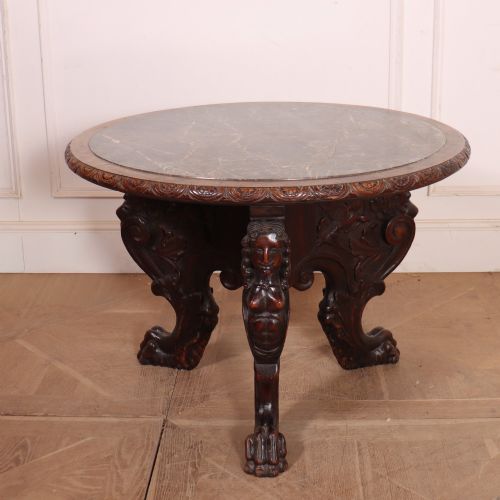
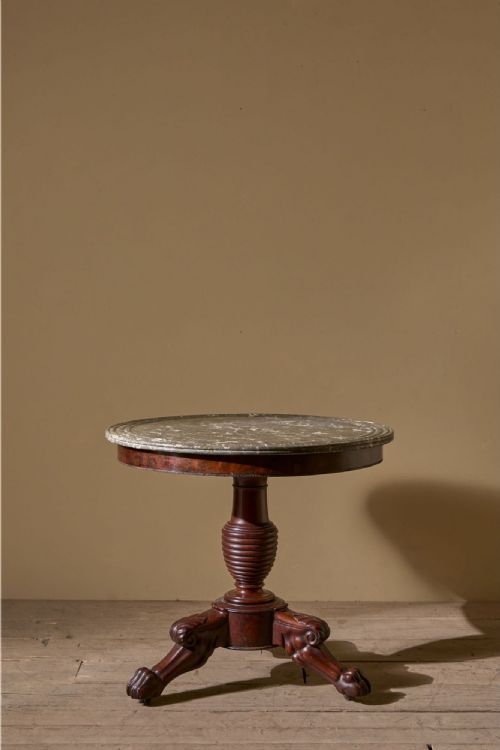
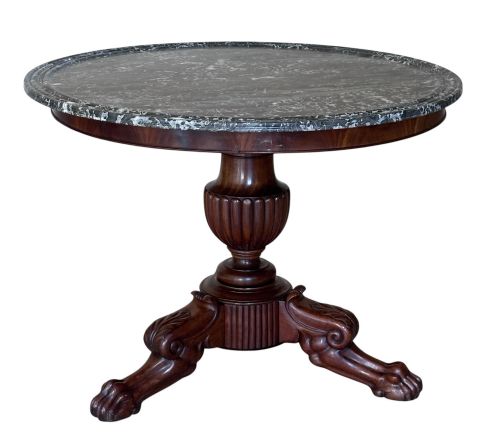
A dark marble centre table brings together heavy stone tops and supportive wooden bases designed to sit away from the walls of a room. When searching for a dark marble centre table, buyers most frequently encounter nineteenth-century French guéridon tables alongside Victorian and Chinese Qing Dynasty examples.
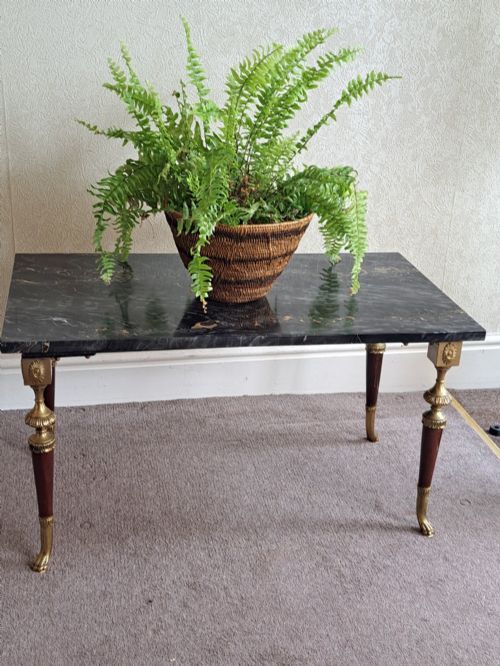
These pieces function as striking focal points in large reception spaces or libraries. The form ranges from round pedestals with classical mounts to rectangular hardwood frames featuring inset stone panels.
Mahogany, walnut, and carved hardwood provide the structural support for dense grey, rouge, or specimen marble slabs. The selection on this page spans the early nineteenth century through to the nineteen-thirties, reflecting diverse regional interpretations of a classical furniture form.
Materials and construction methods
Cabinetmakers constructed the main framework using dense timbers such as mahogany, walnut, and exotic hardwoods. These woods allowed workshops to carve elaborate details like swan supports, rams heads, and classical mouldings.
Heavy stone tops were shaped, polished, and fitted directly into wooden frames or onto central pedestals. In some instances, specialised techniques such as pietra dura or specimen marble arrangements were utilised to create decorative geometric patterns on the stone surface.
Dark Marble Centre Table Retail Price Guide 2026
Typical asking prices for dark marble centre table among the pieces listed under this phrase on Sellingantiques today, from the lower quarter to the upper quarter. They describe what is for sale here now, not the wider market.
Several nineteenth-century tables feature carved swans and rams staring steadfastly into the middle distance, guarding the tea.
Assessing craftsmanship and materials
The refinement of the wood carving separates standard production pieces from exceptional examples. Crisp details on animal motifs, such as swans and rams heads, indicate superior hand-carving by skilled artisans.
The Dark Marble Centre Table Glossary
- Guéridon
- A small French table, typically round and supported by a single central pillar or three legs. These tables frequently feature marble tops and were popular throughout the nineteenth century.
- Pietra dura
- An artistic technique using cut and fitted polished coloured stones to create images or geometric designs. This meticulous inlay work appears on high-status table tops.
- Specimen marble
- A decorative surface composed of various types of marble assembled in geometric patterns. Collectors prize these multi-stone tops for their visual complexity.
- Qing Dynasty
- The final imperial dynasty of China, dating from sixteen forty-four to nineteen twelve. Pieces from this era often utilise dense carved hardwoods.
- French Empire
- A neoclassical design style spanning the late eighteenth and early nineteenth centuries. Furniture from this period emphasises military motifs, classical columns, and bronze mounts.
Dark Marble Centre Table: Frequently Asked Questions
Where should I place a centre table?
A centre table is designed to stand free in the middle of a room rather than pushed against a wall. This allows the piece to be appreciated from all angles and serves as a natural gathering point.
Ensure there is sufficient walking space around the perimeter of the table to maintain the flow of the room.
How do I clean a marble top?
Use a soft cloth dampened with warm water and a mild, neutral soap to wipe down the stone surface. Avoid acidic cleaners, vinegar, or harsh chemicals that can etch or dull the polish of the marble.
Dry the surface thoroughly with a clean towel after washing to prevent water spots.
How can I date a nineteenth-century table?
Examine the construction methods, timber selection, and decorative styles present on the piece. Nineteenth-century examples often display specific regional characteristics, such as French Empire mounts or Victorian carving.
Comparing the secondary woods on the underside of the table can also provide clues regarding its age and origin.