

Dark Mahogany Tiered Table
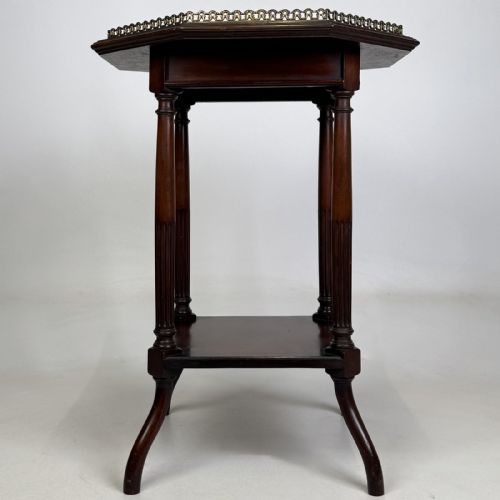
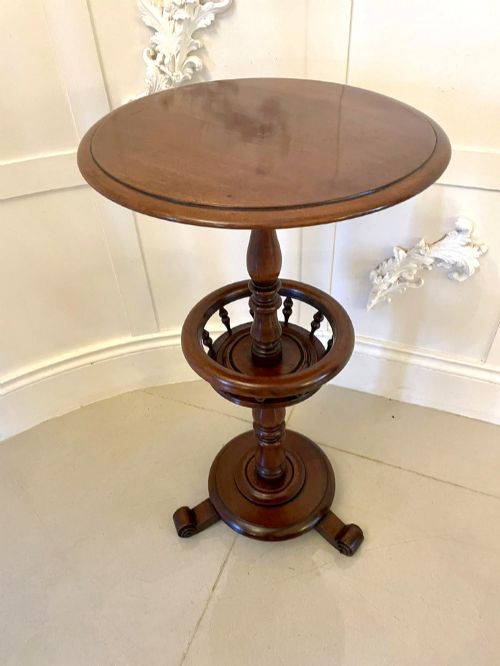
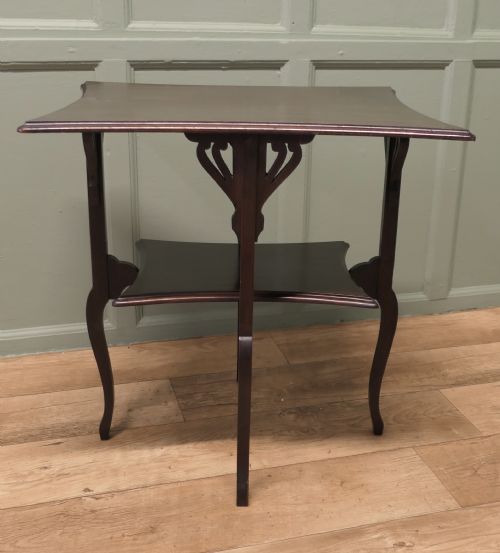
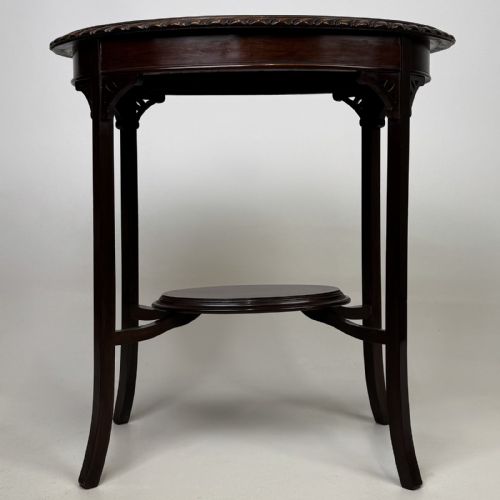
A dark mahogany tiered table offers multiple surfaces in rich timber, bringing practical elegance and period character to any room.
Dark Mahogany Tiered Table
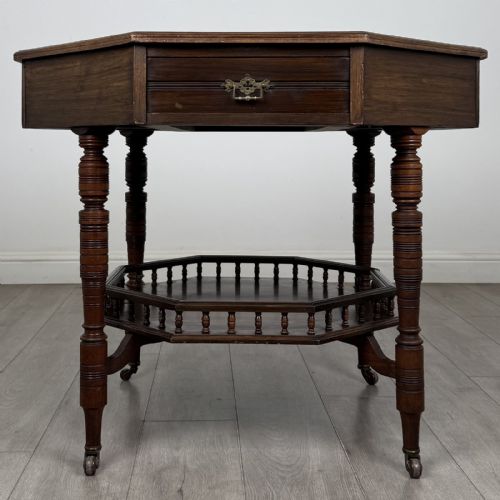
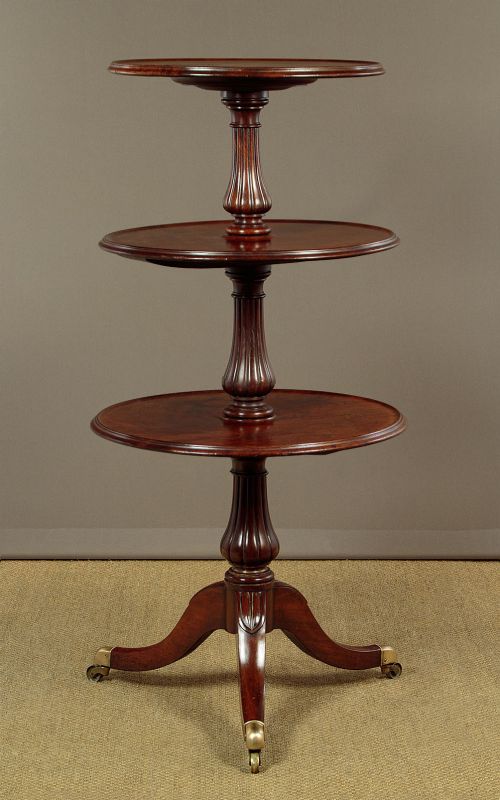
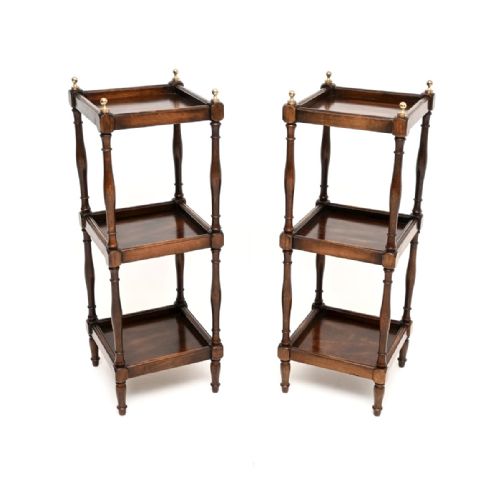
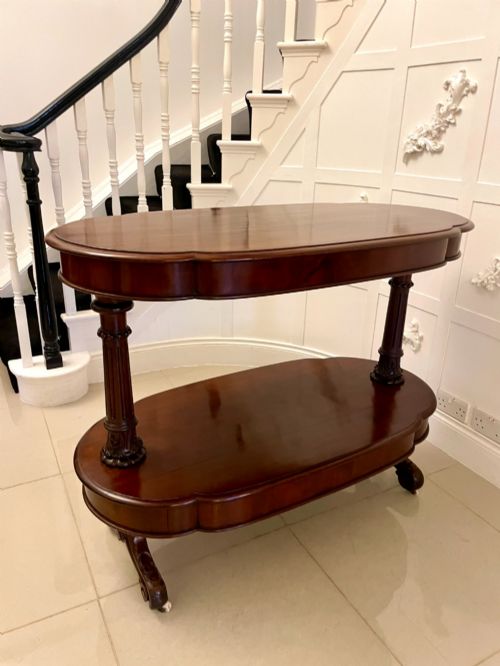
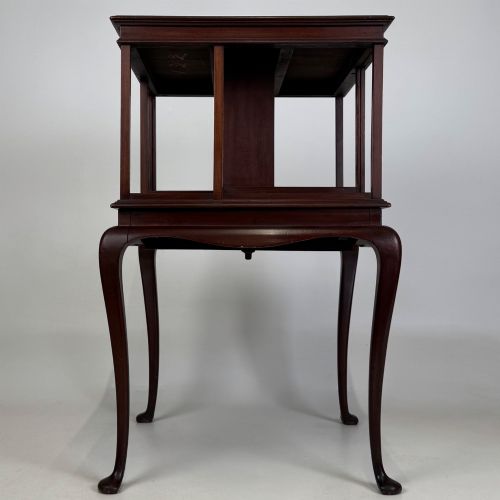
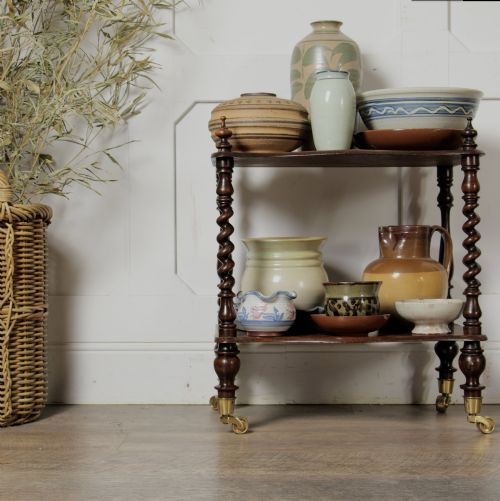
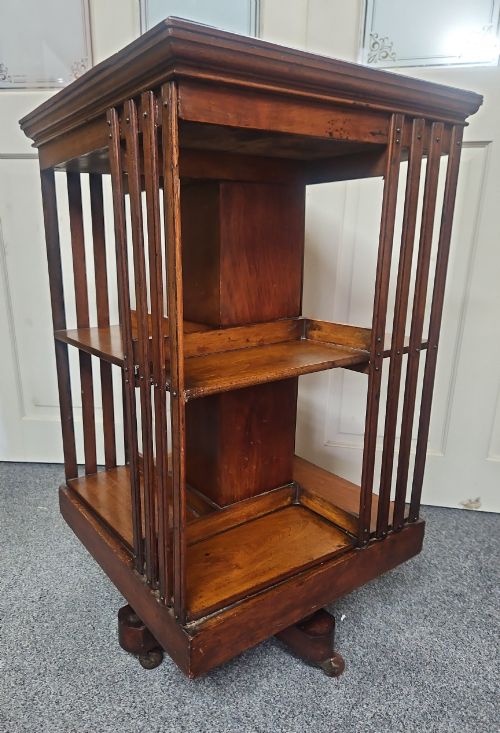
A dark mahogany tiered table is a multi-level piece designed for display, service or storage, spanning periods from the eighteenth century through to the Edwardian era. These multi-deck items appear as dumb waiters, étagères, whatnots, trolleys and revolving bookcases.
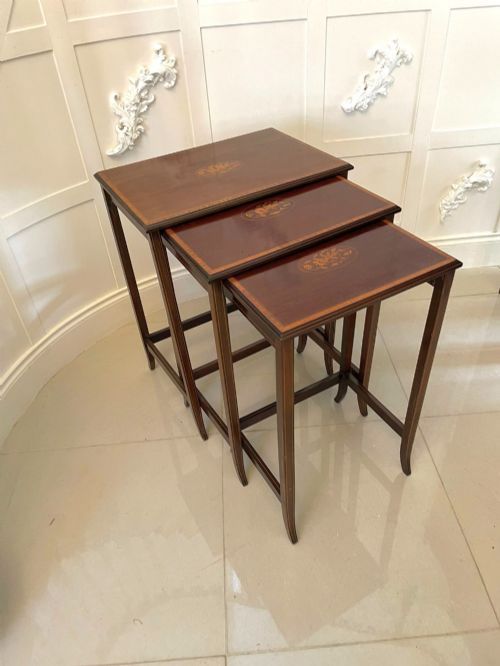
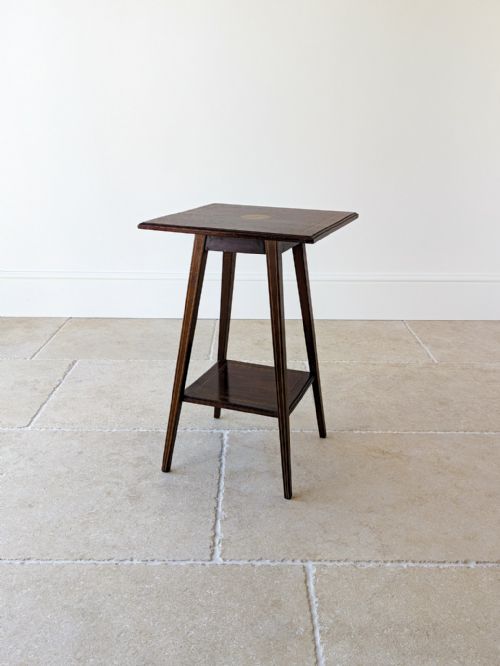
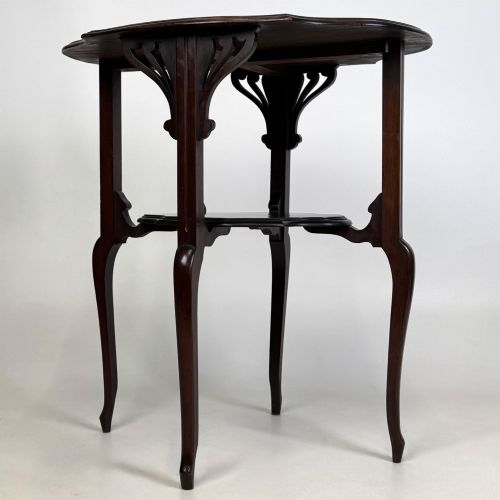
The pieces on this page are most commonly Victorian and Edwardian examples, alongside earlier Georgian and Regency designs. Buyers seeking these tiered forms encounter side tables, lamp tables and occasional stands featuring two or three levels of timber.
Makers such as Gregory and Co contributed to this tradition, alongside makers working in the manner of Gillows. The forms range from strict utilitarian washstands and corner units to decorative plant stands and coffee tables.
Materials and construction
Construction relies heavily on mahogany, complemented by secondary timbers and decorative details such as boxwood stringing, brass castors, iron hardware and marble inserts. Timber selection dictated the depth of colour and grain movement across the multiple tiers.
Joinery methods include precise turning for barley twist supports and sturdy uprights to hold stacked shelves securely. Tiers are linked by central columns, corner posts or revolving mechanisms that allow rotational movement in bookcases.
Listings feature pieces spanning from the 18th century through the Victorian and Edwardian periods up to the 1930s.
Assessing quality in tiered furniture
Quality reveals itself in the figure of the mahogany, the crispness of turned members, and the integration of brass or cast iron fittings. Superior items display well-matched timber grains across each tier and robust structural joints.
The refinement of edge moulding, the balance of proportions between shelves, and the smooth operation of revolving tiers separate standard production from exceptional cabinet work. Maker attribution, such as work bearing stamps or notable workshop provenance, elevates a piece further.
Gregory & Co·Gillows
The Dark Mahogany Tiered Table Glossary
- Dumb waiter
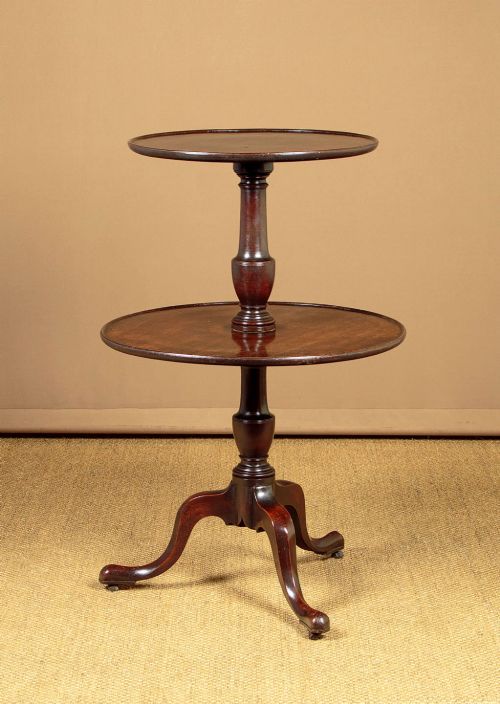
- A multi-tiered freestanding piece traditionally used for serving food or holding dishes without servants present. These typically feature two or three graduating circular or oval trays on a central pillar.
- Whatnot
- An open set of shelves used for displaying ornaments, books or curiosities. The term emerged during the eighteenth century for items with multiple tiers.
- Étagère
- A French term for a piece of furniture with several levels or shelves for display. It functions similarly to a whatnot or tiered side table.
- Barley twist
- A type of turning shaped like a spiral or helix, commonly found on the vertical supports of Victorian stands and tables. This decorative form adds visual texture to upright members.
- Boxwood
- A dense, pale wood frequently used for contrasting inlay or stringing on mahogany furniture. Cabinet makers utilised it to outline drawer fronts and table edges.
Dark Mahogany Tiered Table: Frequently Asked Questions
What is a dark mahogany tiered table used for?
These pieces function as versatile surfaces for lamps, books, drinks and decorative displays across various rooms. Their multiple tiers maximise vertical space while keeping everyday items within reach.
Historically, forms like dumb waiters and whatnots served specific dining and display purposes. Today, buyers adapt them as bedside stands, end tables or prominent living room accents.
How do I distinguish Georgian from Victorian pieces?
Georgian examples, dating from the eighteenth and early nineteenth centuries, often exhibit restrained proportions, fine mahogany grain and classical tripod bases. They reflect an emphasis on structural harmony and understated refinement.
Victorian and later pieces frequently introduce heavier turnings, such as barley twists, or mechanical elements like revolving bookshelves. These later items embrace varied styling from the Aesthetic Movement and revival periods.
Are revolving bookcases hard to maintain?
Revolving bookcases rely on a central pivot mechanism that allows the tiers to turn smoothly in either direction. Regular gentle use and occasional light cleaning keep the timber and hardware in good condition.
The mechanical base requires minimal attention beyond keeping dust clear of the moving pivot point. The solid mahogany exterior benefits from standard polishing suited to antique timber.
How do I fit a tiered table into a modern interior?
A tiered table provides distinct surface levels that break up the horizontal lines of contemporary seating arrangements. Their compact footprints make them suitable as lamp tables beside low sofas or as corner plant stands.
The dark mahogany tones anchor neutral colour schemes and complement both modern minimalism and traditional eclectic decor. Multiple tiers allow you to arrange books and objects without cluttering the main surface.