


Dark Mahogany Tea Chest
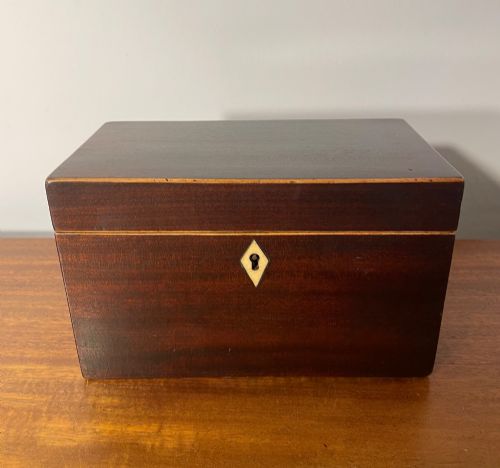
These dark mahogany tea chest pieces are classic lidded containers that bring period elegance and refined storage to any surface.
Dark Mahogany Tea Chest
A dark mahogany tea chest is a functional box designed to store valuable tea leaves safely away from light and moisture during the Georgian, Regency, and Victorian periods. Buyers search for these pieces to add period character and rich timber tones to a room.
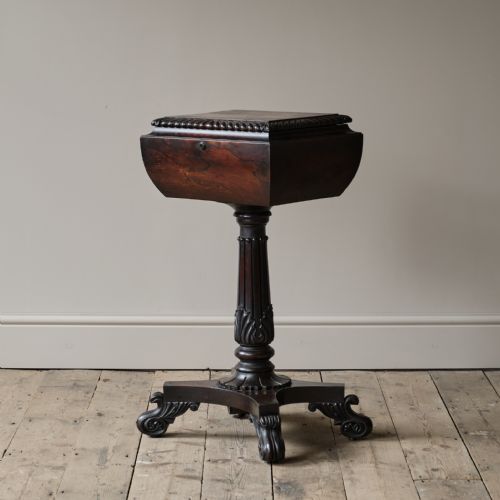
The selections available here range from compact tabletop tea caddies and double-compartment boxes to substantial freestanding teapoys on stands. Many pieces date from the eighteenth and nineteenth centuries, spanning Georgian, Regency, and William IV eras.
You will encounter various distinct forms within this group, including sarcophagus shapes, rectangular boxes with drawers, and miniature sideboard designs. Scottish and Irish regional variations also appear alongside English examples.
How they were made
Cabinetmakers utilised dense mahogany timber, often applied as fine wood veneers over secondary woods to create deep, dark surfaces. Skillful wood inlay and contrasting stringing in boxwood frequently decorate the edges and panels.
Functional details include cast brass handles, escutcheons, and internal glass mixing bowls, whilst bone fittings sometimes accent the interior compartments. The construction relies on traditional joinery methods suited to containing dry goods securely.
The listings span the Georgian, Regency, William IV, and Victorian periods, using mahogany alongside brass, boxwood, bone, and glass.
What varies in quality
Quality depends upon the depth of the mahogany grain and the precision of the boxwood inlay work. Superior examples exhibit harmonious proportions and well-figured timber selection across every visible surface.
The complexity of the form dictates the standard of execution, separating standard tabletop boxes from elaborate sarcophagus teapoys on stands. Interior completeness, including original mixing bowls and fitted compartments, elevates the standing of an individual piece.
Strahan·Gillows
The Dark Mahogany Tea Chest Glossary
- Teapoy
- A freestanding piece of furniture featuring a tea storage box mounted upon a central pillar or legs. These stands often incorporate internal caddies and mixing bowls.
- Sarcophagus form
- A distinct tapered, flat-topped cabinet shape with an angled lid that mimics classical monumental architecture popular during the Regency period.
- Escutcheon
- A protective metal plate surrounding the keyhole of a box or chest. These plates are typically cast in brass and secured with small pins.
- Stringing
- Thin inlay lines of a contrasting timber, such as boxwood, set flush into the mahogany surface to outline panels and borders.
Dark Mahogany Tea Chest: Frequently Asked Questions
What is a dark mahogany tea chest?
These objects are lidded boxes or freestanding stands created to store precious loose tea leaves in nineteenth and eighteenth century households.
They feature compartments for different tea varieties and often include a glass bowl for blending infusions.
How were teapoys used originally?
Tea was an expensive commodity, so leaves were kept locked inside these chests in the parlour or dining room.
The lady of the house would prepare the brew for guests using the internal mixing bowls and caddies.
How do I date a tea chest?
Stylistic cues such as Georgian bracket feet, Regency sarcophagus shapes, and Victorian carving help assign a period.
Construction methods and secondary woods also provide clear indicators of age.
Where should I place a teapoy?
These pieces function well as occasional tables or display surfaces in a living room, study, or hallway.
Their rich timber tones complement traditional and contemporary interiors alike.