


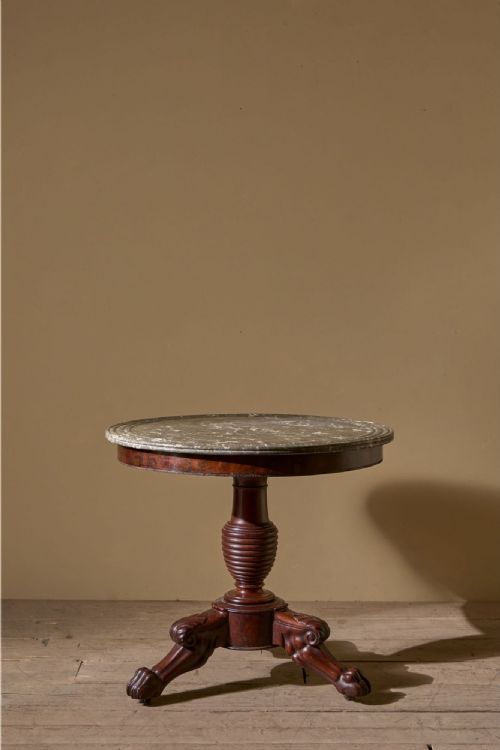


Dark Mahogany Gueridon
A dark mahogany gueridon brings architectural weight and polished timber to a room, offering a circular surface rooted in nineteenth-century French and Victorian design.
Dark Mahogany Gueridon
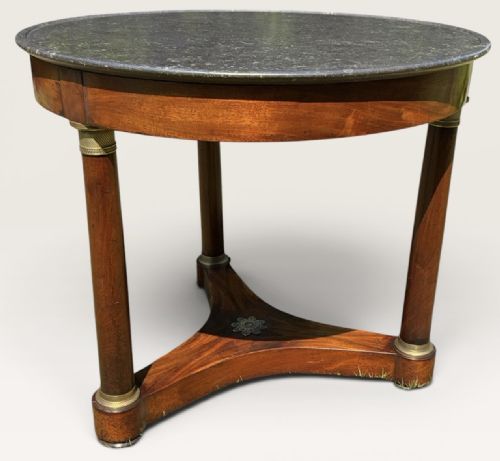
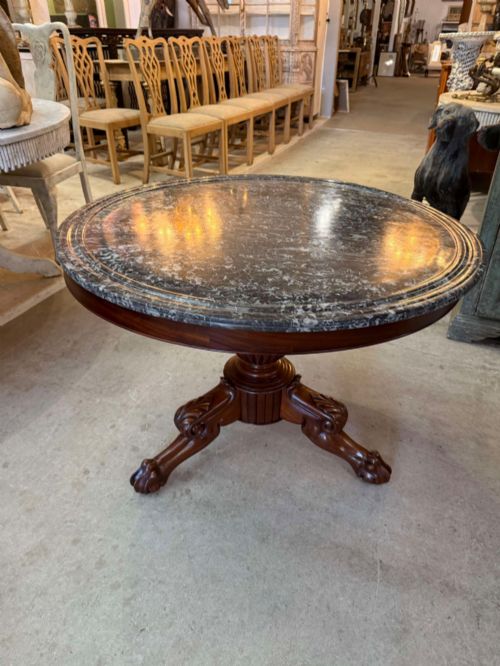
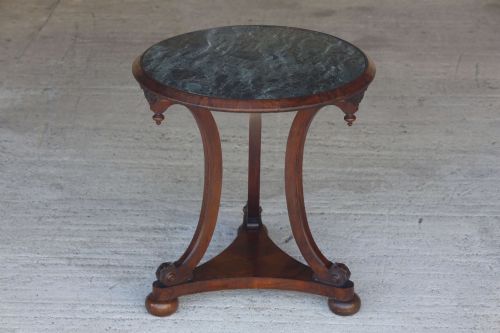
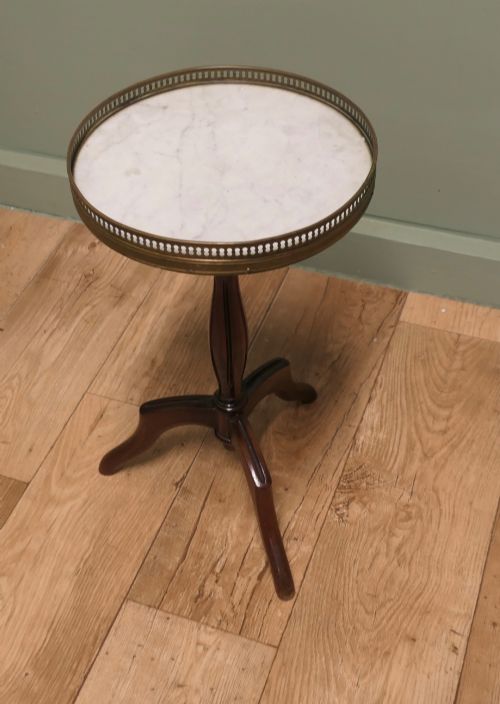
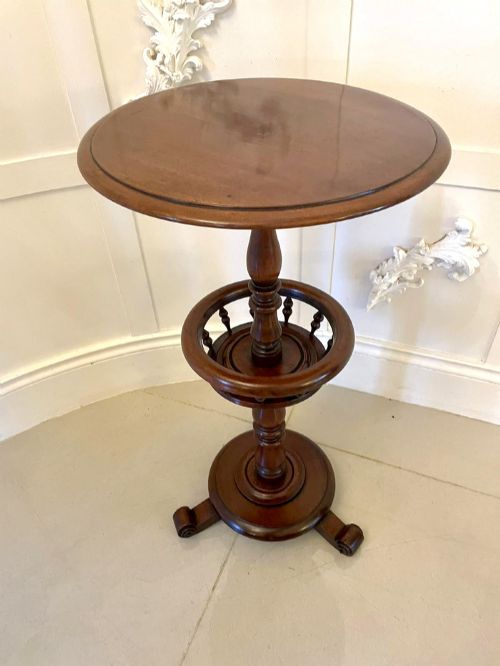
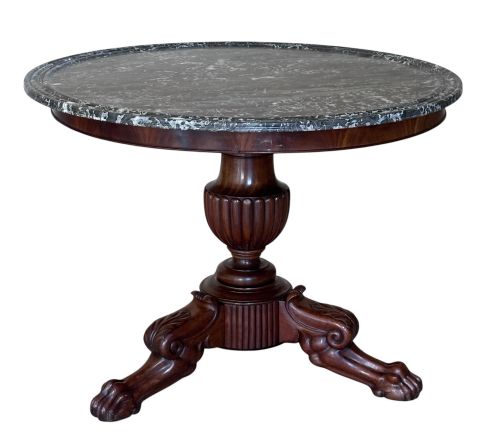
A dark mahogany gueridon functions primarily as a centre table or occasional table, designed to stand freestanding in a room rather than against a wall. The form typically presents a circular timber top supported by a central pillar or distinct pedestal base.
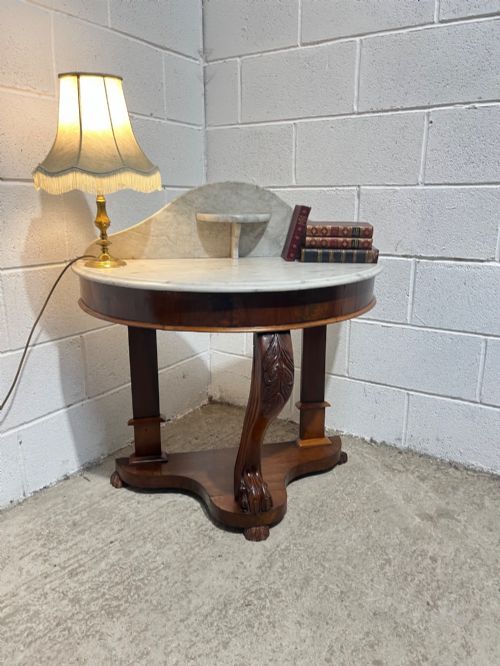
Most examples found here date from the nineteenth century, including specific pieces from eighteen-fifty, eighteen-sixty, and eighteen-ninety, alongside broader Victorian and French Empire style periods. These tables frequently appear alongside alternative descriptions such as centre tables, lamp tables, or occasional tables.
Makers and designers drew heavily on classical motifs, producing tables that bridge functional surface area and sculptural presence. Buyers select these pieces to anchor a seating arrangement or display decorative objects upon an inset marble top.
Assessing quality and craftsmanship
Quality reveals itself in the grain selection of the mahogany and the crispness of any applied bronze or ormolu mounts. Finer examples display meticulous joinery on the central pedestal and tightly fitted marble slabs that sit flush within the timber rim.
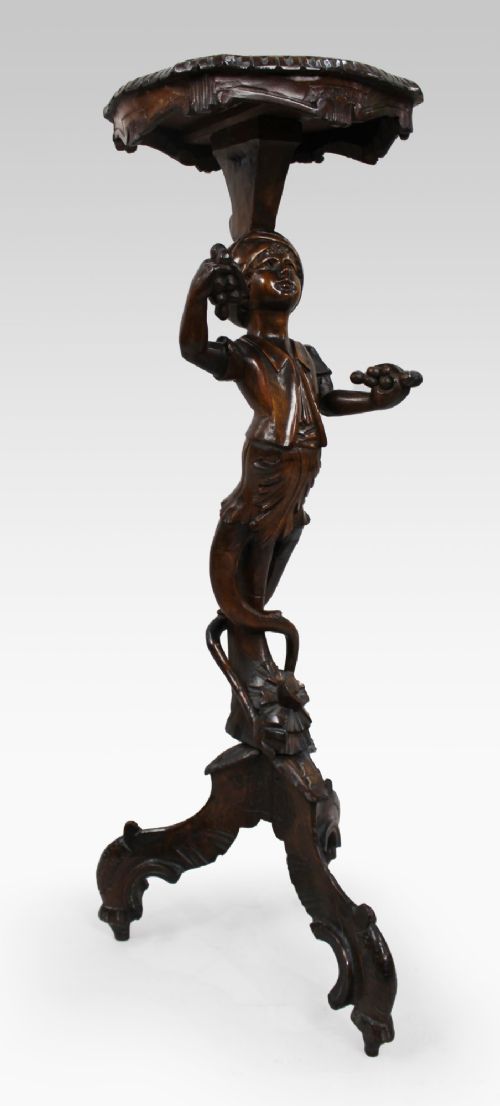
The presence of sculptural carvings, such as detailed rams heads or swan supports, separates standard production from exceptional pieces. Proportions also dictate value, with heavier architectural presence and balanced pedestal weight marking superior workshop output.
Dark Mahogany Gueridon Retail Price Guide 2026
Typical asking prices for dark mahogany gueridon among the pieces listed under this phrase on Sellingantiques today, from the lower quarter to the upper quarter. They describe what is for sale here now, not the wider market.
Several nineteenth-century tables incorporate carved swan supports and staring rams heads, ensuring your occasional table watches the room as intently as your guests do.
The Dark Mahogany Gueridon Glossary
- Gueridon
- A small French table, typically round and supported by a central pillar, originating in the seventeenth century and remaining popular through the Victorian era. These tables were originally designed to hold candlesticks or small decorative items.
- Ormolu
- Gilded bronze applied to furniture as decorative mounts and feet during the eighteenth and nineteenth centuries. This technique involves coating bronze with a gold amalgam.
- Centre table
- A freestanding piece designed to be viewed from all sides and placed in the middle of a room rather than against a perimeter wall. They frequently share forms with standard gueridons.
- Specimen marble
- A tabletop composed of multiple geometric or figurative pieces of different coloured marbles arranged in a mosaic pattern. This labour-intensive top elevates the status of an occasional table.
Dark Mahogany Gueridon: Frequently Asked Questions
What is a gueridon table?
A gueridon is a distinct type of round table supported by a central pedestal, originating in French interior design. They serve as versatile accent pieces in traditional and eclectic rooms.
Historically utilised for holding lights or small decorative objects, today they function effectively as lamp tables or freestanding display surfaces.
How do I style a dark mahogany gueridon?
Place the table in the centre of a room or beside a seating group where its circular top can be appreciated from multiple angles. The dark timber grounds lighter upholstery and fabrics.
Keep surface styling minimal to showcase the mahogany grain and any inset marble top or cast ormolu mounts.
Are these tables French or English?
The majority of pieces carrying this description reflect French design idioms, particularly the French Empire and Louis Philippe periods. Cabinet makers across Europe adopted these continental styles during the nineteenth century.
Victorian interpretations often blend French aesthetic influences with domestic British manufacturing traditions.
How do I identify a nineteenth-century piece?
Look for construction characteristics typical of the period, such as solid mahogany timber framing, hand-cut joinery, and heavy marble inserts. Stylistic cues like rams heads and swan supports point directly to Empire revivals.
Documentation or dealer attribution often confirms the specific decade, such as eighteen-sixty or eighteen-ninety.