






Dark Mahogany Dumb Waiter
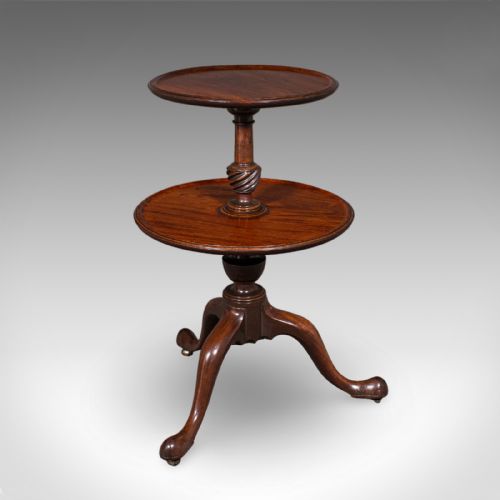
A dark mahogany dumb waiter brings tiered wooden shelving and revolving service directly to the dining room floor.
Dark Mahogany Dumb Waiter
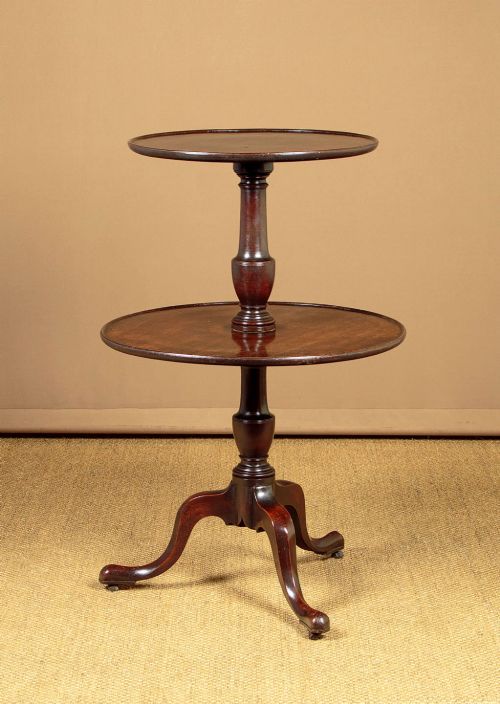
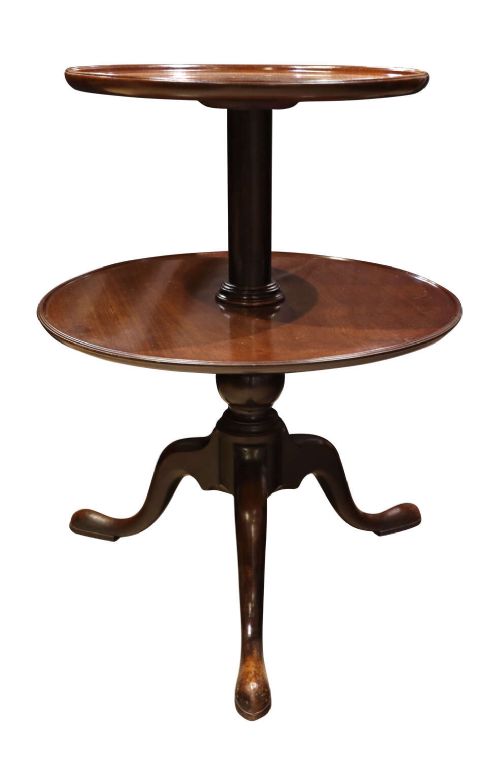
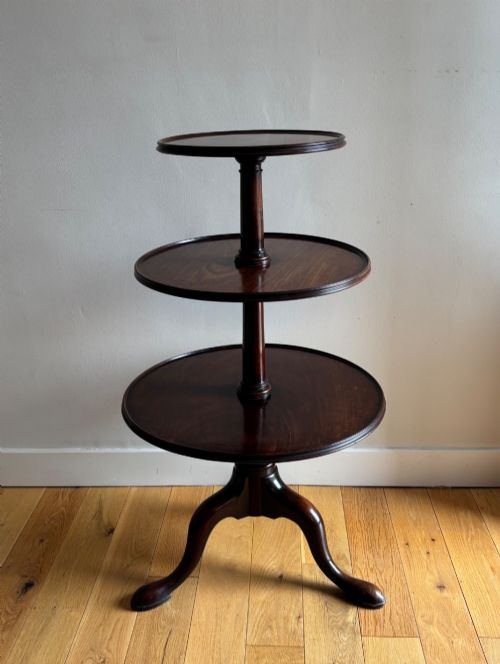
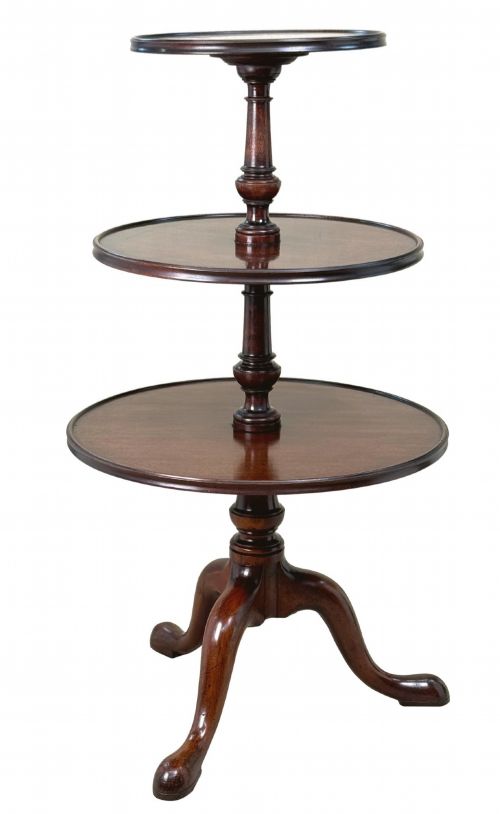
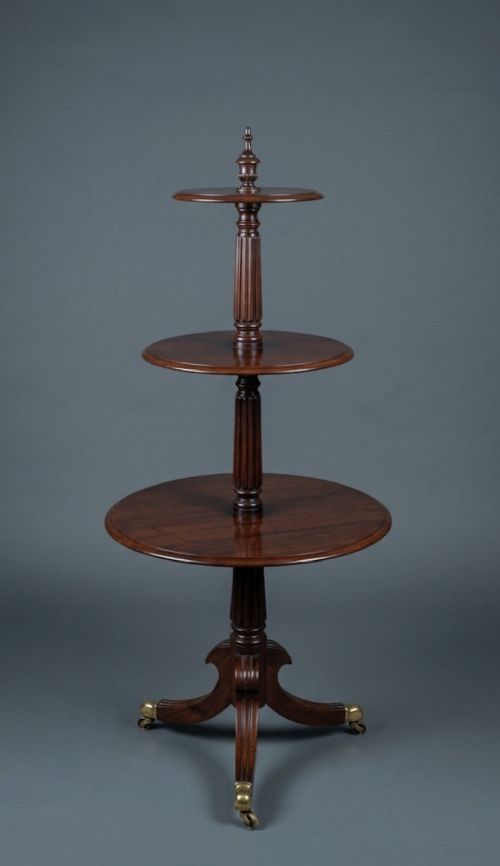
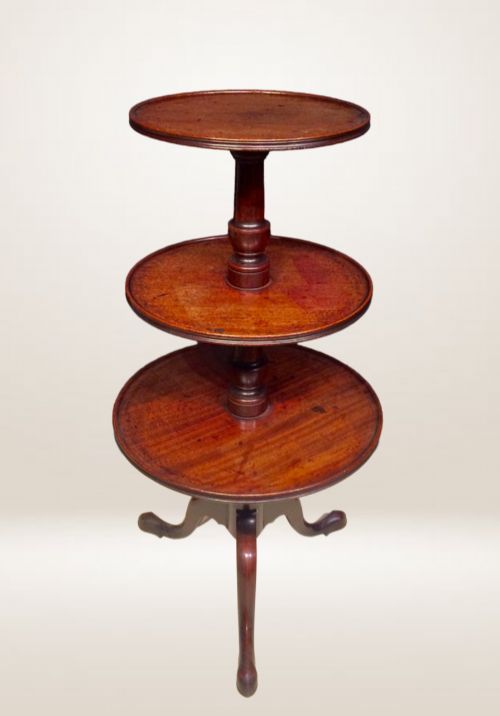
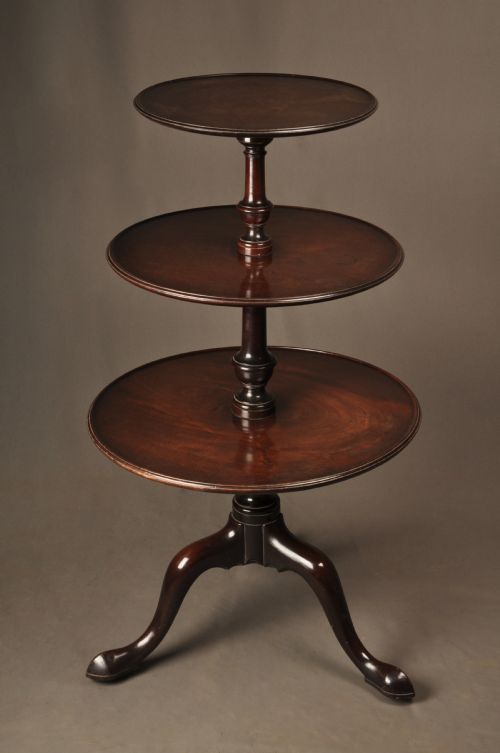
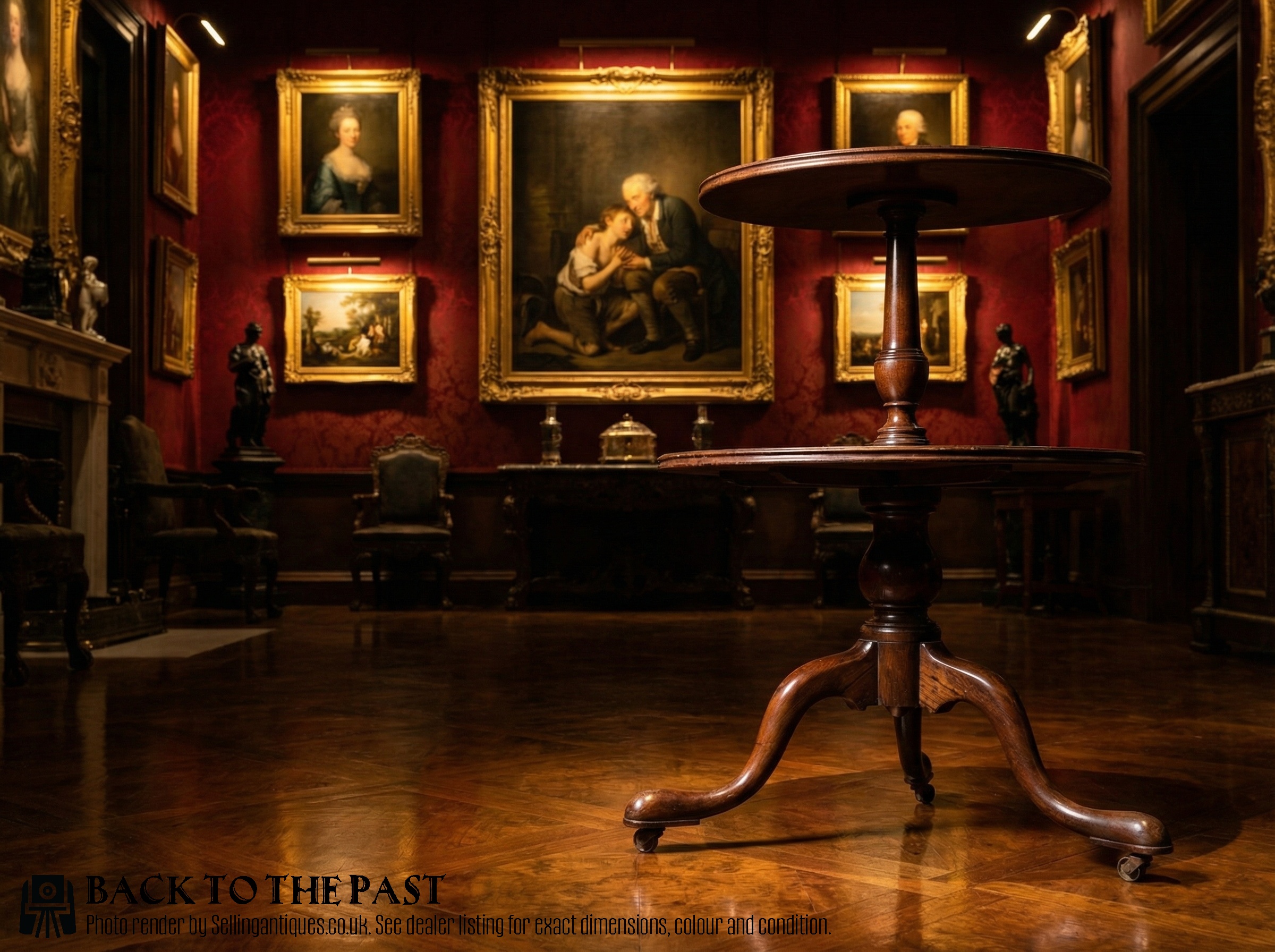
A dark mahogany dumb waiter consists of stacked circular tiers supported by a central pillar and tripod base, designed for serving food and drink without servants present.
The pieces appearing on this page span the Georgian, Regency, and Victorian periods, with George III examples showing particular prominence alongside later Victorian and Edwardian iterations.
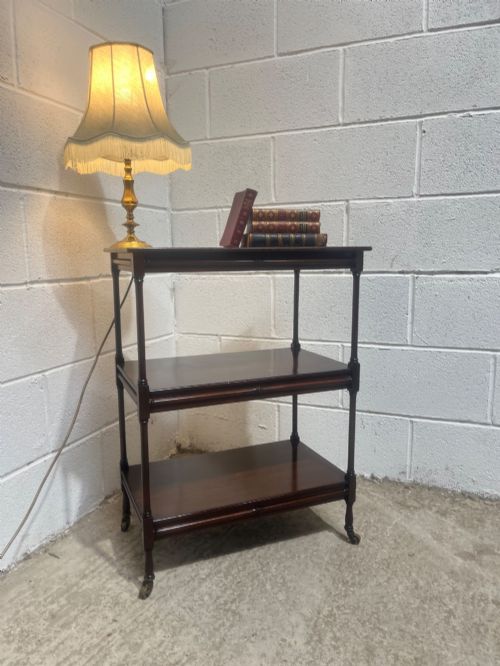
Most examples take the form of two or three graduating tiers, though occasional variants include revolving lazy susans and folding serving stands.
Materials and construction methods
Craftsmen utilised solid mahogany and dense Cuban mahogany, often selecting timber with rich figuring to form the graduated circular trays.
Support structures rely on turned central columns standing on tripod legs, frequently incorporating brass castors for mobility across dining room floors.
Certain tiered stands fold flat for storage, proving that nineteenth-century hosts also valued clever space-saving tricks.
Distinctions in grade and execution
Quality rests upon the depth of the timber's grain and the crispness of the turned column work rather than mere decorative carving.
Superior pieces display seamless revolving mechanisms on their tiers and stable tripod bases that bear heavy service without wobble.
The Dark Mahogany Dumb Waiter Glossary
- Dumb waiter
- A tiered freestanding serving table used in dining rooms during the eighteenth and nineteenth centuries. These pieces allowed diners to help themselves to courses without domestic staff in attendance.
- Tripod base
- A three-legged support structure commonly found beneath the central pillar of these serving stands. This configuration ensures stability on uneven dining room floors.
- Graduated tiers
- Circular wooden shelves that decrease in diameter from bottom to top. This arrangement prevents lower items from being obscured by upper trays.
- Revolving mechanism
- The internal pivot allowing individual tiers to turn independently. This function lets diners access items without reaching across the table.
- Cuban mahogany
- A dense, dark tropical timber prized for cabinet making in the eighteenth century. It yields a rich patina through long exposure to light and wax.
Dark Mahogany Dumb Waiter: Frequently Asked Questions
How were dumb waiters used?
These pieces stood beside dining tables to hold extra dishes, wine bottles, and silverware during meals. Diners rotated the tiers to pass food without interrupting conversation.
They relieved the need for servants to remain in the room throughout the entire dining service.
How do I date a dumb waiter?
Dating relies on leg profiles, turning styles, and timber selection observed across different eras. Georgian pieces often feature slender tripod legs with pad or spade feet.
Later Victorian versions show heavier turning and sometimes incorporate brass highlights or mechanical folding actions.
Can I use these as side tables?
Tiered stands function effectively as display surfaces or bedside tables in modern rooms. Their stacked circular trays provide substantial surface area while occupying minimal floor space.
Placing them in corners or beside seating areas utilises their vertical design efficiently.
What is Cuban mahogany?
Cuban mahogany is a heavy, dark hardwood harvested in the Caribbean and widely utilised by eighteenth-century cabinet makers. The wood develops a deep reddish-brown tone over centuries of polishing.
It resists warping and accepts fine turning on central columns exceptionally well.