






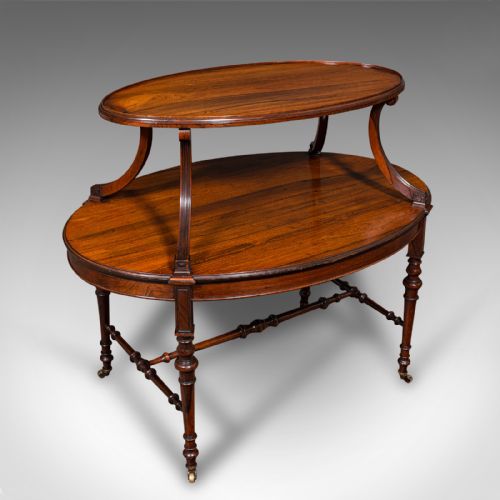


Mahogany Buffet Dessert Stand
A mahogany buffet dessert stand provides tiered elegance for dining service, combining practical multi-level surface space with rich timber grain.
Mahogany Buffet Dessert Stand
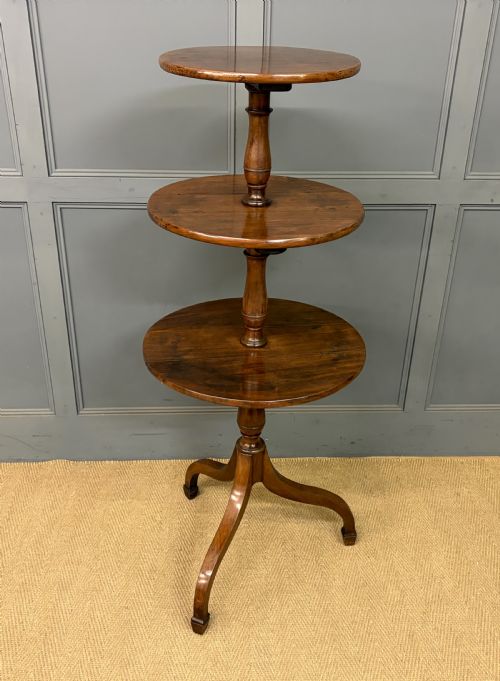
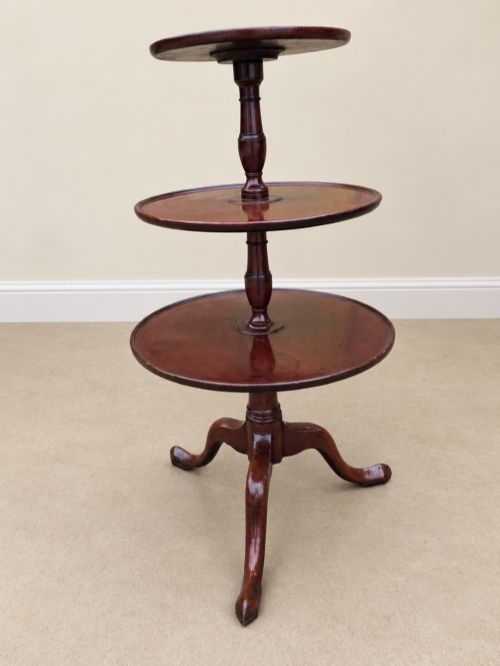
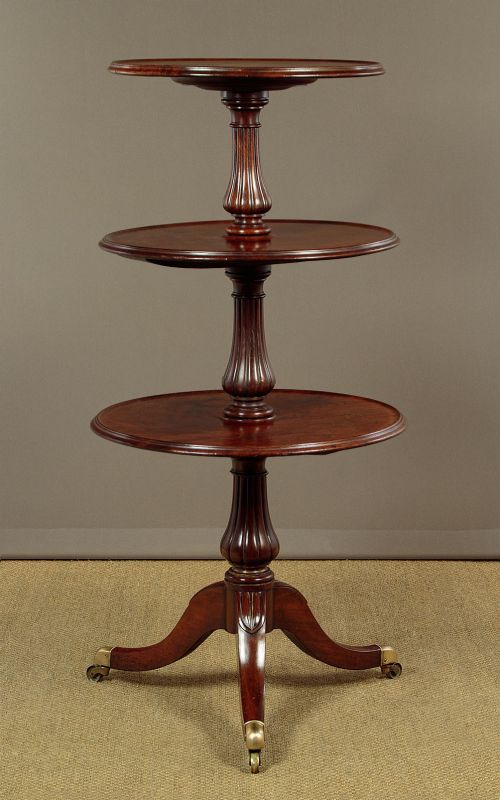
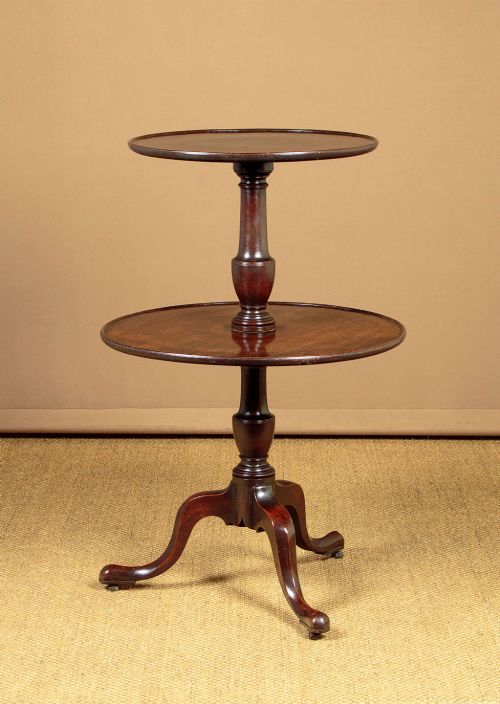
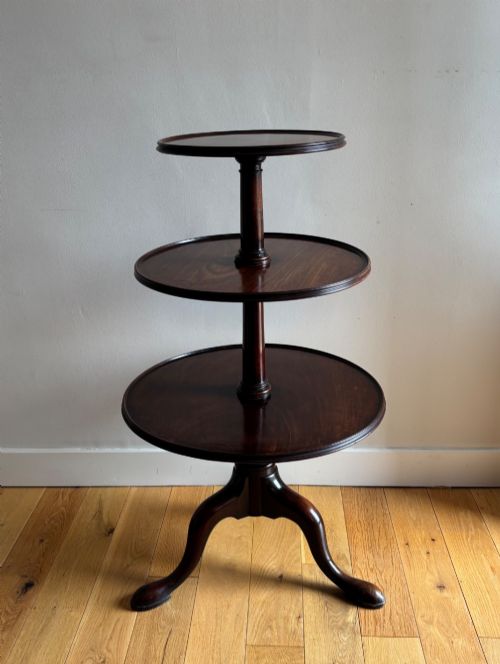
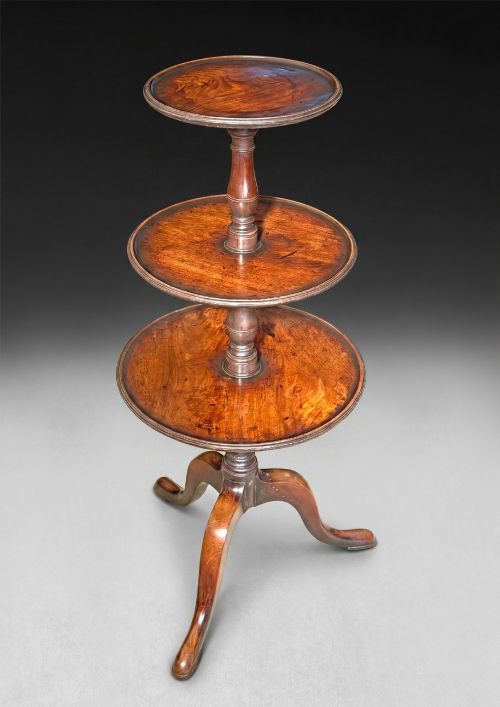
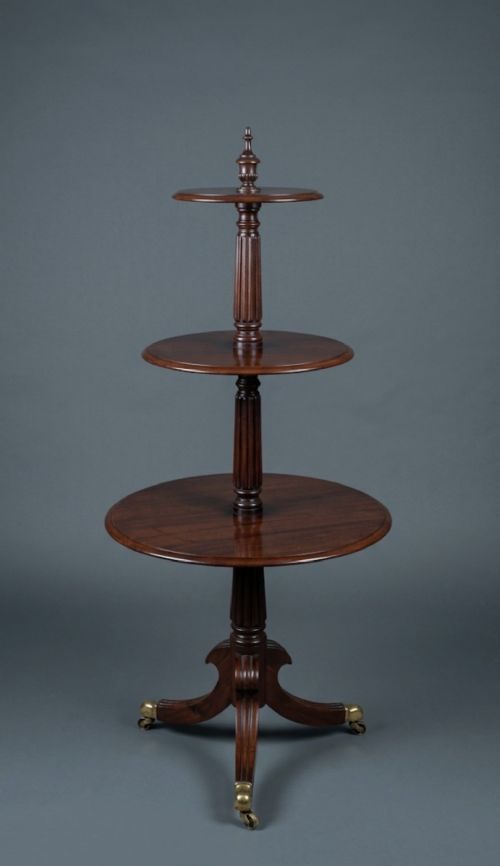
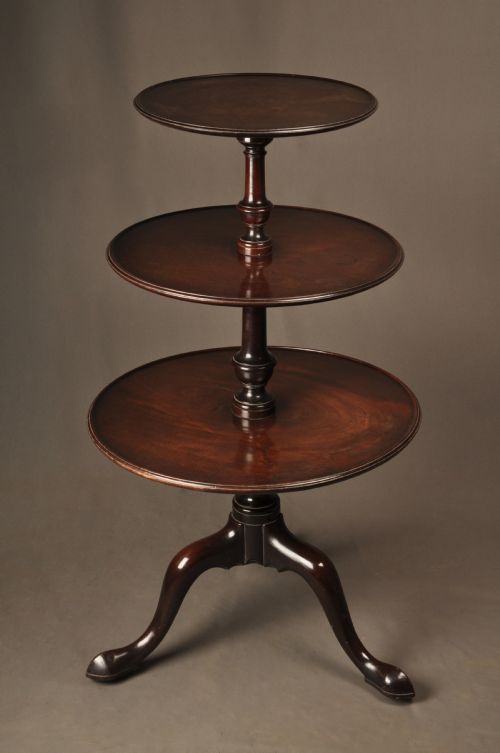
A mahogany buffet dessert stand encompasses tiered serving tables and dumb waiters designed for dining rooms across the eighteenth and nineteenth centuries. These pieces appear most frequently in Georgian and Regency iterations, taking the form of multi-tiered circular tables raised on central columns with tripod supports.
The listings here show examples spanning the Georgian, Regency, and Victorian periods, alongside occasional later pieces. Two and three-tier variations dominate the selection, offering graduated surfaces originally used for holding dishes and desserts during formal meals.
Makers and workshops of the periods constructed these stands to serve guests without the constant attendance of servants. The fundamental architecture relies on stability and proportion, ensuring multiple laden tiers remain balanced upon a single central pillar.
Materials and Construction
Cabinet makers relied primarily on solid and veneered mahogany, frequently selected for its deep colour and durability under heavy daily use. Brass fittings such as castors and column connectors appear regularly, providing both structural reinforcement and subtle decorative contrast against the dark timber.
Construction techniques involved turning robust central pedestals and joining them securely to three-legged tripod bases, often terminating in pad feet or claw feet. Some specialised examples incorporated folding mechanisms or brass hinges to allow the graduated trays to drop down when not in service.
Mahogany Buffet Dessert Stand Retail Price Guide 2026
Typical asking prices for mahogany buffet dessert stand among the pieces listed under this phrase on Sellingantiques today, from the lower quarter to the upper quarter. They describe what is for sale here now, not the wider market.
Some nineteenth-century diners relied on folding tiers to quickly hide the pudding before anyone asked for a second helping.
Distinctions in Quality
Quality reveals itself through the selection of timber grain, the crispness of turned mouldings on the central column, and the structural integrity of the tier joints. Superior pieces exhibit fine figuring in the mahogany and robust pivoting mechanisms that allow circular tiers to revolve smoothly without wobble.
The presence of original brass hardware and well-proportioned tripod legs separates master-carved examples from utilitarian workshop output. Finer stands balance weight evenly across all tiers, maintaining precise alignment from the largest base tray up to the smallest top tier.
Maple & Co·Gillows
The Mahogany Buffet Dessert Stand Glossary
- Dumb waiter
- A freestanding tiered stand used for serving food and drink without servants present.
- Tripod base
- A three-legged support system providing stability for the central column of the stand.
- Tiered table
- A piece of furniture featuring multiple horizontal surfaces arranged vertically on a single shaft.
- Galleried top
- A raised rim around the edge of a tray designed to prevent dishes from sliding off.
- Revolving mechanism
- The internal pivot allowing individual tiers to turn independently for easy access.
Mahogany Buffet Dessert Stand: Frequently Asked Questions
What was a mahogany buffet dessert stand used for?
These stands served as portable sideboards during formal dining, holding extra courses, glassware, and desserts within easy reach of the host.
By placing dishes on graduated tiers, households saved valuable dining table space while reducing the need for constant staff attendance during meals.
How do I date a Georgian dumb waiter?
Dating relies on examining the turning style of the central pillar, the profile of the tripod legs, and the method of joining the tiers.
Earlier eighteenth-century pieces often feature simpler turned columns and robust mahogany boards, whereas Regency examples introduce more refined brass mounts and reeded details.
Are the tiers on these stands always fixed?
Many tiers remain stationary on fixed collars, while others incorporate rotating pivots to let diners spin each tray independently.
Certain specialised variants also include folding mechanisms that allow the circular trays to drop vertically for compact storage when not in use.
How do I care for antique mahogany furniture?
Maintain the timber by keeping it away from direct heat sources and sudden humidity changes that can cause the wood to split.
Apply a traditional beeswax polish occasionally to nourish the grain and protect the surface without building up synthetic residues.