

Dark Mahogany Candle Table
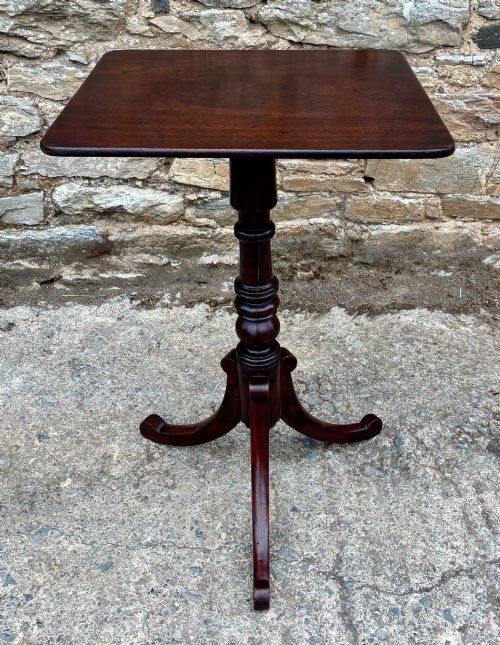
A dark mahogany candle table brings compact elegance to a corner, offering a stable surface raised on a slender tripod base.
Dark Mahogany Candle Table
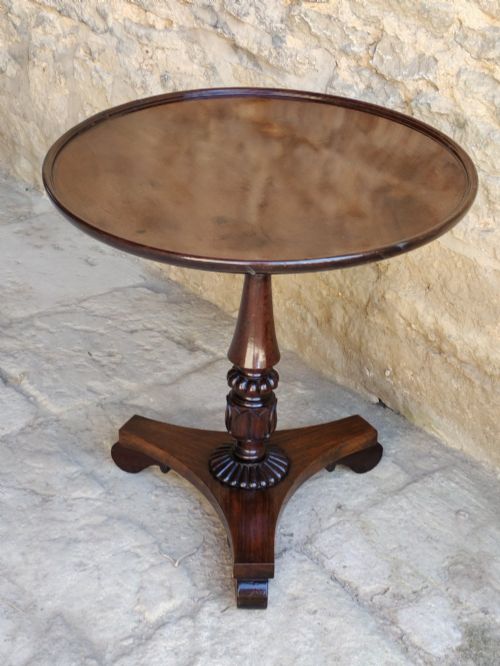
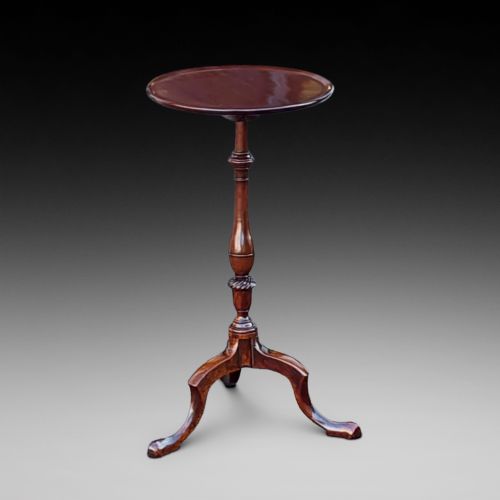
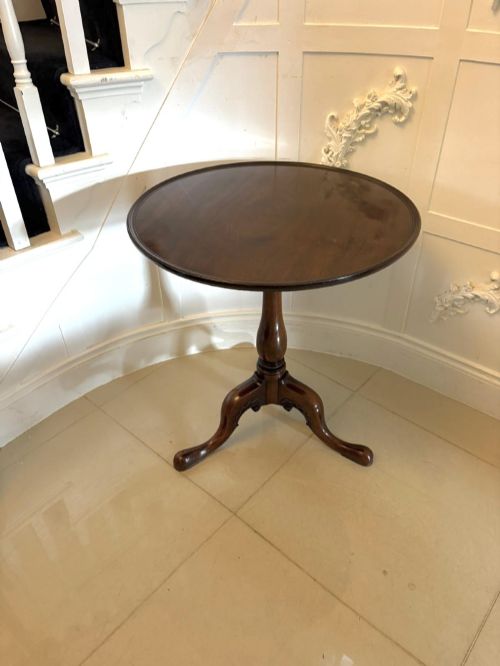
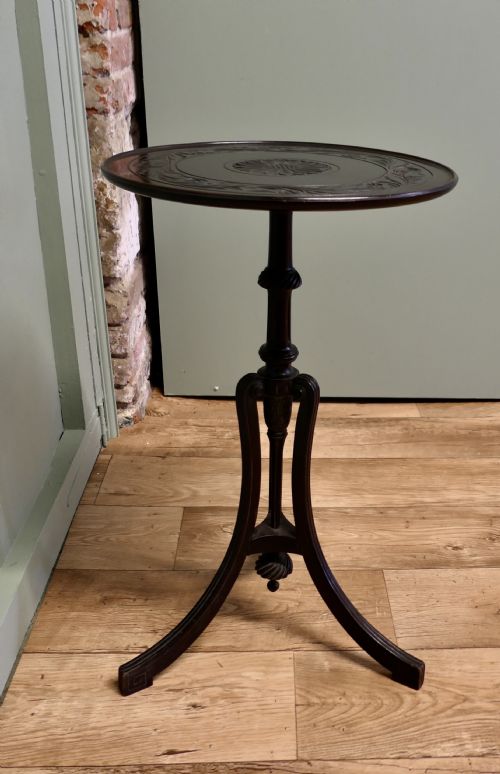
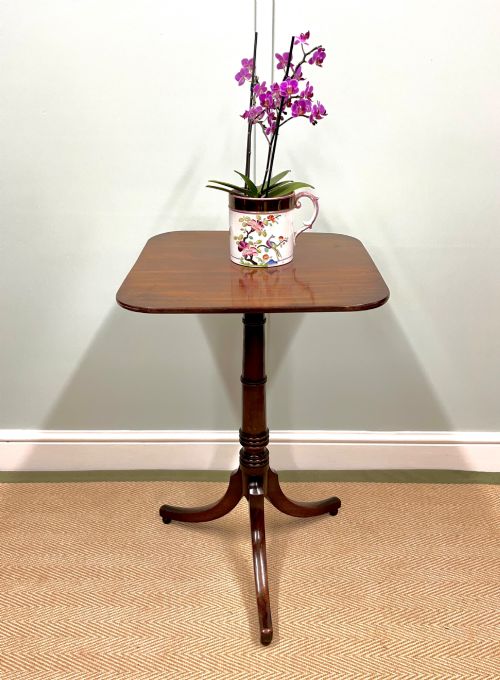
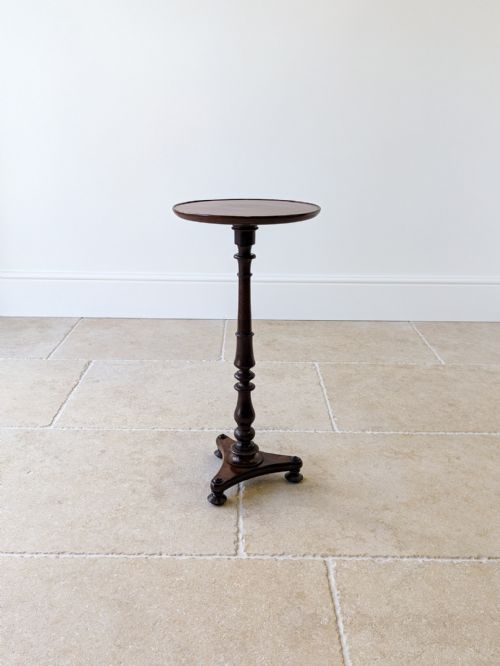
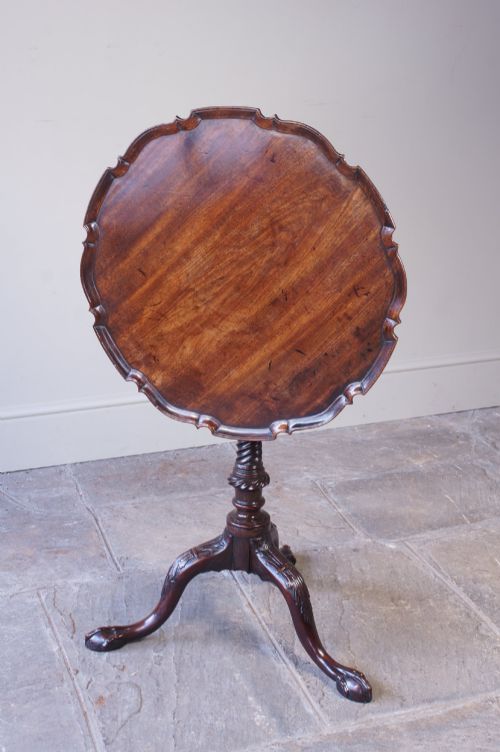
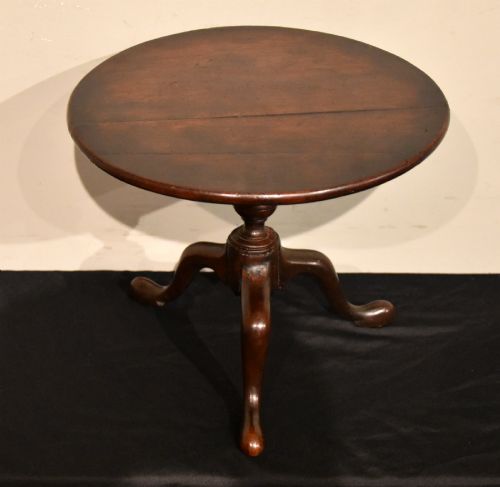
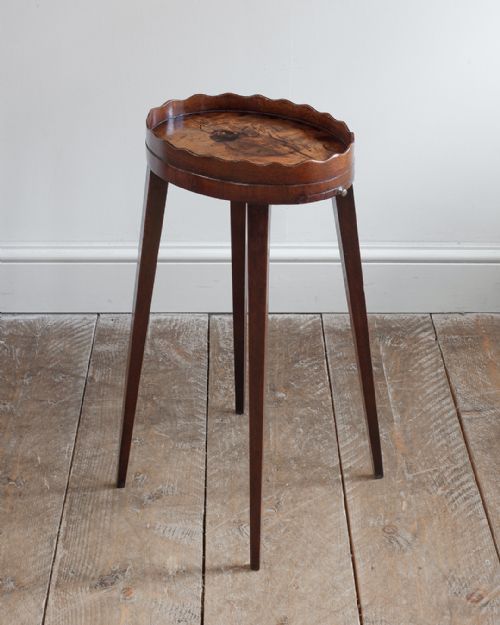
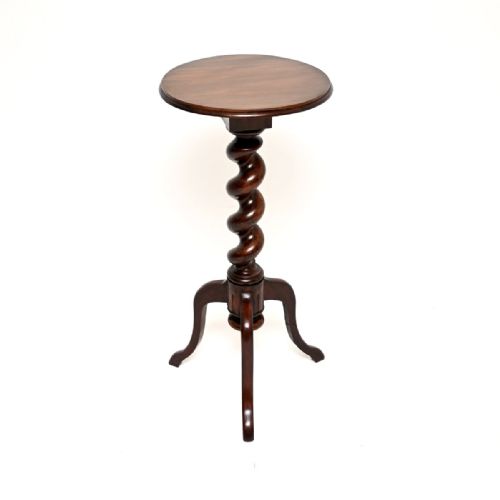
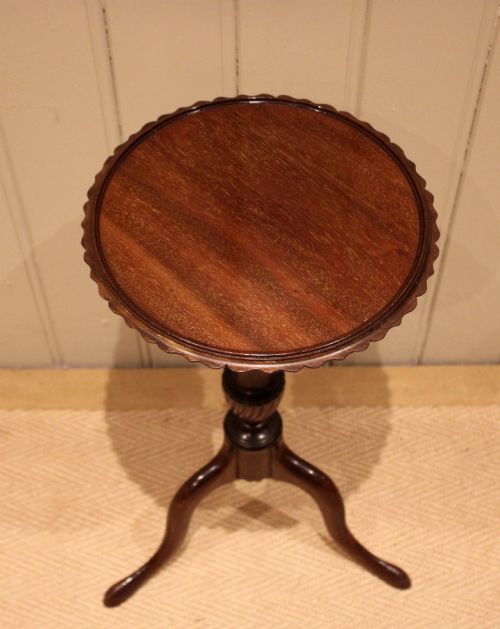
A dark mahogany candle table serves as a portable support for illumination, drinks or small objects, appearing frequently in Georgian, Regency and Victorian forms. These pieces often feature circular tops supported by tripod legs, designed to occupy minimal floor space in domestic interiors.
Buyers will encounter both fixed tops and tilting surfaces, known as snap tops, which allowed tables to stand flat against a wall when not in use. The compact scale remains a defining characteristic across all periods.
How they were made
Cabinetmakers constructed these tables primarily using solid mahogany and rosewood, sometimes accented with cherry wood, walnut, brass fittings and needlepoint textiles. Timber selection favoured dense, dark grain capable of taking a deep polished finish.
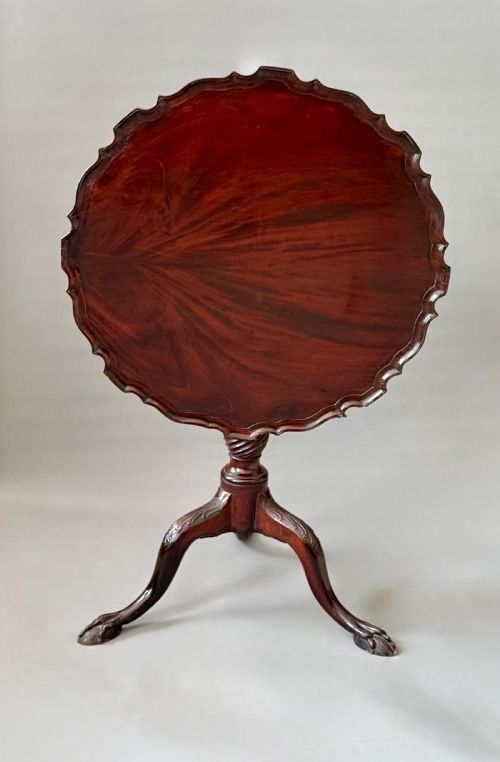
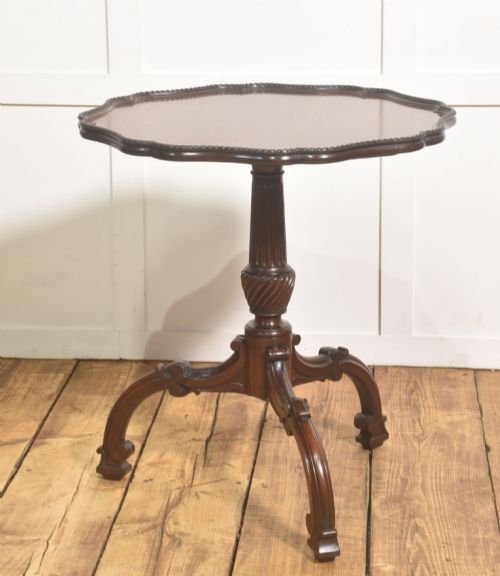
Tripod bases were joined to central pedestals using sturdy turning and tenon techniques to support the weight of the top. Tops were frequently shaped with raised edges such as dishtop, tray top or pie crust rims, carved directly from the solid wood or applied.
Tilt mechanisms utilised simple wooden catches or brass hinges to allow the surface to pivot safely from vertical to horizontal positions.
Listings feature eighteenth-century George III examples alongside nineteenth-century Regency and Victorian interpretations, constructed from mahogany, rosewood and walnut.
What varies in quality
Quality rests upon the crispness of the carving on the tripod legs and the choice of mahogany grain in the top. Superior examples display elegant proportions, subtle peg joinery and patination developed over centuries of polish and use.
The integration of the tilt mechanism and the stability of the central pillar differentiate simpler utility tables from finer parlour pieces. Finer specimens show careful turning on the pedestal shaft and well-formed cabriole legs terminating in pad or claw feet.
Bulstrode Cambridge·Gillow
The Dark Mahogany Candle Table Glossary
- Tripod table
- A small freestanding table supported by a central pillar resting on three legs. This construction ensured stability on uneven historical floorboards.
- Tilt top
- A hinged tabletop that pivots to a vertical position when not in use. It allowed the table to be stored against the perimeter of a room.
- Pie crust rim
- A raised, scalloped edge carved around the circumference of a circular tabletop. The profile resembles the crimped crust of a pastry pie.
- Dishtop
- A circular tabletop with a concave centre depressed below a raised rounded rim. This design helped prevent rolling items from sliding off the edge.
- Snap top
- An alternative term for a tilt top table featuring a spring or latch mechanism to lock the surface horizontal.
Dark Mahogany Candle Table: Frequently Asked Questions
What is a dark mahogany candle table?
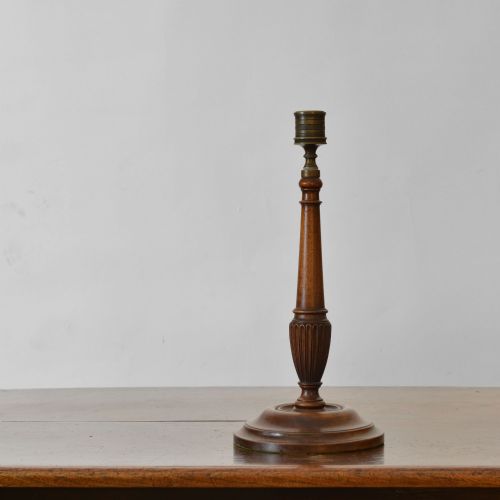
A dark mahogany candle table is a small antique stand designed originally to hold a source of artificial light near a chair or bed. Their compact footprints make them versatile for modern living as accent surfaces beside seating.
Most feature a single central pillar and three legs, allowing the piece to tuck neatly into corners or narrow spaces without obstructing movement through a room.
How were wine tables used?
Wine tables were moved around entertaining rooms to hold glassware, decanters and candles within easy reach of seated guests. Their portability allowed servants to reposition them as needed during evening gatherings.
In contemporary homes, they function well as lamp tables, plant stands or bedside surfaces where space is limited.
How do I date a mahogany table?
Dating relies on examining timber characteristics, construction methods, leg profiles and overall design style. Georgian pieces often display hand-cut joinery and dense, dark mahogany patination, while Edwardian examples show lighter internal construction.
Comparing the turned details on the pillar and the shaping of the feet against known period styles helps narrow the decade of manufacture.