

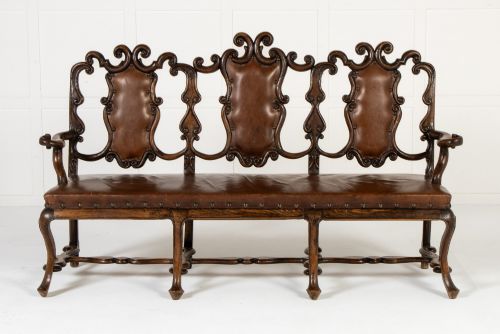


Dark Leather Bench
These dark leather benches offer robust seating in carved oak, walnut, and exotic hardwoods across Victorian and Edwardian periods.
Dark Leather Bench
A dark leather bench brings substantial seating and historic character into a hall, study, or living space. When you search for a dark leather bench, you encounter forms ranging from simple joint stools and ottoman box seats to expansive club fenders and settees. The pieces listed span periods from the mid-nineteenth century through the Edwardian era and into the 1930s.
You are most likely to meet nineteenth-century oak and walnut examples, alongside vernacular country craft items and pieces exhibiting Gothic or Baroque Revival styles. Makers such as Liberty and William Birch appear alongside regional variants including Irish, Italian, and South African stinkwood forms. Each object serves as a functional seat with integrated storage or architectural presence.
The category encompasses specialised items such as leather worker pony benches alongside grand palatial hall seats and club fenders. Materials combine heavy timber frames with patinated leather and brass detailing. These seating options suit domestic interiors requiring strong focal points and durable historic furniture.
Materials and construction
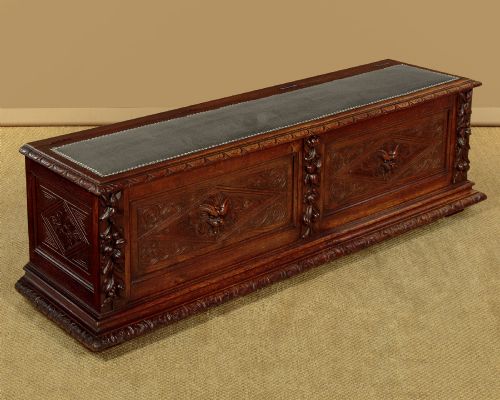
Carpenters utilised solid timbers including oak, walnut, hardwood, and stinkwood to build sturdy foundational frames. Joinery methods relied on traditional techniques such as mortise and tenon joints to ensure long-term stability under heavy use. Carved ornamentation often decorates the wooden panels, arms, and legs of Victorian and revival pieces.
Upholsterers applied dark leather over padding or directly to wooden seats, securing the edges with brass tacks or studs. Club fenders incorporated brass framework alongside leather-topped seating cushions designed for fireside placement. Glass elements occasionally appear in related compartment lids or structural accents.
Dark Leather Bench Retail Price Guide 2026
Typical asking prices for dark leather bench among the pieces listed under this phrase on Sellingantiques today, from the lower quarter to the upper quarter. They describe what is for sale here now, not the wider market.
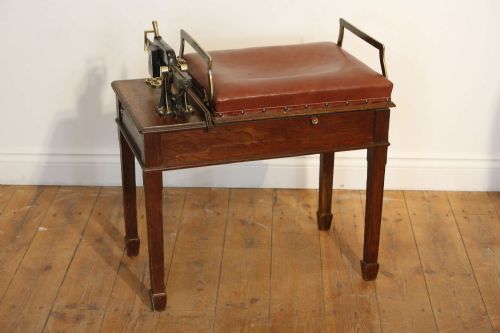
Leather worker pony benches double as charmingly unusual seats, once designed for specialised saddlery tasks.
Factors of quality
Quality rests upon the selection and seasoning of the timber, distinguishing dense native oaks and walnuts from simpler secondary woods. The depth and crispness of the hand-carving define the artistic ambition of the piece, separating standard production from bespoke commissions. Superior joinery ensures the frame remains rigid without excessive modern reinforcement.
The condition and texture of the leather seating surface greatly influence the overall merit of the bench. Original patination and hand-worked brass detailing indicate superior craftsmanship compared to later replacements. Maker attributions, such as Liberty or specific regional origins, elevate the historical importance of the item.
Liberty·William Birch
The Dark Leather Bench Glossary
- Club fender
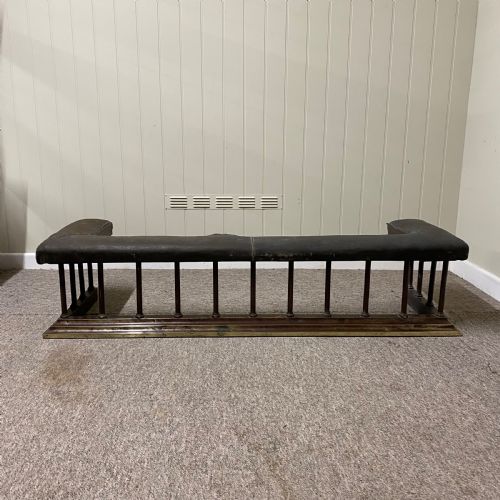
- A low fireside seat with upholstered leather top cushions and an open brass or iron balustrade base. These items allowed people to sit near the hearth while keeping the fire contained.
- Joint stool
- A sturdy wooden seat constructed with pegged mortise and tenon joinery rather than turned legs alone. This form predates simple domestic chairs and offers immense structural durability.
- Settle
- A high-backed wooden bench featuring solid arms and an enclosed base designed to block draughts in older homes. Many examples include hinged seats providing hidden storage compartments.
Dark Leather Bench: Frequently Asked Questions
Where should I place a hall bench?
A hall bench suits entryways, corridors, or large living spaces where it provides both a practical seat and visual weight. Many examples include internal storage compartments suitable for everyday items.
Ensure the room has sufficient clearance to accommodate the substantial depth of carved oak or walnut frames without obstructing doorways.
How do I maintain leather upholstery?
Historic leather requires regular conditioning with specialised balms to prevent drying and cracking over time. Avoid placing these benches in direct sunlight or near active heat sources.
Gentle dusting with a dry cloth preserves the original surface sheen and patination accumulated over the decades.
What is a club fender used for?
A club fender provides perimeter seating around an open fireplace while allowing warmth to circulate through the metal base. The leather cushions offer comfortable resting spots during cooler months.
These pieces typically integrate brass rails and sturdy frames designed to withstand proximity to hearths.
How can I date an oak bench?
Dating relies on examining the construction marks, tool traces, and stylistic indicators such as Gothic Revival or Arts and Crafts motifs. Wood shrinkage and fastener types also offer clues regarding the period of manufacture.
Comparing the joinery methods against documented pieces from the nineteenth and early twentieth centuries helps confirm the era.