



Dark Iron Side Table
A dark iron side table brings heavy metal structure and warm timber grain into a room, offering sturdy utility with historic character.
Dark Iron Side Table
A dark iron side table combines durable metal framing with timber or marble tops, fulfilling a practical need for surface space while anchoring a room with industrial or rustic weight.
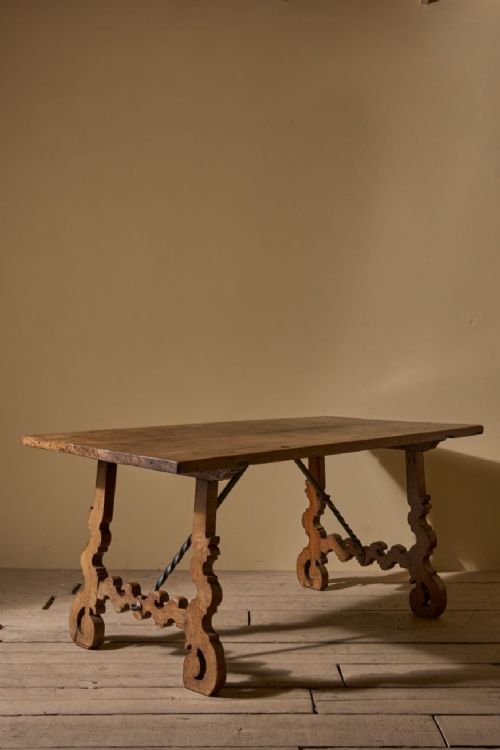
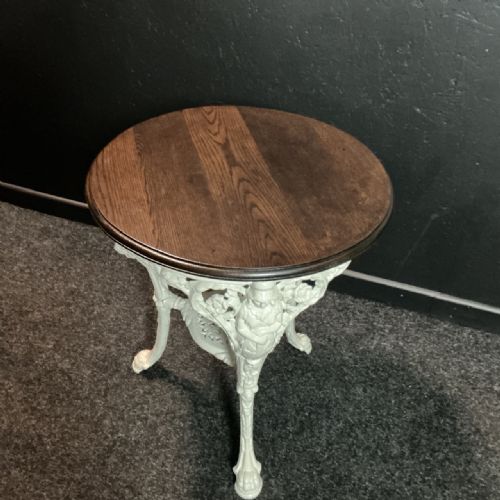
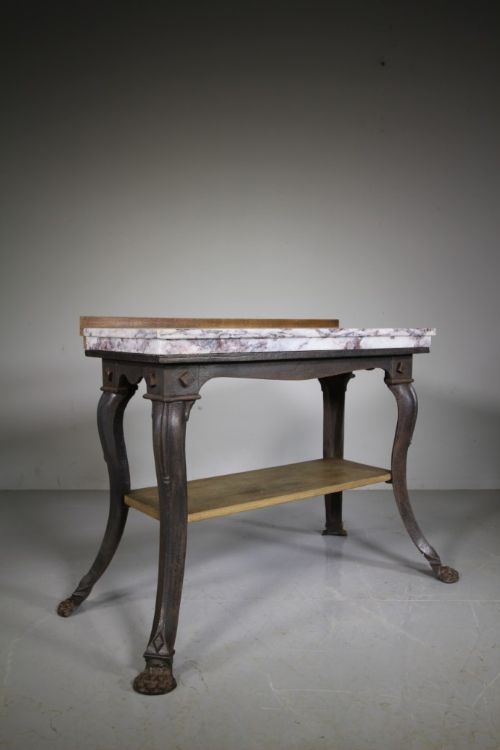
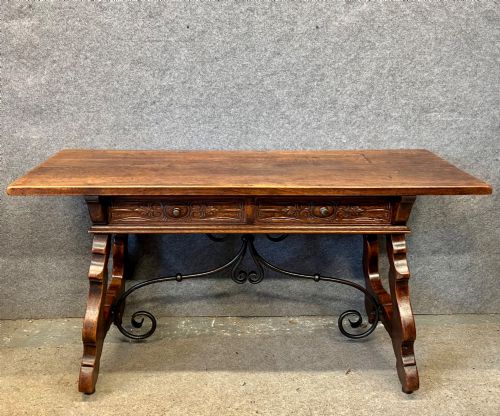
The versions met most frequently on this page span several centuries, combining cast or wrought iron with materials such as walnut, oak, and marble.
Makers produced these forms for diverse domestic and commercial settings, ranging from Spanish provincial homes to Victorian British pubs and French interiors.
Materials and construction
Smiths and founders worked iron into solid cast structures with scroll work or tripod supports, as well as forged wrought iron frames.
Joiners and cabinetmakers paired these metal bases with dense hardwoods like walnut and oak, occasionally adding marble surfaces for hardwearing utility.
One unexpected survivor on the list is a sewing machine cabinet that conceals its industrious past beneath a polished walnut veneer.
Assessing quality
Quality rests upon the proportion between the metal base and the timber top, where finer examples display harmonious balance rather than crude assembly.
The integrity of the surface patination and the crispness of the iron casting separate ordinary utility pieces from those retaining strong regional character.
The Dark Iron Side Table Glossary
- Wrought iron
- Iron that has been heated and worked with tools by a smith rather than cast in a mould. This process yields a fibrous structure visible in the finished surface.
- Cast iron
- Molten iron poured into a sand or metal mould to form intricate shapes. It provides rigidity and allowed Victorian makers to produce elaborate scroll work.
- Patina
- The surface sheen and colour developed through age, handling, and use. Good patina shows the natural softening of timber and metal over generations.
- Tripod base
- A support structure resting on three legs. This design ensures stability on uneven historic floors.
Dark Iron Side Table: Frequently Asked Questions
How do I clean a dark iron base?
Dust the iron regularly with a dry cloth to prevent grime accumulation. Avoid harsh chemical cleaners that strip the historic finish.
Apply a light microcrystalline wax sparingly if the metal requires protection against moisture in the room.
Are these tables sturdy enough for daily use?
Most examples utilise heavy iron frames combined with dense timbers like oak and walnut. This construction provides exceptional weight and stability for everyday placement.
Ensure the joints between the top and the metal base remain secure before placing heavy items upon the surface.
Can I place a marble top table outside?
Historic tables featuring iron and marble were built for indoor domestic or commercial environments. Frost and severe weather can damage vulnerable timber components and iron fixings.
Keep these pieces inside where temperature fluctuations remain moderate to preserve the original materials.
How do I identify the period of an iron table?
Examine the casting techniques and the joinery of the wooden elements where applicable. Earlier pieces often display hand-forged wrought iron or pegged timber construction.
Compare the overall design proportions and regional styles, such as Spanish baroque or Victorian scroll work, against known historical baselines.