

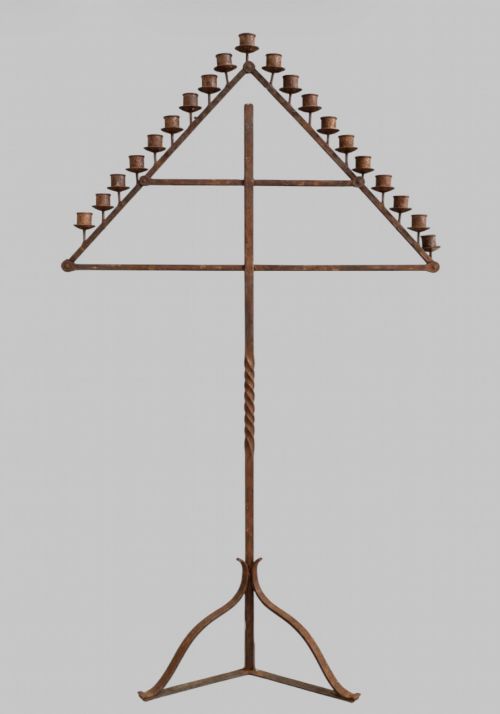


Dark Iron Light Stand
These dark iron light stands bring robust metalwork and height to a room, offering functional illumination through centuries of candle and lamp design.
Dark Iron Light Stand
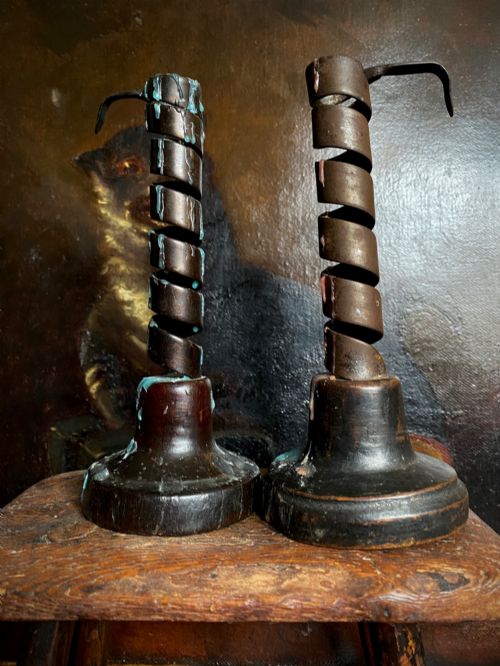
A dark iron light stand spans several centuries of floor lamps, candlesticks, and torcheres designed to elevate a light source within a room. You will frequently encounter wrought iron and cast iron pieces spanning from the eighteenth century through the Art Deco period.
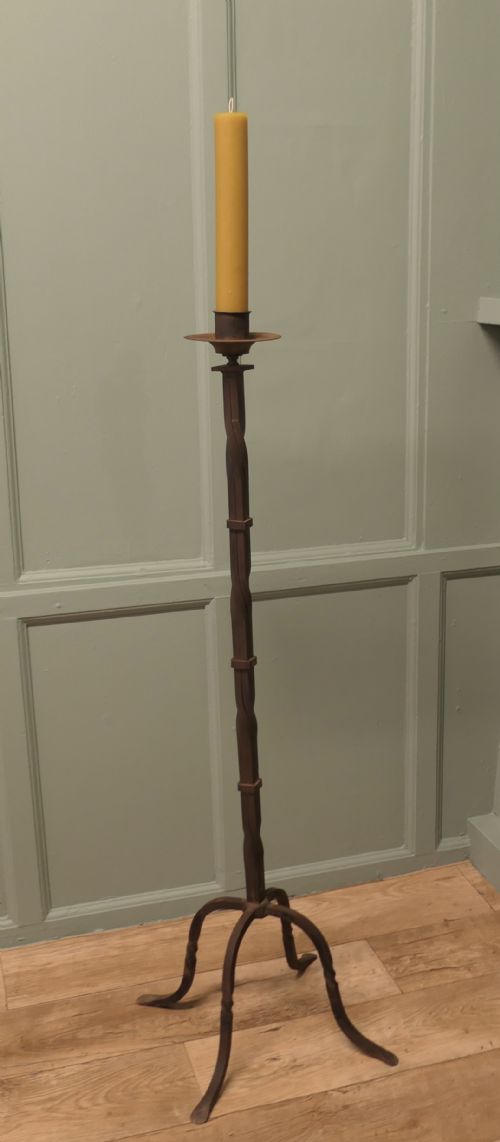
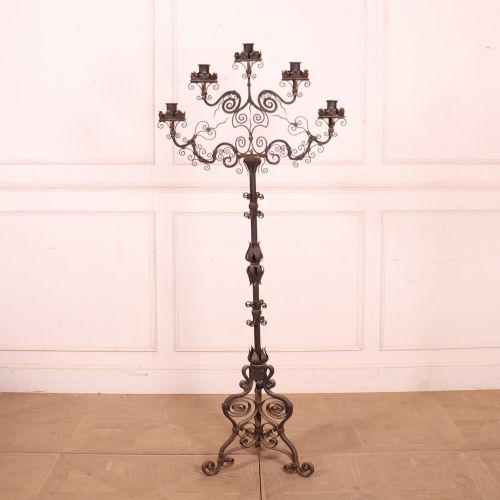
The forms range from architectural multi-candle floor candelabras and Italian altar pieces to adjustable standard lamps and tall lantern stands. These objects combine utilitarian metalwork with stylistic influences from Gothic Revival, Victorian Neoclassical, and Secessionist designs.
Makers utilised heavy iron alongside brass and bronze patination to create imposing floor standing holders and table pieces. Surviving examples demonstrate how lighting evolved from early rush lights and candles to gas and electrical standards.
How dark iron light stands were made
Blacksmiths forged wrought iron by hand, heating and hammering the metal to shape twisted stems, adjustable arms, and sturdy bases. Cast iron components offered intricate surface detail through mold-pouring, often finished with a bronze patina or combined with hardwood elements.
Artisans incorporated brass details and secondary metals into trench art and Secessionist pieces, merging structural iron strength with decorative warmth. Surface finishes developed naturally through age, preserving the raw texture of hammered metal or the smooth dark skin of patinated castings.
Dark Iron Light Stand Retail Price Guide 2026
Typical asking prices for dark iron light stand among the pieces listed under this phrase on Sellingantiques today, from the lower quarter to the upper quarter. They describe what is for sale here now, not the wider market.
Some trench art candlesticks repurposed battlefield scrap metal into domestic illumination.
What varies in quality
The distinction between ordinary and exceptional ironwork lies in the fluidity of the forging and the crispness of the cast details. Superior pieces display purposeful proportion and balanced weight, where structural iron supports decorative elements without clumsiness.
Original surface patination and untouched construction methods elevate a stand above later adaptations or marriages of components. Fine examples retain their original mechanical adjustments and period fixings, showing the hand of the maker clearly in every joint.
Hugo Berger Goberg
The Dark Iron Light Stand Glossary
- Torchere
- A tall stand designed to support a light, typically a candle or lamp, originating in the seventeenth century. These tall supports elevate illumination to eye level.
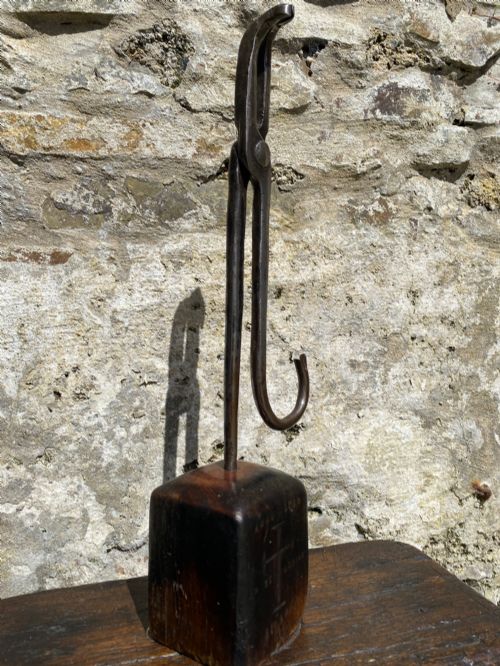
- Rush light
- A simple lighting device utilising a rush soaked in fat held by metal jaws on a spring arm. Welsh examples demonstrate this traditional method of domestic illumination.
- Secessionist
- A design movement from the late nineteenth and early twentieth centuries characterised by geometric forms and stylised motifs. Hugo Berger workshop pieces often display this aesthetic.
- Wrought iron
- Iron that has been heated and worked with tools by a blacksmith, showing distinctive hammer marks. This material provides high tensile strength for slender stems and scrollwork.
Dark Iron Light Stand: Frequently Asked Questions
How do I clean dark iron light stands?
Maintenance requires only a soft cloth to remove dust, preserving the historical surface patina. Avoid liquid cleaners that might strip the aged finish from the metal.
Keep ironwork dry to prevent oxidation, applying a light coat of microcrystalline wax if the metal requires protection.
Were these stands used with candles or electricity?
Most early examples were engineered specifically for tallow candles, rush lights, or gas jets. Later standard lamps incorporated wiring for electric bulbs as domestic technology shifted.
Conversion for modern electrical use is common in nineteenth and twentieth-century floor lamps while retaining the original iron silhouette.
How can I tell an eighteenth-century stand from a Victorian one?
Earlier pieces often show hand-forged wrought iron construction with simpler, utilitarian lines designed for rush lights or candles. Victorian and later examples frequently utilise cast iron with heavier decorative motifs drawn from classical or Gothic revivals.
Examining the construction joints and fastener types helps clarify the manufacturing period.
Where should I place a floor candelabrum in a room?
Tall architectural stands suit corners or empty wall spaces where their vertical presence adds structure. They function well as statement pieces that draw the eye upward.
Ensure adequate clearance around freestanding candle holders to maintain safety and visual balance.