





Dark Brown Mantel Clock
These dark brown mantel clock pieces bring rich timber tones and precise timekeeping to a room, offering both practical utility and decorative presence.

Dark Brown Mantel Clock
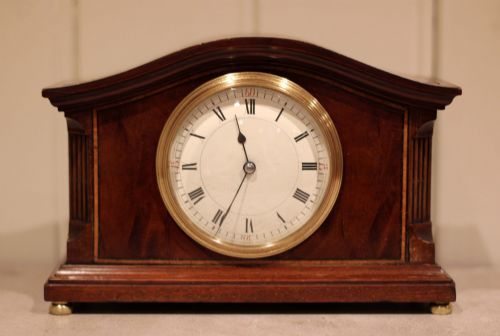
A dark brown mantel clock provides a dependable timepiece housed in a rich wood case designed to sit upon a shelf or fireplace surround. These items span periods from the Georgian era through to the mid-twentieth century, utilising timber frames and classic dial faces.
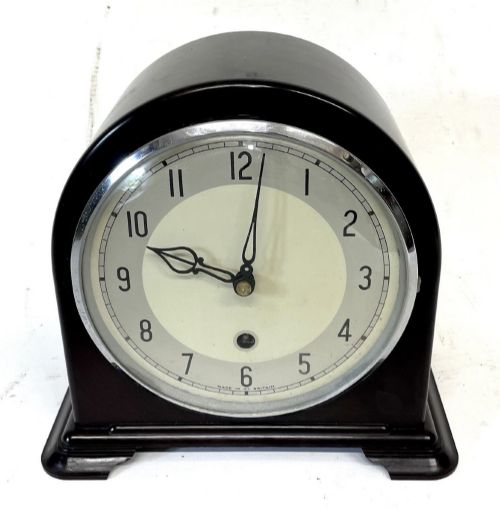
You will encounter mahogany, kingwood, rosewood, and coromandel cases alongside carved wood Black Forest designs and utilitarian Bakelite office models. The selection ranges from architectural portico clocks to bracket clocks and simple library timepieces.
How they were made
Cases rely on dense timbers such as mahogany, rosewood, and kingwood, often shaped into bracket, portico, or dome-topped silhouettes. Carved wood examples utilise traditional regional woodworking techniques to achieve intricate architectural and naturalist detailing.
Internal movements are paired with brass bezels, glass viewing panels, and silvered or enamel dials. Later twentieth-century examples incorporate moulded Bakelite alongside metal components for robust utility.
Dark Brown Mantel Clock Retail Price Guide 2026
Typical asking prices for dark brown mantel clock among the pieces listed under this phrase on Sellingantiques today, from the lower quarter to the upper quarter. They describe what is for sale here now, not the wider market.
Listings span the Georgian period, the nineteenth century, and mid-century Bakelite manufacturing.
What varies in quality
The sophistication of the timber veneer and the precision of the case joinery distinguish finer examples from standard production pieces. Figured mahogany, rich coromandel, and delicate brass inlay elevate the decorative impact of a dark brown mantel clock.
The refinement of the dial execution, whether engraved silvered metal or crisp enamel, reflects the standard of the maker's workshop. Complex movements such as fusee mechanisms or striking trains further separate standard timepieces from high-grade commissions.
Bush of London·Turner of London·William Comyns·Brockbanks of London·Blangy
The Dark Brown Mantel Clock Glossary
- Bracket clock
- A portable timekeeper originally designed to sit on a wall bracket. These substantial pieces typically feature fine wood cases and brass carrying handles.
- Fusee
- A conical pulley connected to the mainspring by a chain or cord. This device ensures even tension as the spring unwinds, improving timekeeping accuracy.
- Portico clock
- A mantel clock styled after classical architectural porticos with supporting columns. They often showcase rich wood veneers and silvered dials.
- Bakelite
- An early form of synthetic plastic used for clock cases from the mid-twentieth century onwards. It offers a smooth dark finish and durable construction.
Dark Brown Mantel Clock: Frequently Asked Questions
Where should I place a dark brown mantel clock?
These clocks find a natural home on a mantelpiece, sideboard, or sturdy desk where their rich wood tones can complement surrounding furniture. Ensure the surface is level to keep the pendulum or movement running reliably.
Keep the clock away from direct heat sources and strong drafts to protect the antique wood veneers and internal brass mechanics over time.
How do I wind a mechanical mantel clock?
Most mechanical examples require a key inserted into the dial holes to tension the mainspring. Turn the key gently until you feel firm resistance, avoiding overwinding.
Different movements require different intervals, with eight-day designs needing attention far less frequently than daily timepieces.
What is a fusee movement?
A fusee is a mechanical device that regulates the pull of the mainspring to ensure steady power delivery. It uses a grooved cone and a fine chain to maintain equal force as the spring runs down.
This system is a hallmark of better-quality British clockmaking found in many bracket and library clocks.
How do I tell a Georgian clock from a Victorian one?
Georgian pieces often display restrained classical proportions, flame mahogany veneers, and subtle brass mounts. They prioritise elegant architectural lines over heavy ornamentation.
Victorian and later nineteenth-century examples frequently embrace bolder carving, architectural portico styles, or more elaborate regional woodworking traditions like those from the Black Forest.