


Dark Brown Keepsake Box
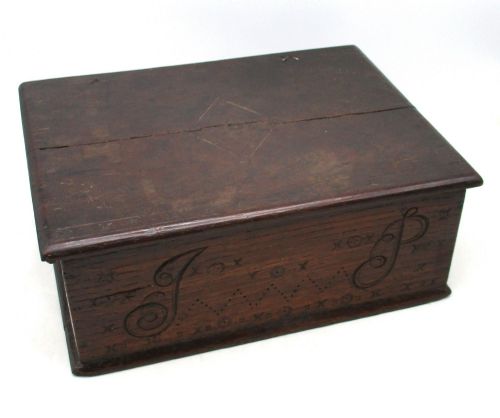
These dark brown keepsake box pieces are solid timber caskets, leather-bound chests and small storage boxes designed to hold valuables and documents.
Dark Brown Keepsake Box
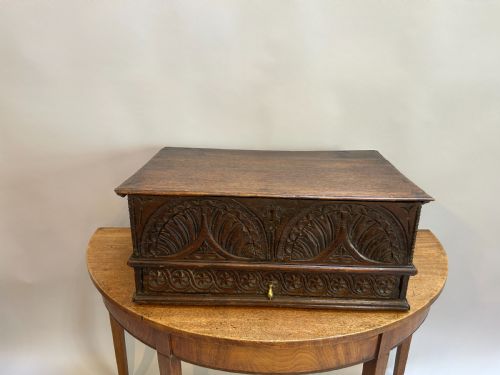
A dark brown keepsake box covers a range of compact wooden chests, leather-bound caskets and lidded storage pieces designed for small valuables, letters and documents. The selection spans sturdy oak Bible boxes and document chests from the seventeenth and eighteenth centuries alongside nineteenth-century rosewood work boxes and mahogany storage pieces.
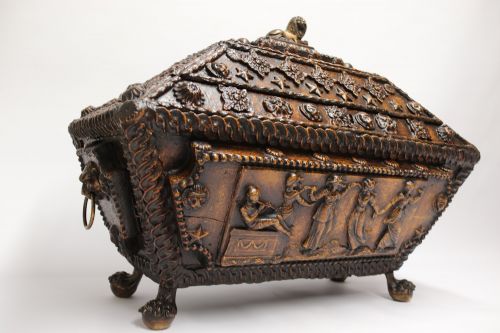
Buyers will most frequently encounter nineteenth-century examples in rosewood, oak and leather, alongside earlier seventeenth- and eighteenth-century carved oak table boxes. These range from small lidded caskets and tea caddies to larger sarcophagus-shaped jewellery boxes and faux book containers.
Materials and construction
The construction relies heavily on native and exotic timbers such as oak, mahogany and rosewood, frequently joined with traditional cabinetry techniques. Many pieces incorporate decorative surface treatments including gesso, paint and gold leaf, complemented by brass mounts and hinges.
Several variations utilise specialised coverings and inlays, combining leather binding with rosette-shaped brass mounts, claw and ball feet, or mother of pearl details set directly into the timber.
Listings feature oak, rosewood and mahogany pieces spanning from the seventeenth century through to the Edwardian period.
Quality and craftsmanship
Quality rests in the precision of the timber carving, the integrity of the joinery and the selection of materials such as heavily grained rosewood or finely figured oak. Finer boxes display well-executed decorative details, including precise gesso work, gilt decoration and well-fitted internal compartments.
The sophistication of the hardware and locking mechanisms also distinguishes better examples, from simple spring-loaded latches to substantial cast metal mounts and decorative brass feet that remain original to the piece.
The Dark Brown Keepsake Box Glossary
- Bible Box
- A small wooden desk box or chest originally constructed to hold a family Bible. These pieces typically feature a sloping or flat lidded top and date from the seventeenth and eighteenth centuries.
- Tea Caddy
- A lidded container built to store loose tea leaves securely. In nineteenth-century examples, these often feature internal compartments and rosewood construction.
- Sarcophagus-Shaped
- A container design featuring a stepped or domed lid and flared sides resembling a classical stone coffin. This form appears frequently in Regency and William IV jewellery boxes.
- Gesso
- A plaster-like material applied to wood surfaces as a smooth base for painting and gilding. It allows for intricate decorative relief work on casket exteriors.
Dark Brown Keepsake Box: Frequently Asked Questions
What were dark brown keepsake boxes used for originally?
These boxes served multiple domestic purposes, primarily holding valuable documents, letters, jewellery and small personal items. Many functioned as portable storage for writing materials or household accounts.
Larger versions accommodated family Bibles or needlework supplies, while specialised forms like tea caddies kept expensive commodities secure under lock and key.
How do I date a wooden storage box?
Dating relies on examining the timber species, construction methods, joinery and decorative motifs. Eighteenth-century and earlier pieces usually feature heavy oak with hand-carved details and forged iron hardware.
Later nineteenth-century examples introduce exotic woods like rosewood, more refined brass mounts, and internal silk or velvet linings suited for jewellery.
Are these boxes suitable for daily use?
Most antique boxes function well for modern storage of small keepsakes, desk accessories or trinkets. Their sturdy wooden construction and lidded designs keep contents protected.
Care should be taken with delicate finishes, internal paper linings, and working locks on historical pieces to preserve their original condition.
What is the difference between a work box and a tea caddy?
A work box contains internal compartments and trays designed specifically for sewing equipment, threads and needlework tools. These often incorporate mirrors or velvet-lined trays.
A tea caddy is structured internally to hold dry tea leaves, frequently featuring fitted canisters or foil-lined compartments to maintain freshness.