



Dark Bronze Mantel Urns
These dark bronze mantel urns bring neoclassical gravity and patinated weight to an interior, channelling antique forms through nineteenth-century foundry work.
Dark Bronze Mantel Urns
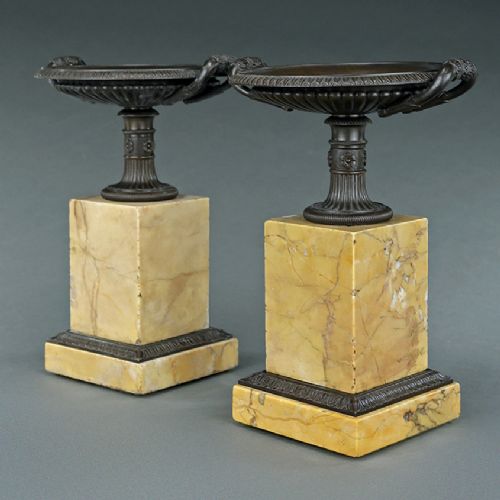
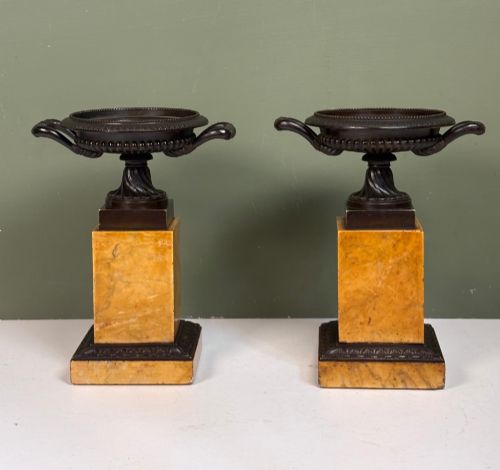
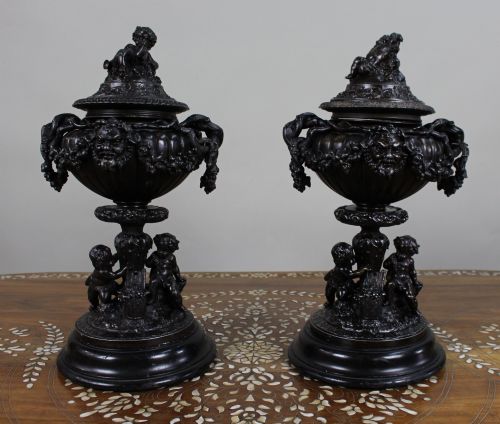
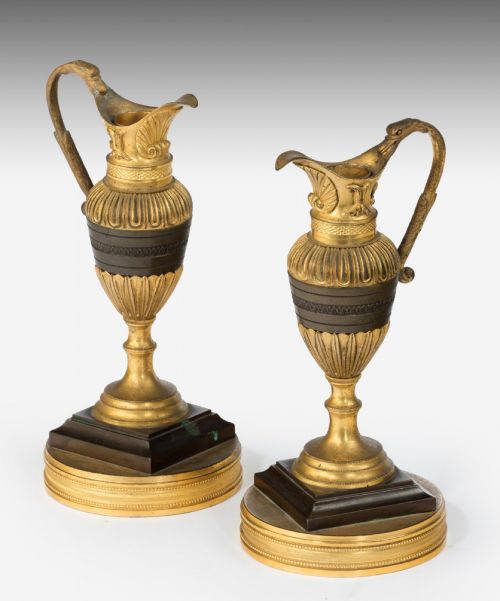
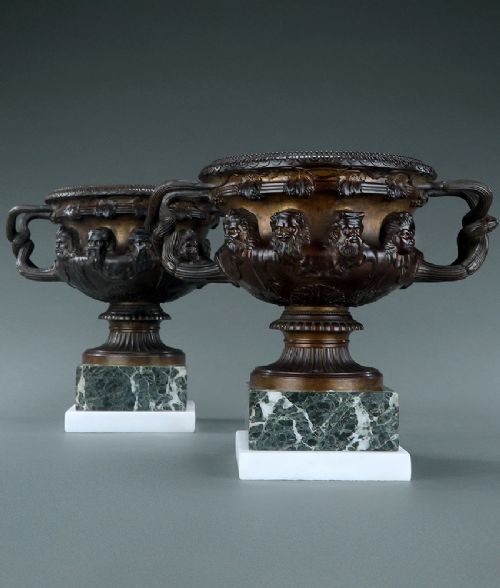
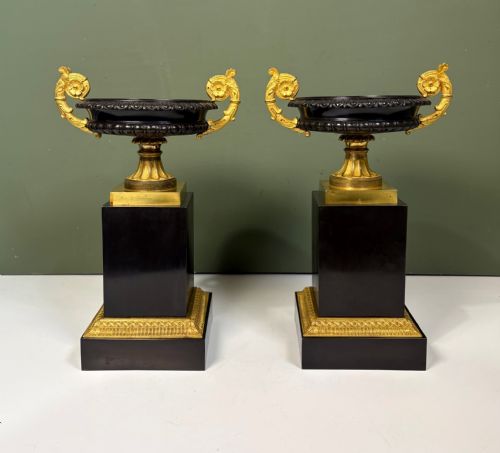
When you search for dark bronze mantel urns, you encounter decorative vessels shaped by nineteenth-century tastes for classical antiquity. The examples on this page span the Regency period through the late nineteenth century, taking forms such as campana urns, tazzas, cassolettes, and ewers.
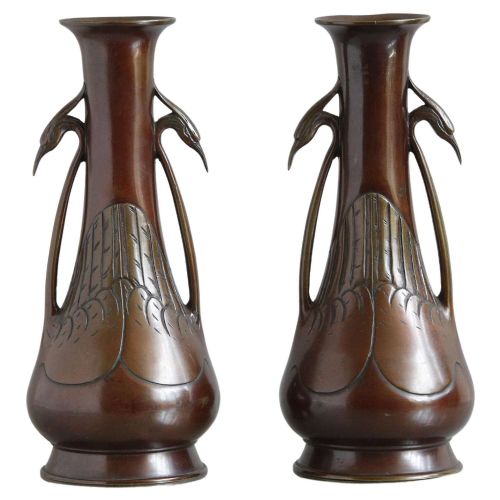
French and Italian workshops predominate, alongside Japanese Meiji period bronzes produced for Western export. You will frequently find pairs mounted on marble plinths or incorporating ormolu mounts, reflecting Grand Tour influences and classical revival styles.
How they were made
Foundries utilised traditional casting techniques in bronze, patinated bronze, and bronzed spelter to shape these vessels. Molten metal was poured into moulds, then chased and finished by hand to define sculptural details such as Bacchic masks, putti, and handles.
Many pieces combine dark bronze bodies with contrasting ormolu mounts, gilt bronze highlights, or carved marble plinths and green marble sections. This combination of cast metal and stone created the architectural presence demanded by nineteenth-century mantelpieces.
Japanese Meiji period bronzes appear alongside European Grand Tour reductions of classical antiquities such as the Albani Vase.
What varies in quality
The distinction between ordinary production and superior work lies in the crispness of the chased detail and the depth of the metal patination. Finer castings preserve the sharpness of classical foliage, masks, and figures without softening during the finishing process.
Material integration also separates the range, where heavy marble bases, well-fitted ormolu mounts, and substantial bronze weight indicate higher workshop standards. Lighter substitutes such as spelter demonstrate a different tier of nineteenth-century manufacturing.
The Dark Bronze Mantel Urns Glossary
- Campana urn
- A bell-shaped vessel with an everted rim, rising from a pedestal foot, modelled after ancient Roman garden vases. This form is common among nineteenth-century mantel ornaments.
- Cassolette
- A decorative vase featuring a reversible lid that transforms the vessel from an urn into a burner or holder. They frequently appear in bronze paired with marble plinths.
- Ormolu
- Gilt bronze mounts applied to furniture and decorative objects to provide contrast and ornamental detail. The technique involves coating bronze with a gold amalgam.
- Tazza
- A shallow bowl or cup mounted on a stem and foot, originating from classical glassware and pottery. Nineteenth-century examples often translate this shape into cast bronze.
- Spelter
- A zinc alloy used as a less expensive substitute for bronze in nineteenth-century decorative castings. It is often patinated to resemble darker metals.
Dark Bronze Mantel Urns: Frequently Asked Questions
What is a mantel urn?
A mantel urn is a decorative vessel designed to sit upon a fireplace mantel or shelf, taking inspiration from classical antiquity. Nineteenth-century makers produced these pieces in bronze, marble, and spelter to serve as architectural ornaments.
Such objects often came as pairs or as part of a garniture set flanking a clock. Their designs drew heavily on archaeological discoveries and Grand Tour souvenirs.
How do I identify a Regency bronze urn?
Regency period urns typically date from the early nineteenth century and display strict neoclassical restraint. They rely on clean classical proportions, dark patinated bronze surfaces, and sparing use of ormolu mounts.
Later Victorian interpretations often adopt more exuberant Renaissance revival or French styles with heavier ornamentation. Examining the base construction and mounting helps establish the manufacturing period.
Where were these urns made?
The pieces listed originate primarily from European foundries in France and Italy, reflecting the aesthetic of the Grand Tour. Japanese workshops also produced bronze vases during the Meiji period for the Western export market.
European makers drew on classical models found in Italian collections, adapting ancient forms for nineteenth-century domestic interiors.
How should I clean bronze urns?
Bronze objects require gentle dusting with a soft, dry cloth to protect the historic patina. Avoid commercial metal polishes, which can strip away original patination and damage chemical finishes.
If the piece incorporates marble bases, keep moisture away from the stone to prevent staining. Professional conservation is recommended for any deeper cleaning.