
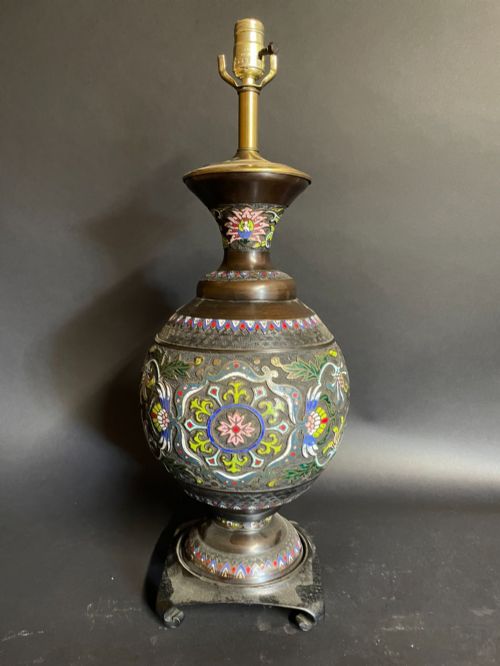


Dark Bronze Floral Vase
A dark bronze floral vase brings rich metallic weight and botanical motifs into a room, offering an enduring centrepiece for any collector.
Dark Bronze Floral Vase
The most common examples on this page date from the Victorian era and the Meiji period, reflecting a strong cross-cultural exchange of design during those decades. These pieces take various forms, from slender baluster urns to mixed metal posy vases designed to hold stems or simply stand alone as decorative objects.
How they were made
Makers utilised bronze, brass, and copper, often combining them through mixed metal techniques to create contrasting tones across the surface of the vessel. Cloisonné enamel and gilding frequently appear alongside the dark metal body, adding vibrant colour accents to the floral motifs.
Artisans applied raised detail and patination to achieve the characteristic deep, dark finish, occasionally incorporating signatures or marks from the workshop directly into the cast bronze.
What varies in quality
The distinction between standard production and superior work lies in the crispness of the raised floral detail and the depth of the dark bronze patination. Finer examples display meticulous mixed metal inlay and balanced proportions that catch the light evenly across the body.
Pairs and signed pieces command greater attention from collectors because the casting and finishing require uniform skill across multiple vessels, whereas lesser items show simple surface treatment without the same intricacy of hand-finishing.
Charles Korschann
The Dark Bronze Floral Vase Glossary
- Baluster
- A vertical architectural form with a swelled base that tapers upward, frequently seen in the silhouette of these vases. This shape provides stability and a pleasing weight to the vessel.
- Patination
- The natural or chemical ageing of a metallic surface that produces a dark, lustrous skin over the bronze. It enhances the visual depth of the floral details.
- Cloisonné
- An ancient technique where enamel paste is applied within wire compartments soldered to a metal base. Firing fuses the coloured glass to the dark bronze frame.
- Mixed metal
- The practice of combining contrasting metals such as copper, brass, and bronze within a single design. This method highlights specific elements of the floral decoration.
Dark Bronze Floral Vase: Frequently Asked Questions
What is a dark bronze floral vase?
A dark bronze floral vase is a cast metal vessel decorated with plant motifs, originating predominantly from late nineteenth-century European and Japanese makers. They combine heavy metallic forms with intricate surface detailing.
These pieces were produced to display cut stems or to serve purely as decorative ornaments within domestic interiors, reflecting the aesthetic tastes of the Victorian and Meiji periods.
How do I style a bronze vase?
Living with these pieces involves placing them on sturdy surfaces where their dark patination and metallic sheen can catch natural light. They suit both traditional and eclectic modern interiors.
Parks of dried botanicals or single stems complement the floral designs, though many collectors prefer to display them empty to appreciate the craftsmanship of the metalwork.
Are these vases signed?
Some pieces feature artist signatures or workshop marks cast directly into the bronze base or body, particularly those originating from Japanese Meiji period foundries. These inscriptions help identify the origin of the work.
Unsigned pieces remain common and are judged entirely by the quality of their casting, patination, and decorative detail rather than a maker's mark.
How do I date an antique bronze vase?
Dating relies on stylistic clues such as the presence of Art Nouveau curves, Meiji period iconography, or Victorian decorative conventions. The manufacturing techniques and the nature of the bronze patination also offer clear chronological markers.
Comparing the methods of construction with documented pieces from the late nineteenth and early twentieth centuries helps narrow down the period of origin.