


Dark Academia Portrait Painting
A dark academia portrait painting brings heavy shadows and solemn historic gravitas to a room, offering the moody atmosphere collectors seek.
Dark Academia Portrait Painting
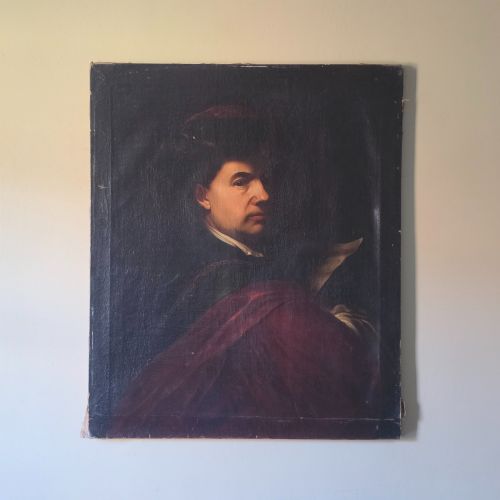
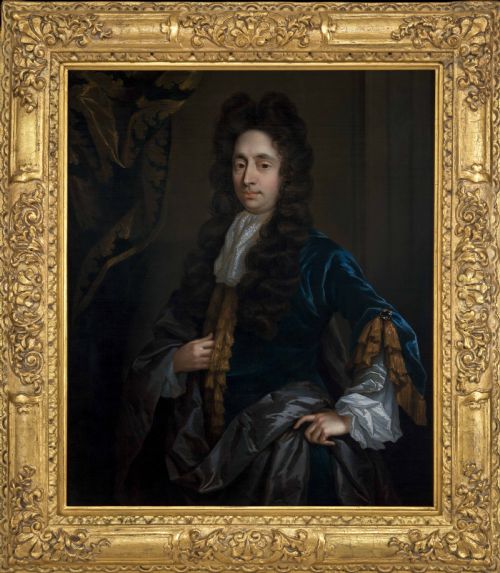
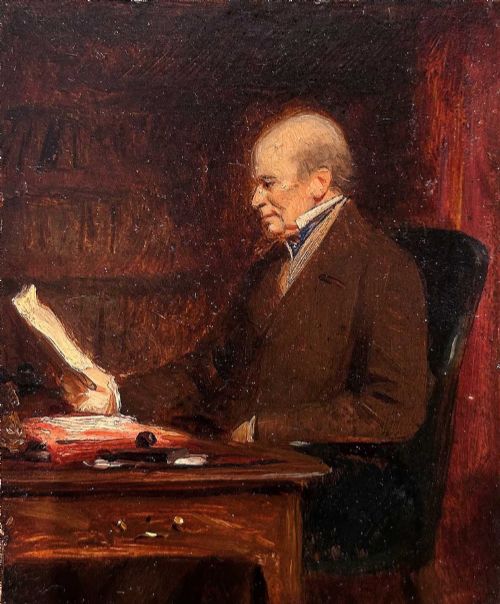
A dark academia portrait painting captures solemn sitters, dramatic chiaroscuro, and historic subjects suited to a moody scholarly interior. When exploring this phrase, buyers encounter traditional oil paintings on canvas and wood panels depicting gentlemen, scholars, and historic figures from various centuries. These works stem from diverse origins including English, Scottish, Dutch, German, and Austrian schools, spanning periods from the seventeenth century through the Victorian era.
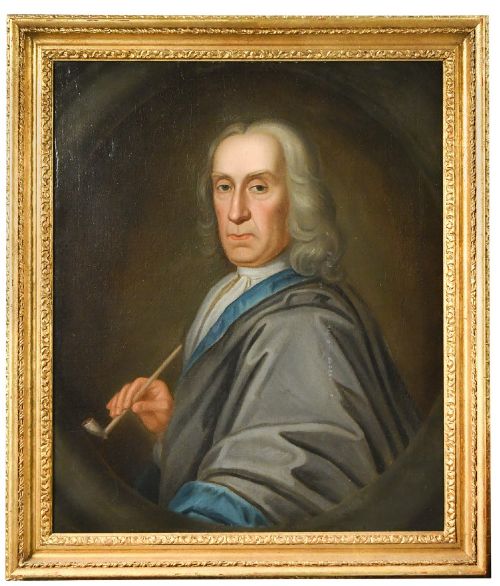
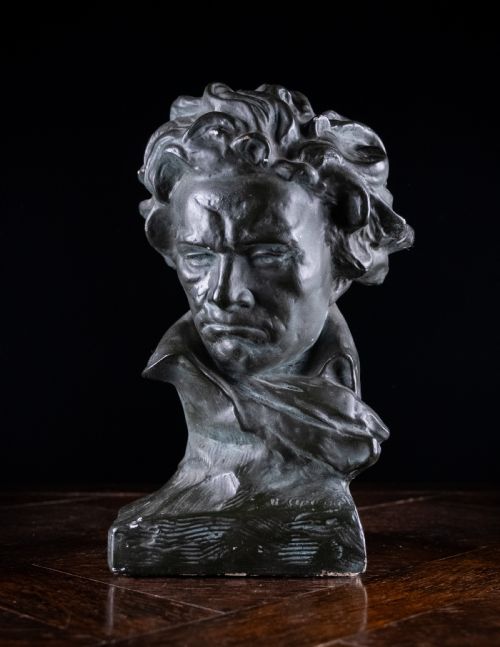
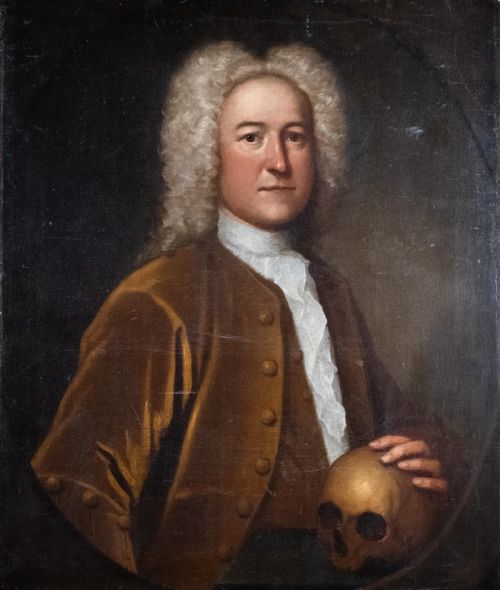
The subjects frequently include gentlemen holding pipes or skulls, clerics, scientists, and figures set against dark backgrounds or paneled interiors. Alongside standard canvas works, variations include oil on copper, framed box mounts, and painted plaster busts sharing the same sombre aesthetic. Collectors find pieces attributed to specific historical schools as well as naive folk art interpretations.
The visual weight of these pieces relies on dark palettes, muted tones, and aged varnishes that accumulate over centuries. Choosing a dark academia portrait painting establishes an anchor for a study, library, or hallway dominated by rich wood and tactile fabrics.
Materials and Construction
Artists painted primarily with oil paint on stretched canvas, wooden boards, or copper plates, building rich layers of pigment to achieve deep shadows. Canvases were secured to wooden stretchers and occasionally housed within heavy gilded wood frames enriched with gesso or gold leaf.
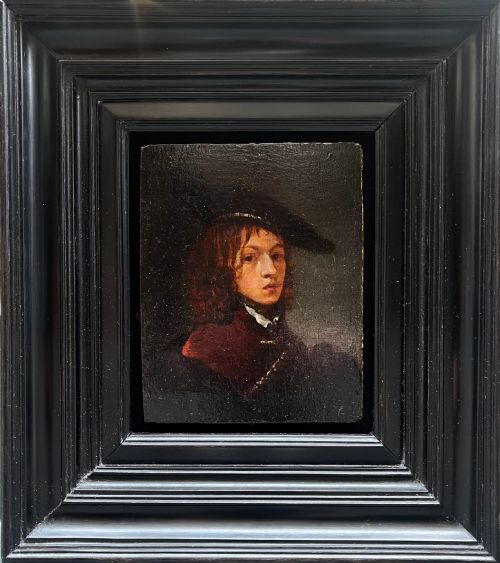
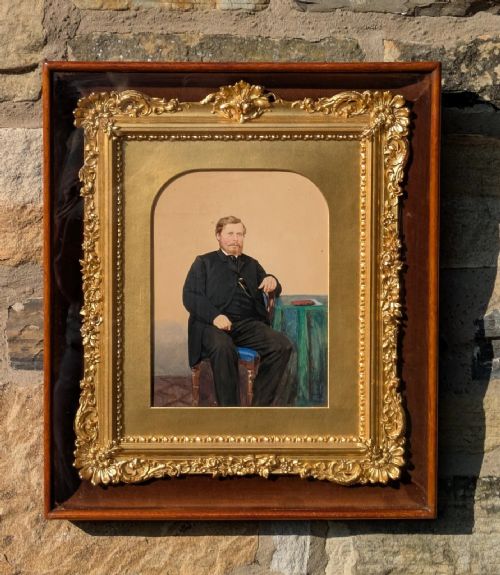
Framing often involves deep glazed box mounts or ornate Victorian gilt frames that complement the heavy atmosphere of the oil paintings. The physical support materials show age through craquelure in the oil paint and oxidation in the underlying media.
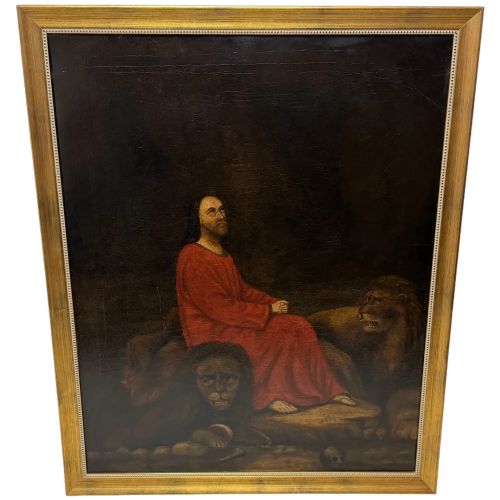
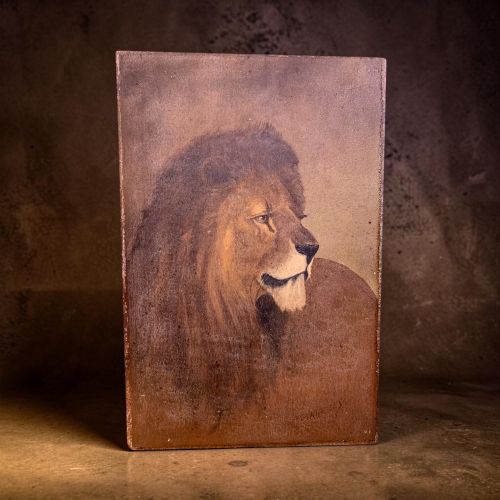
Several gentlemen in the collection bring their pipes, books, skulls, and a pet lion to pose for posterity.
Assessing Quality and Execution
The quality of a dark academia portrait painting rests on the anatomical precision of the hands and face, the handling of light, and the depth of the background glazes. Masterful works capture psychological intensity and lifelike texture in fabrics like ruffs, velvet, and black tie.
Condition plays a role in evaluation, distinguishing untouched original surfaces from heavy later restorations or overpainting. The execution of the surrounding frame, whether an original period giltwood moulding or a later replacement, contributes to the overall integrity of the piece.
Stephen Pearce·Herbert Butler·James Archer·George Dowdney·John Scougall·Stephen Taylor·Otto Rothenburgh·Lemuel Francis Abbott
The Dark Academia Portrait Painting Glossary
- Chiaroscuro
- The use of strong contrasts between light and dark to give a three-dimensional volume to figures. This technique defines the moody atmosphere of many academic portraits.
- Craquelure
- A network of fine cracks in the surface paint or varnish of an oil painting. This ageing process indicates the natural drying and shifting of historic materials over centuries.
- Gesso
- A plaster mixture used as a smooth base for painting or applied to wood frames before gilding. It provides a durable foundation for intricate decorative mouldings.
- Ruff
- A voluminous pleated collar worn in European fashion during the sixteenth and seventeenth centuries. Its appearance helps date early portraits of gentlemen.
- Provenance
- The documented history of ownership of an antique object. A clear history adds context to academic portraits and verifies their age.
Dark Academia Portrait Painting: Frequently Asked Questions
How do I date a dark academia portrait painting?
Dating relies on the style of clothing, hair, and collars worn by the sitter, along with construction methods of the canvas stretcher and frame. Material analysis of the wood, canvas, and oil paint further narrows the period.
Secondary clues include handwritten inscriptions on the reverse, artist signatures, and historical records linking the sitter to a specific century.
What is Dutch Golden Age style?
The Dutch Golden Age style reflects seventeenth-century painting traditions characterised by dramatic lighting, realistic rendering of textures, and restrained, dark colour palettes. Artists of this tradition focused on profound psychological depth in their portraits.
Pupils and followers of masters like Rembrandt perpetuated these techniques across subsequent generations.
Where should I hang a dark portrait?
These paintings suit spaces with traditional decor, dark wood panelling, or bookshelves, enhancing the scholarly atmosphere of a room. Hanging them at eye level in subdued lighting highlights the dramatic chiaroscuro.
Avoid placing delicate oil paintings and gilt frames in direct sunlight or areas with high humidity to preserve the canvas and paint layers.
What is naive folk art?
Naive folk art describes pieces created by self-taught artists who prioritized expressive character over strict academic rules of proportion and perspective. These works often feature charming simplification and direct emotional impact.
In the context of portraits, folk art examples offer a rustic alternative to formal court or society paintings.