

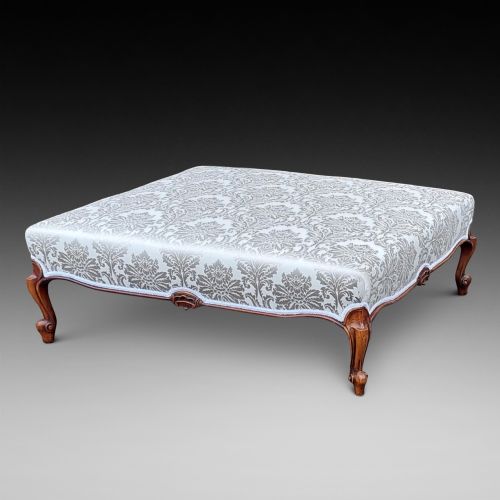
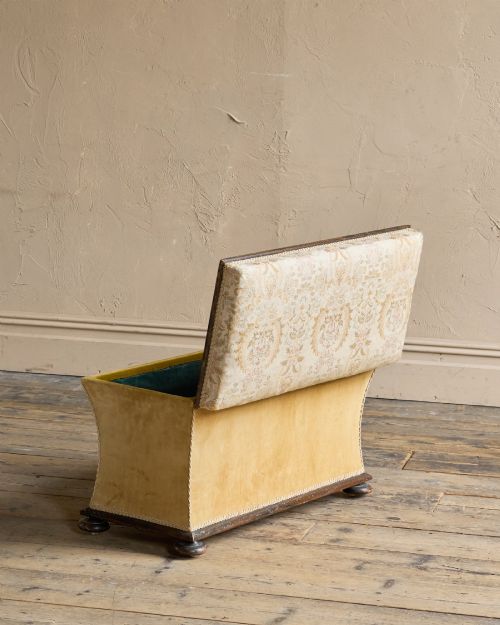
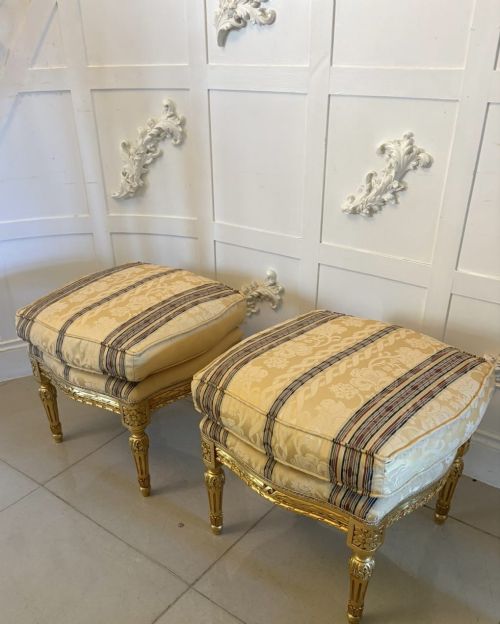
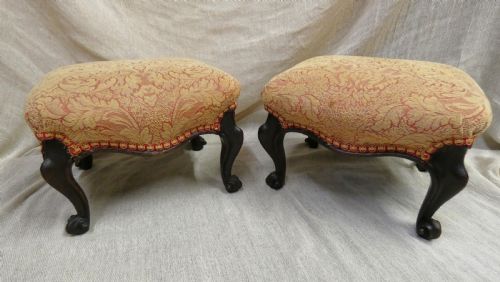
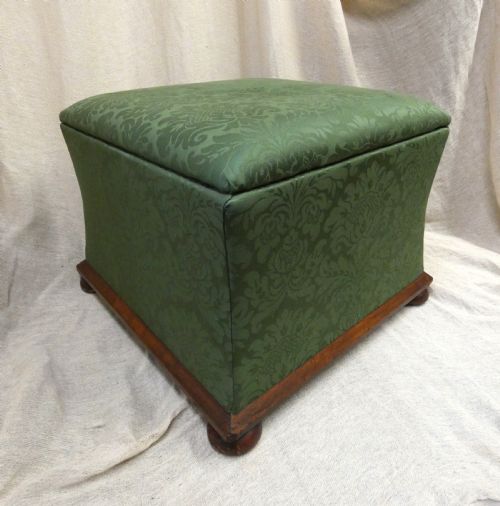


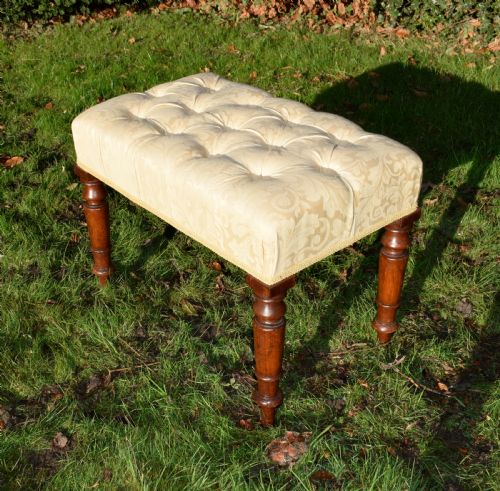

Damask Upholstered Ottoman
A damask upholstered ottoman brings tactile texture and traditional seating to a room, offering both decorative presence and concealed storage.
Damask Upholstered Ottoman
A damask upholstered ottoman encompasses a diverse selection of seating and resting forms, ranging from dedicated storage ottomans and workboxes to footstools, benches, and window seats. Buyers searching for a damask upholstered ottoman will encounter pieces spanning the Victorian and Regency eras, alongside later nineteenth and early twentieth-century examples.
The objects take various structural shapes, including sarcophagus forms, long benches, and concave frames. These pieces originate from multiple stylistic traditions, encompassing French Neoclassical, Baroque Revival, Anglo-Indian, and Queen Anne Revival influences.
How they were made
Construction relies upon traditional timber framing utilising mahogany, rosewood, walnut, teak, and giltwood. Carving and joinery form the structural foundation of the frames, which support the upholstered upper sections.
Textiles such as damask fabric provide the visible upholstery surface. Buttoning techniques and detailed fabric application complete the top sections of the stools and ottomans.
Damask Upholstered Ottoman Retail Price Guide 2026
Typical asking prices for damask upholstered ottoman among the pieces listed under this phrase on Sellingantiques today, from the lower quarter to the upper quarter. They describe what is for sale here now, not the wider market.
The listings show pieces constructed from mahogany, rosewood, walnut, teak, and giltwood, upholstered in damask and standard fabrics across Victorian and Regency periods.
What varies in quality
The standard of timber carving and the architectural execution of the frame define the structural tier of each piece. Elaborately carved giltwood or deeply figured rosewood and mahogany demonstrate greater artisanal labour than simpler secondary timbers.
Upholstery execution and the selection of fabric grade contribute significantly to the visual execution. Finely preserved damask and buttoned surfaces separate standard utilitarian items from more decorative examples.
The Damask Upholstered Ottoman Glossary
- Damask
- A reversible figured fabric woven on a jacquard loom, traditionally featuring patterns created through contrasting warp and weft satin weaves. It provides a textured, decorative surface suitable for period upholstery.
- Ottoman
- A low, upholstered seat or footstool without arms or a back, frequently incorporating internal storage space. The form developed diverse structural variations throughout the nineteenth century.
- Giltwood
- Timber coated with a thin layer of gold leaf or gesso preparation. It appears frequently on frames associated with French and Baroque revival styles.
- Sarcophagus
- A monumental container shape featuring a sloped or domed lid, adapted during the nineteenth century for storage ottomans. This architectural form borrows from classical antiquity.
- Cabriole
- A furniture leg that curves outward and then tapers inward, finishing in a pad, scroll, or claw foot. The profile imitates the natural bend of an animal leg.
Damask Upholstered Ottoman: Frequently Asked Questions
How do I identify a Victorian ottoman?
Victorian examples often utilise dense hardwoods like mahogany and walnut, frequently featuring buttoned upholstery or deep storage compartments.
Makers of this period drew upon varied stylistic revivals, resulting in robust frames designed for domestic comfort.
Where should I place a window seat?
Window seats suit transitional spaces, hallways, or living rooms where low furniture preserves natural light and sightlines.
Their elongated proportions allow them to function as secondary seating without crowding a floor plan.
What is an Anglo-Indian stool?
Anglo-Indian pieces combine traditional British furniture forms with indigenous carving techniques executed in exotic timbers like teak and rosewood.
These objects reflect the aesthetic exchange between British design and South Asian craftsmanship during the nineteenth century.
How do I care for damask upholstery?
Damask requires gentle vacuuming with a soft brush attachment to remove dust settled within the woven pattern.
Avoiding direct sunlight helps preserve the integrity and colour of the textile fibres over time.