

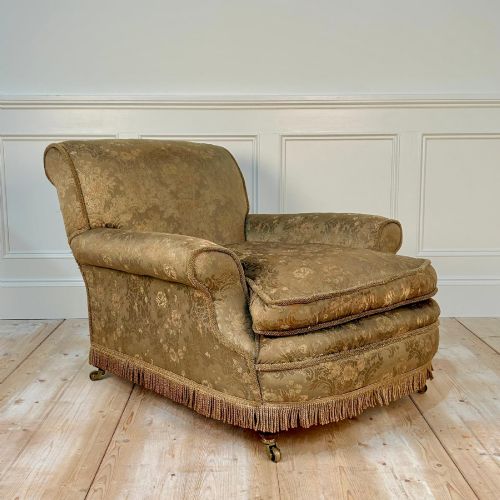
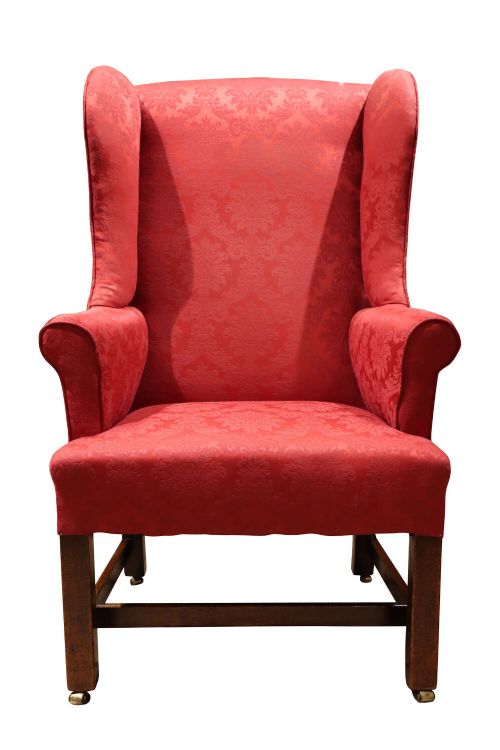
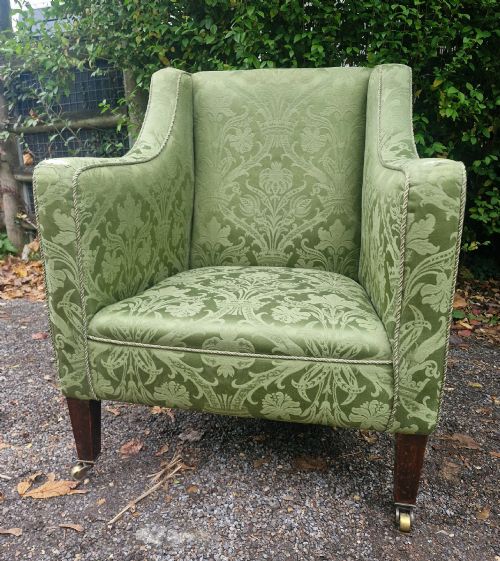
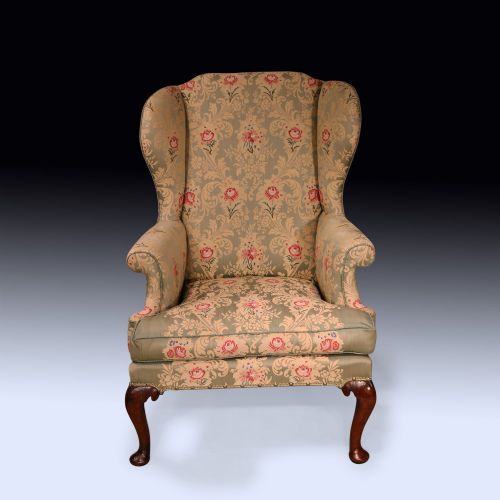
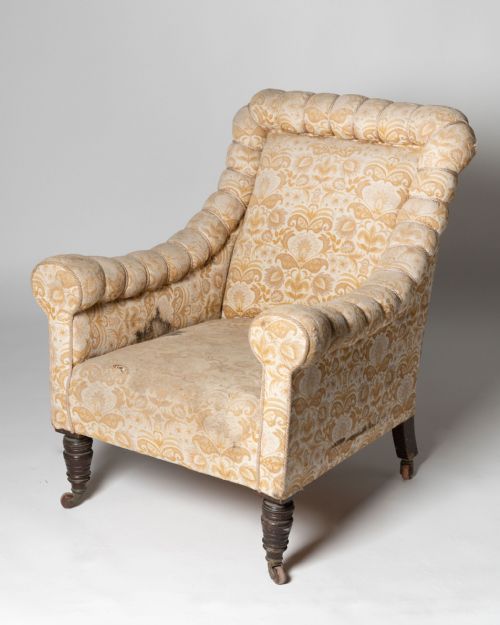
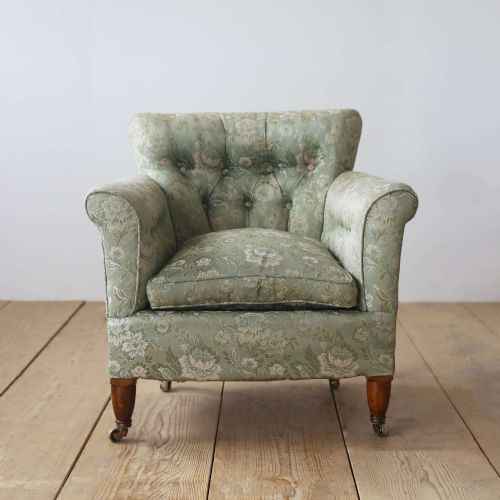
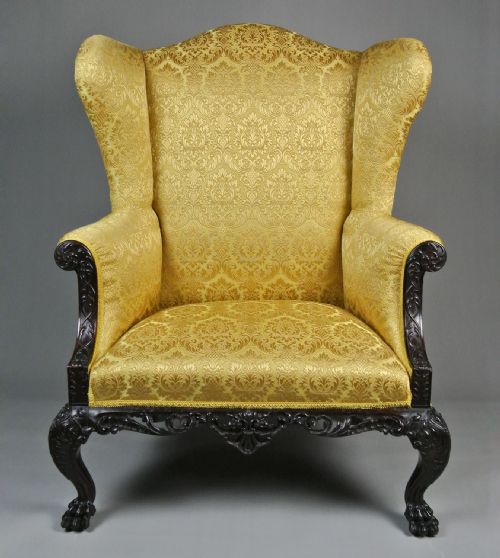
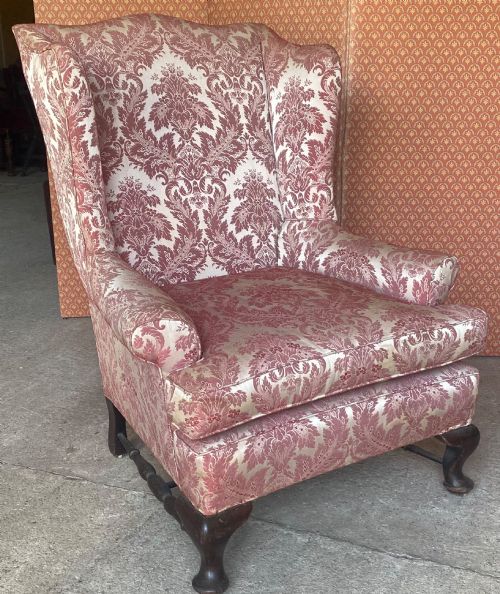
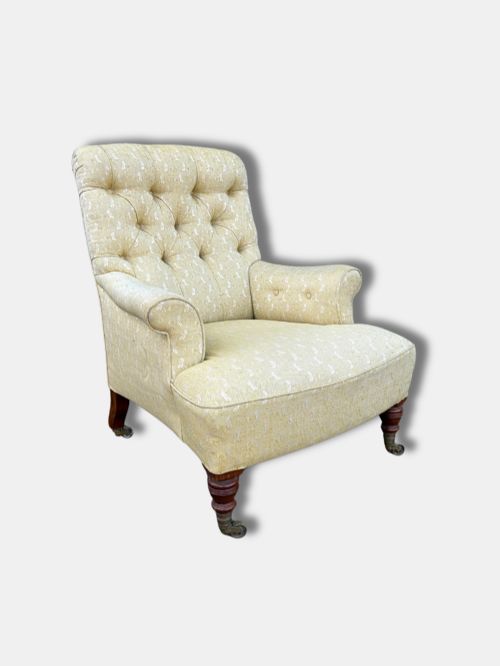
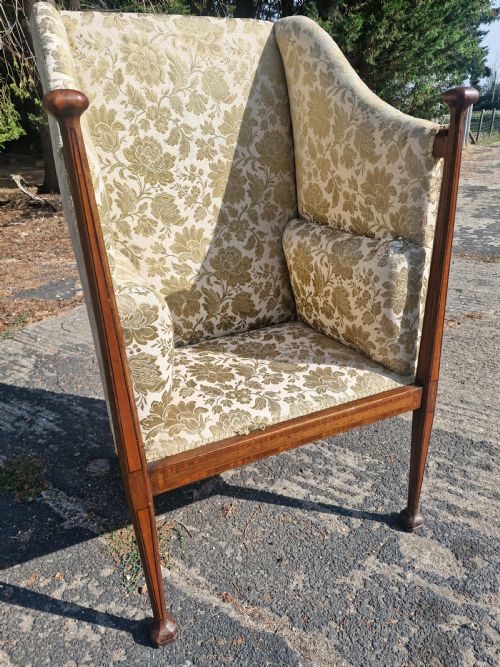
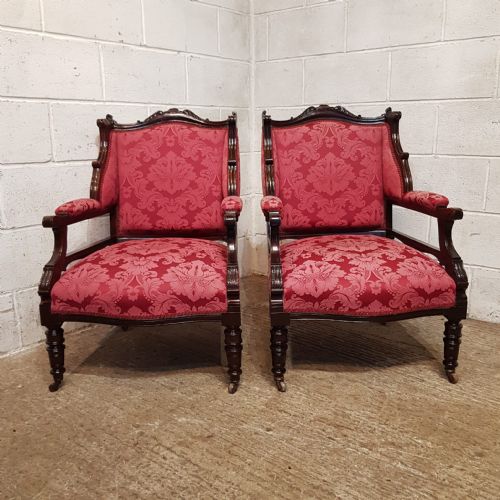


Damask Upholstered Easy Chair
These damask upholstered easy chairs offer deep seating and period elegance, combining historic woodwork with rich textile upholstery.
Damask Upholstered Easy Chair
A damask upholstered easy chair provides comfortable seating through fully padded frames covered in patterned woven fabric. These armchairs appear in various historical forms, from 18th century wing chairs to Victorian and Edwardian models.
Buyers frequently encounter mahogany, walnut, and hardwood frames supporting the damask textiles. The selection spans distinct eras including Georgian, Victorian, and Edwardian periods.
Armchair designs range from high back wing chairs to club chairs and tub chairs. Each piece integrates wooden framing with textile upholstery to create a substantial seating option.
Construction and materials
Frames rely on solid hardwoods such as mahogany and walnut, shaped by hand to form structural supports, carved legs, and wing panels. Joinery techniques secure the wooden skeletons before upholstery is applied.
Textiles like damask fabric cover the padding, secured with brass tacks or traditional methods. Additional materials such as iron or brass components appear in specific internal frames and castors.
Damask Upholstered Easy Chair Retail Price Guide 2026
Typical asking prices for damask upholstered easy chair among the pieces listed under this phrase on Sellingantiques today, from the lower quarter to the upper quarter. They describe what is for sale here now, not the wider market.
Some armchairs feature hidden iron back supports tucked inside the upholstery to keep the wings rigid.
Judging quality and craftsmanship
The integrity of the underlying wooden frame dictates stability, with finer examples displaying precise joinery and detailed carving on mahogany or walnut surfaces. Substantial framing prevents movement and supports the weight of the upholstery over decades.
The quality of the damask fabric and the execution of the upholstery work define the visual appeal. Tightly woven textiles and careful alignment of patterns distinguish superior examples from standard production.
Howard and Sons·Cornelius V Smith·Harrods London
The Damask Upholstered Easy Chair Glossary
- Damask
- A reversible figured fabric with patterns formed by weaving, traditionally utilising silk, wool, or cotton. This textile provides the characteristic decorative surface on the upholstery.
- Wing chair
- An armchair featuring side panels attached to the armrests, designed to shield the occupant from drafts. These high back forms date back to the 18th century and earlier.
- Mahogany
- A durable tropical hardwood prized for its deep reddish brown colour and resistance to warping. Cabinet makers used this material extensively for 18th and 19th century chair frames.
- Tub chair
- A curved armchair where the back and arms form a continuous semicircular enclosure. This compact form appears frequently in Edwardian designs.
- Walnut
- A dense, dark timber utilised for furniture frames during the 18th century. Its grain provides a rich surface texture beneath clear finishes.
Damask Upholstered Easy Chair: Frequently Asked Questions
How do I identify a Georgian damask chair?
Georgian chairs typically feature solid mahogany frames with hand carved details on the legs and wing supports. The proportions reflect the aesthetic standards of the 18th century.
Examine the construction methods and wood ageing to confirm the period of manufacture.
Where should I place a wing armchair?
Wing armchairs suit living rooms, libraries, or studies where their high backs provide both comfort and visual weight. They function well as standalone reading chairs.
Ensure adequate clearance around the piece to display the wooden legs and damask pattern.
What is the difference between Victorian and Edwardian styles?
Victorian seating often incorporates heavier proportions, button upholstery, and dark carved wood. Edwardian designs tend to present lighter frames and simpler silhouettes.
Both periods utilise damask fabric, but the overarching frame construction reflects changing domestic tastes.
How do I care for damask upholstery?
Protect damask fabric from direct sunlight to prevent fading of the woven pattern. Regular gentle vacuuming removes dust from the textured surface.
Consult a professional textile restorer for deep cleaning to preserve the integrity of the fabric.