



Damask Fabric Sofa
These damask fabric sofa pieces range from nineteenth century Chesterfields to early twentieth century day beds, offering patterned elegance for traditional interiors.
Damask Fabric Sofa
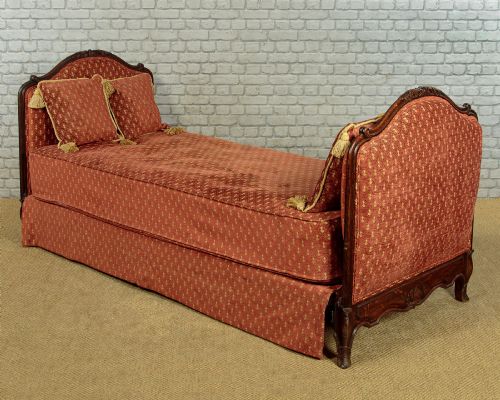
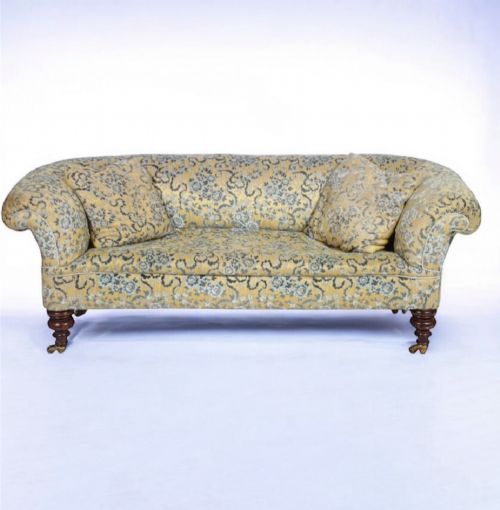
When you search for a damask fabric sofa, you are looking at upholstered seating designed for formal reception rooms and drawing rooms. The selection includes nineteenth century Chesterfields, Victorian settees, and early twentieth century day beds.
You are most likely to meet Victorian and nineteenth century examples on this page, often upholstered in patterned fabric with turned walnut legs or carved lion paw feet. These pieces combine robust frames with decorative textile covers.
The forms span settees, chaise longues, lounge suites, and camel back sofas reflecting George III style or French Provincial influences. Each piece offers a distinct silhouette shaped by its period of origin.
How they were made
Makers built the foundational frames using timber such as mahogany and walnut, ensuring structural strength beneath the upholstery. Exposed woodwork often featured detailed carving or turned legs with brass elements.
Craftsmen applied traditional upholstery techniques over sprung or padded foundations, securing damask fabric and upholstery fabric to complete the surface. This layered construction provided both durability and a refined exterior texture.
Damask Fabric Sofa Retail Price Guide 2026
Typical asking prices for damask fabric sofa among the pieces listed under this phrase on Sellingantiques today, from the lower quarter to the upper quarter. They describe what is for sale here now, not the wider market.
Some Victorian sofas boast carved lion paw feet, allowing your living room seating to stand its ground with feline authority.
What varies in quality
The distinction between standard examples and superior pieces rests upon the precision of the frame carving and the integrity of the timber. Walnut and mahogany structures with detailed ornamentation indicate higher workmanship.
Quality also appears in the execution of the upholstery and the choice of textile, where dense damask weave and well-preserved padding maintain the form better over time.
The Damask Fabric Sofa Glossary
- Chesterfield
- A large upholstered sofa traditionally featuring deep buttoning and rolled arms of equal height to the back. It serves as a classic centrepiece in traditional rooms.
- Damask
- A reversible figured fabric with patterns formed by contrasting warps and wefts, traditionally woven in silk, wool, or linen. It adds subtle texture and sheen to seating.
- Camel Back
- A sofa design characterised by a serpentine curved back resembling a camel's hump, popular during the eighteenth century. This style offers an elegant profile in formal settings.
- Settee
- A medium-sized upholstered seat with a back and arms, designed for two or more people. It provides formal seating distinct from a larger sofa.
Damask Fabric Sofa: Frequently Asked Questions
What periods do these sofas come from?
The pieces span several distinct eras, ranging from eighteenth century George III designs to nineteenth century Victorian iterations and early twentieth century examples up to nineteen forty. Each period introduces specific aesthetic details to the wooden frames and upholstery.
Victorian pieces often feature robust proportions and carved wooden elements like lion paw feet, while earlier styles incorporate refined camel back silhouettes and mahogany frames.
What wood types are used?
Frames are constructed primarily from traditional hardwoods including mahogany and walnut, alongside general timber components. These materials provided the necessary strength for heavily upholstered seating.
Visible woodwork on legs and trim highlights the grain and colour of the walnut or mahogany beneath the finish.
Are day beds included?
Yes, the selection encompasses related seating forms alongside standard sofas, including day beds, chaise longues, and complete lounge suites. These pieces share similar upholstery fabrics and period construction.
Such alternatives offer varied seating arrangements for bedrooms, dressing rooms, or extended living spaces.