


Damask Dining Chairs
Damask dining chairs bring patterned textile upholstery together with solid timber frames spanning the Georgian, Victorian, and later periods.
Damask Dining Chairs
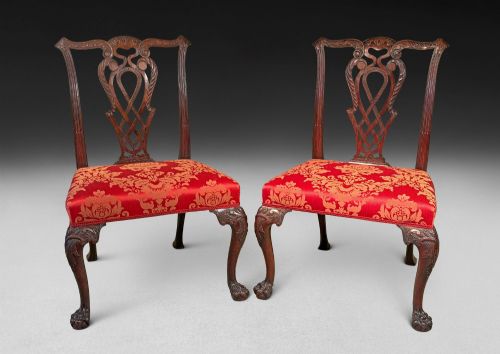
Damask dining chairs combine solid timber frames with patterned textile upholstery designed for formal seating around a table. These pieces range from single side chairs to large matched suites spanning eighteen to early twentieth century production.
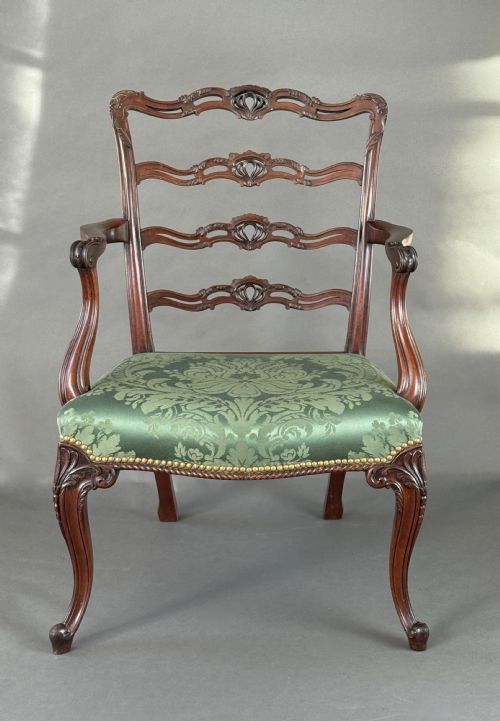
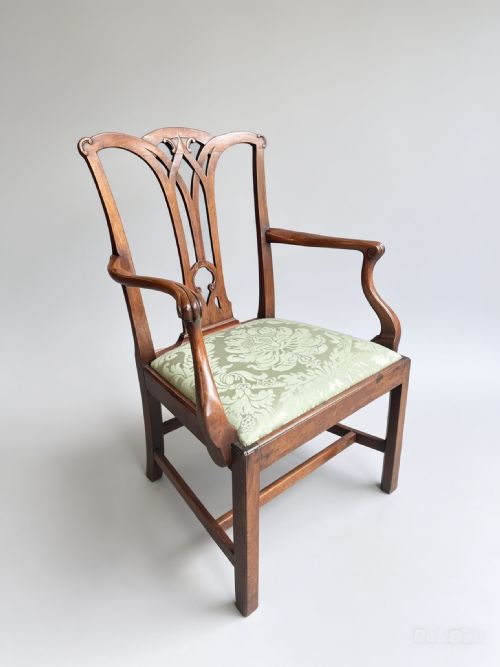
The materials and silhouettes encountered here cover mahogany, walnut, rosewood, and oak frameworks shaped into Chippendale, Hepplewhite, Regency, and Victorian styles. Armchairs, side chairs, and carvers appear frequently across these listings.
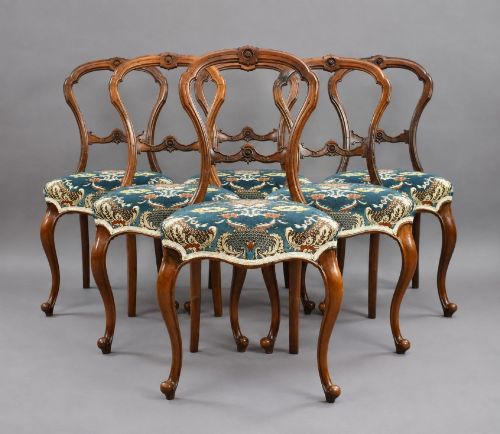
Many examples utilise period revival designs alongside pieces built during the Georgian and Victorian eras. Upholstery integrates fabric and textile finishes that complement the carved woodwork of the frame.
How they were made
Makers shaped structural elements from dense hardwoods including mahogany, walnut, and rosewood, employing traditional joinery to secure legs, backs, and seats. Carved details on splats and crest rails demonstrate cabinetmaking techniques from the eighteenth and nineteenth centuries.
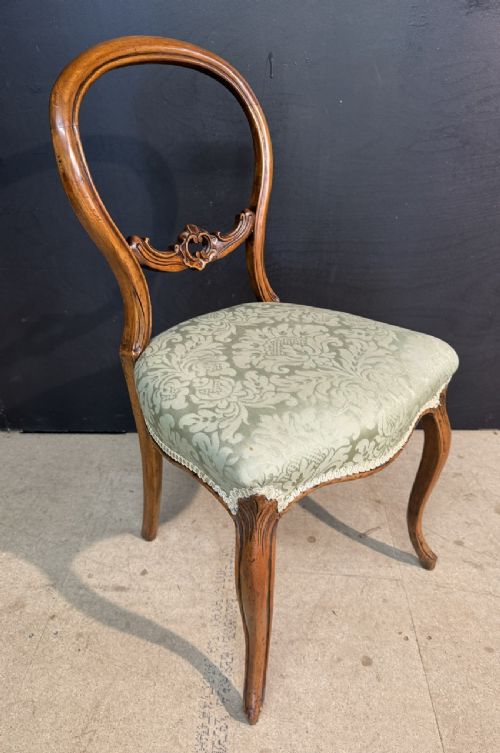
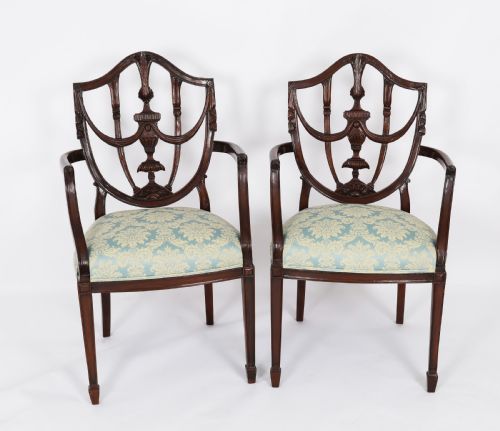
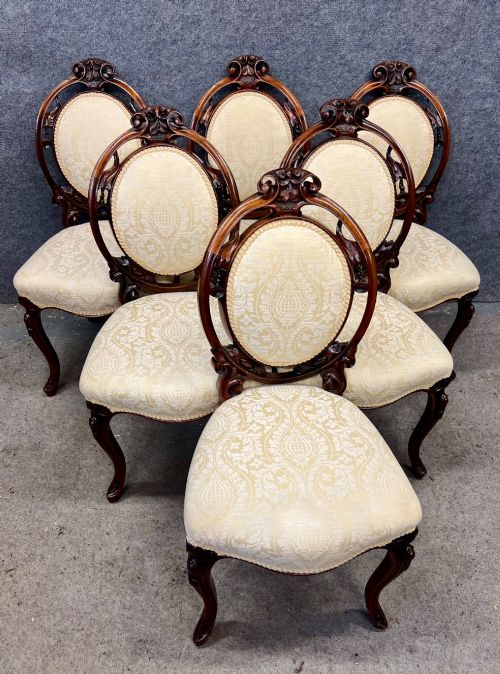
Upholstery techniques involve securing textile fabrics, including damask, over padded seat foundations and sometimes shield or balloon backs. Brass elements and decorative trim occasionally accent the wooden and upholstered components.
Even chairs intended strictly for dining occasionally feature concealed cabriole legs designed simply to impress seated guests beneath the table.
What varies in quality
The execution of timber carving and the crispness of detail on chair backs separate standard workshop output from exceptional examples. Timber selection also dictates grade, with finely figured mahogany and dense rosewood commanding stronger presence than plain secondary woods.
Completeness of a matched set heavily influences the standing of a suite, particularly when dealing with larger dining configurations. Original upholstery methods and the integrity of the underlying timber frame determine the structural standard of each piece.
The Damask Dining Chairs Glossary
- Damask
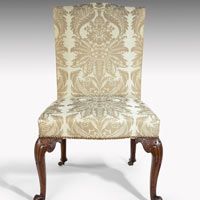
- A reversible figured fabric traditionally woven on a drawloom with patterns formed by contrasting warp and weft threads. It provides the patterned textile surface seen on these chair seats and backs.
- Balloon back
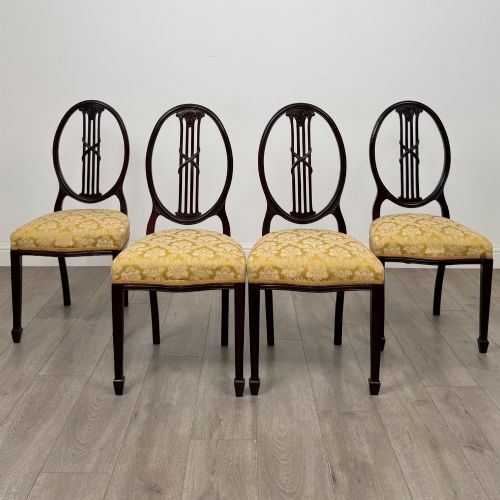
- A rounded, oval-shaped chair back popular during the Victorian period. This profile curves outward to resemble a balloon.
- Shield back
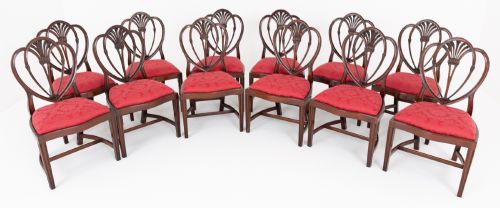
- A chair back shaped in the contour of a heraldic shield, commonly associated with eighteenth century designers like Hepplewhite. It often encloses pierced wooden splats.
- Barley twist
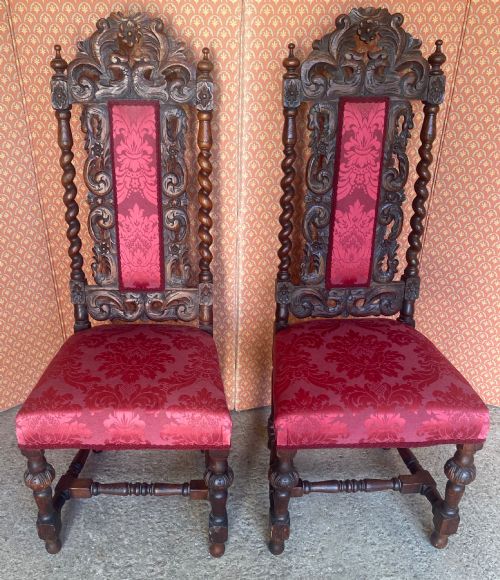
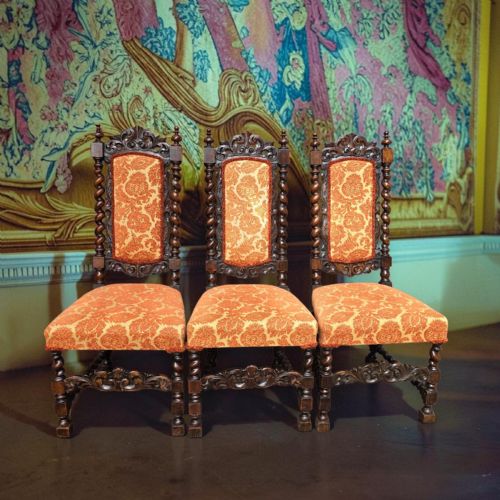
- A turning technique resembling a spiral rope, frequently found on the legs and upright supports of nineteenth century furniture. It is produced by cutting and shaping the timber in a helical twist.
Damask Dining Chairs: Frequently Asked Questions
How do I date damask dining chairs?
Dating relies on examining the timber species, structural joinery methods, and stylistic cues such as shield backs or balloon framing. Cabinetmakers shifted from dense eighteenth-century mahogany to nineteenth-century rosewood and walnut.
Secondary woods and tool marks visible beneath the seat also help place a chair within the Georgian, Victorian, or later revival periods.
Are large sets difficult to find?
Extended sets spanning ten or more matching chairs occur less frequently than pairs, single side chairs, or smaller groups of four and six. Many larger configurations date from later revival periods when expansive dining rooms required uniform seating.
Assembling or acquiring an original suite of twelve or more matching chairs requires patience across available marketplace stock.
What woods were used for these chairs?
Mahogany serves as the predominant timber across eighteenth and nineteenth-century pieces, offering strength for intricate carved splats and legs. Walnut and rosewood appear frequently in Victorian and earlier high-status commissions.
Oak and cherry also occur in specific regional or revival examples listed among the current inventory.
How should I care for antique damask upholstery?
Textile upholstery benefits from gentle vacuuming with a soft brush attachment to remove surface dust without catching on woven threads. Direct sunlight should be avoided to prevent the colours within the patterned fabric from fading over time.
Professional textile cleaning maintains the condition of the material without compromising the underlying padding or frame.