



D End Extending Table
A d end extending table offers versatile dining space rooted in Georgian and Victorian craftsmanship.
D End Extending Table
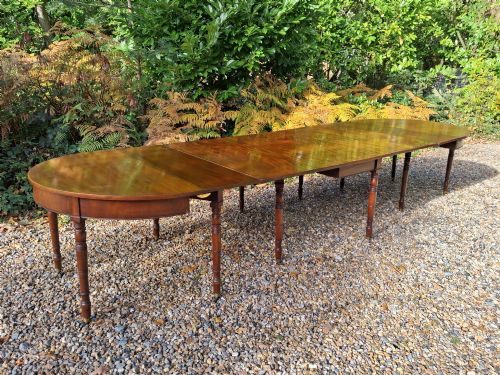
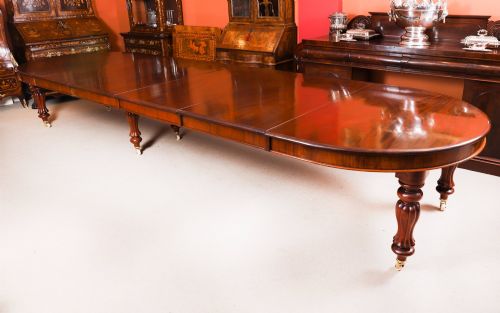
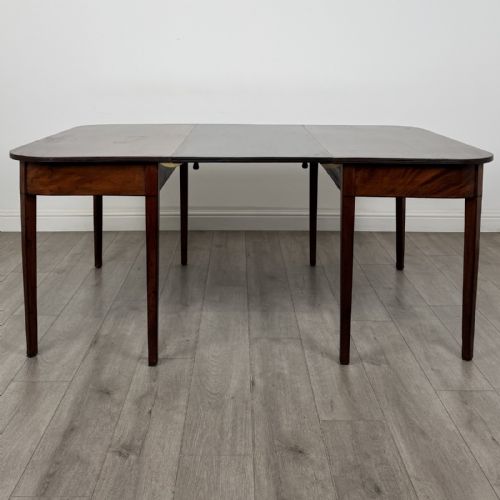
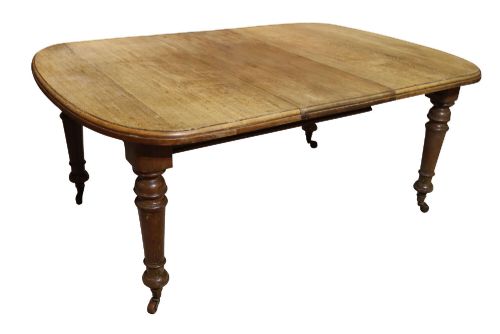
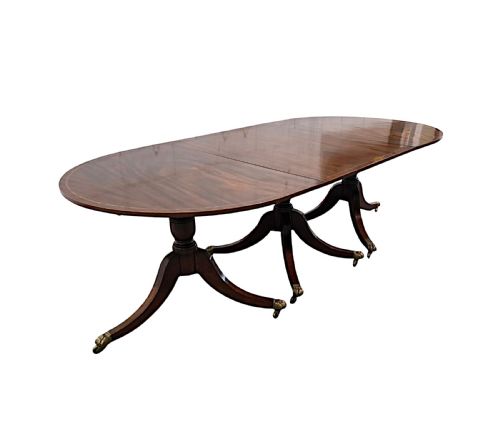
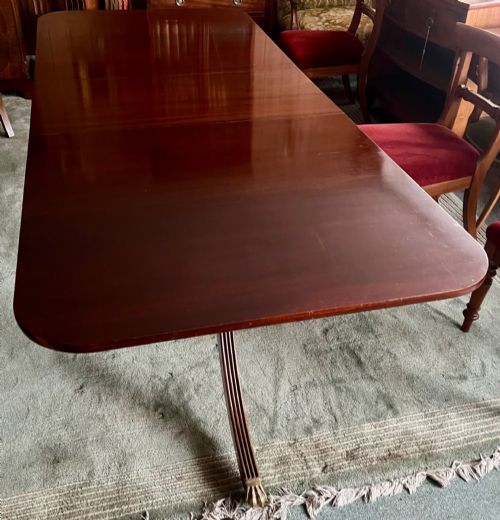
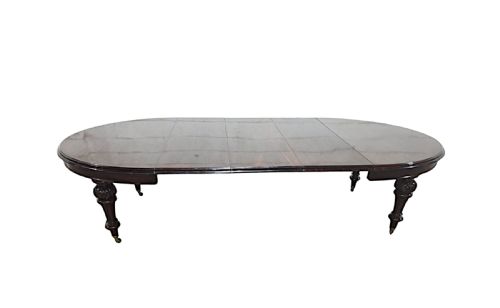
A d end extending table is a dining table designed with semicircular ends that separate to accommodate extra leaves, providing adaptability for daily use and larger gatherings. These tables frequently appear in Georgian, Regency, and Victorian iterations, constructed primarily to expand for considerable seating capacities.
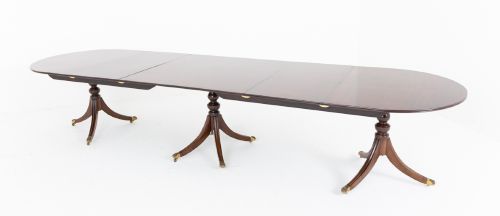
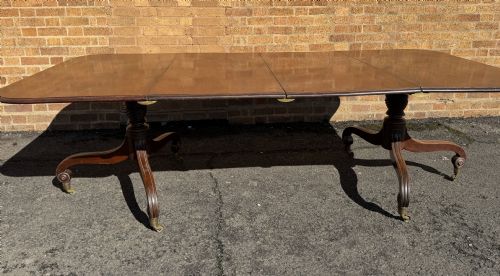
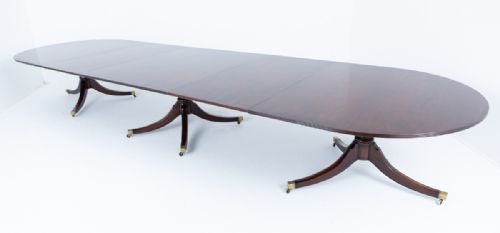
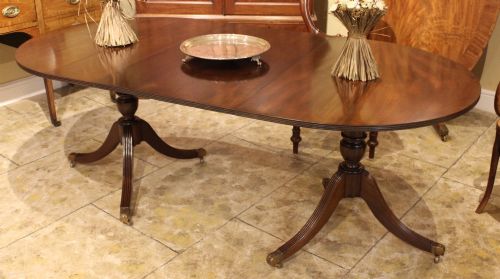
The version most commonly met on this page is the mahogany pillar table, often featuring twin or triple pedestals alongside drop-leaf or console configurations. These pieces range from intimate six-seater formats up to grand tables designed for twenty or more diners.
Beyond standard dining formats, the listings include related extending forms such as book slides and console tables sharing the characteristic semicircular profile. This variety reflects how cabinetmakers applied the semicircular architectural shape across different domestic furniture types.
How They Were Made
Cabinetmakers predominantly utilised solid and figured mahogany, often pairing timber with brass castors and incorporating boxwood or satinwood inlay for decorative contrast. Alternative timbers such as oak, teak, fruitwood, and walnut appear occasionally across different periods and regional workshops.
Construction relies on robust pillar and pedestal supports, drop-leaf hinges, or mechanical wind-out systems designed to handle the weight of multiple extension leaves securely. Joinery focuses on stable weight distribution, allowing very large tables to extend smoothly without sagging.
D End Extending Table Retail Price Guide 2026
Typical asking prices for d end extending table among the pieces listed under this phrase on Sellingantiques today, from the lower quarter to the upper quarter. They describe what is for sale here now, not the wider market.
Some ingenious Victorian households employed portable book slides with the same expanding action to keep their novels neatly upright.
What Varies in Quality
Quality in a d end extending table is dictated by the selection of figured mahogany timber and the precision of the joining mechanisms that hold the leaves level. Superior examples exhibit matched grain patterns across the top even when fully extended.
The architectural proportion of the pedestals and the refinement of brass fittings separate standard domestic pieces from workshop creations attributed to notable makers like William and Gibton or Robert Adam. Heavy, stable pillar assemblies indicate superior structural integrity in larger multi-leaf dining formats.
William and Gibton·Robert Adam·Waring and Gillow
The D End Extending Table Glossary
- D-End
- A table end shaped in a semicircle resembling the capital letter D. This form allows the table to stand against a wall as a console when unextended.
- Pillar and Pedestal
- A central column support resting on splayed legs, usually fitted with brass castors. This design provides maximum legroom for seated diners.
- Wind-Out Mechanism
- A mechanical screw gear operated by a crank handle that parts the table halves to insert leaves. It became standard on many Victorian tables.
- Console Table
- A freestanding or wall-secured table with a semicircular top. Pairs of these tables often combine with leaves to form a long dining surface.
D End Extending Table: Frequently Asked Questions
How do I extend a d end table?
Most extending versions rely on either a wind-out mechanism operated with a handle or simple drop-leaf actions supplemented by removable centre leaves. The sections pull apart along integrated runners to accept the extra timber.
Heavier multi-pillar tables require careful alignment to ensure the leaves lock securely into the brass locating pins without straining the central pedestals.
Can I use the ends separately?
The semicircular ends frequently function independently as console tables against a wall when the table is not extended for dining. This dual-purpose design was a primary reason for their popularity in Georgian and Victorian drawing rooms.
When joined together without leaves, the two D ends form a compact round or oval table suitable for smaller gatherings.
How do I care for mahogany surfaces?
Mahogany benefits from regular dusting with a soft cloth and occasional application of traditional beeswax to nourish the grain. Direct sunlight and excessive heat should be avoided to prevent the timber from fading or splitting.
Using protective mats under hot dishes and liquids preserves the polished finish of the antique top.