



Cut Stem Wine Glasses
Cut stem wine glasses bring tactile weight and brilliant light refraction to the table, uniting Georgian gravitas with later continental colour.
Cut Stem Wine Glasses
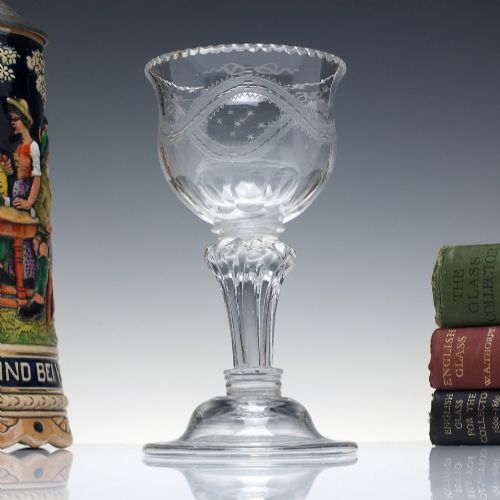
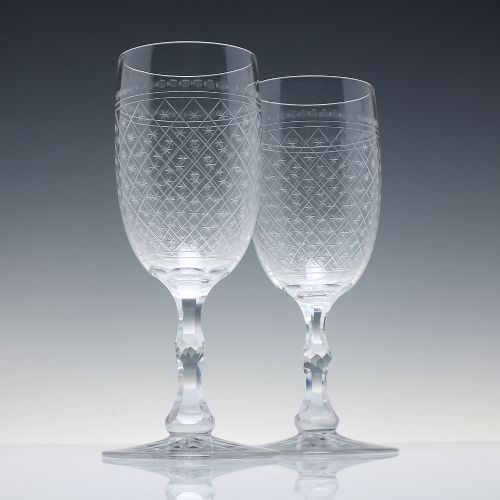
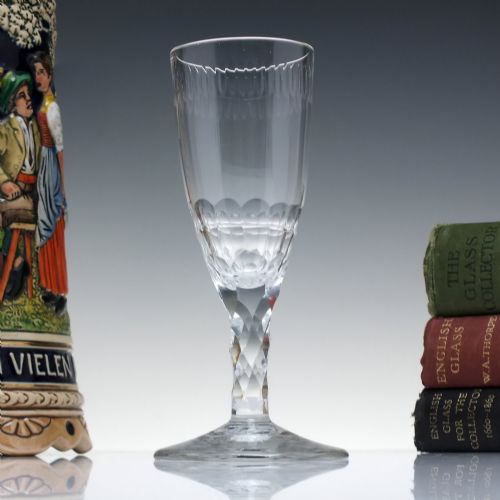
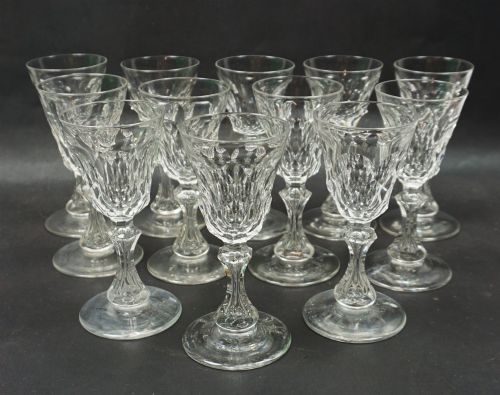
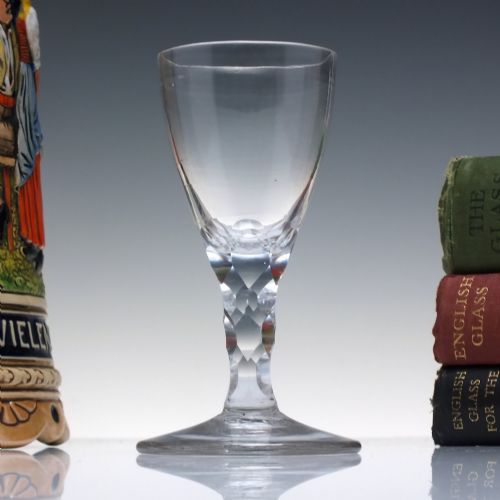
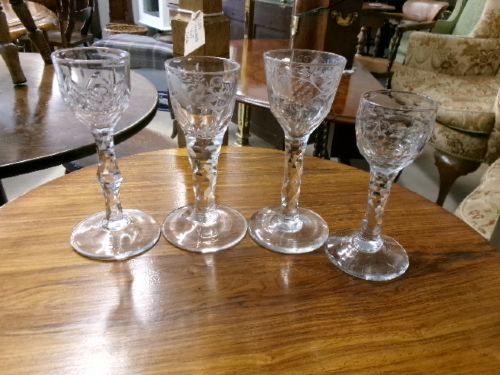
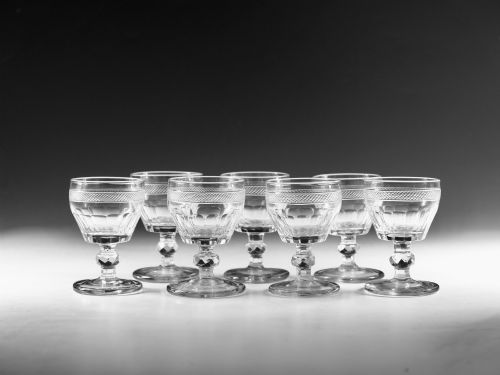
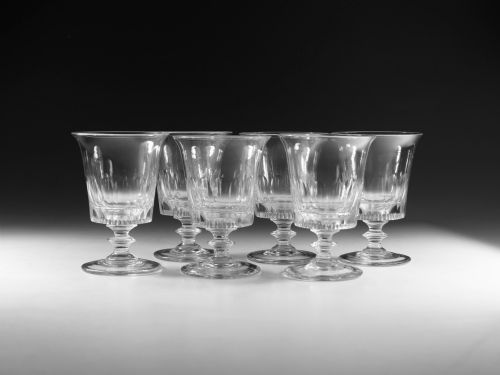
Cut stem wine glasses encompass drinking vessels designed with faceted, panelled, or patterned stems supporting bowls intended for wine, port, sherry, or rummers. The selection ranges from eighteenth-century English lead glass examples to nineteenth-century continental achievements.
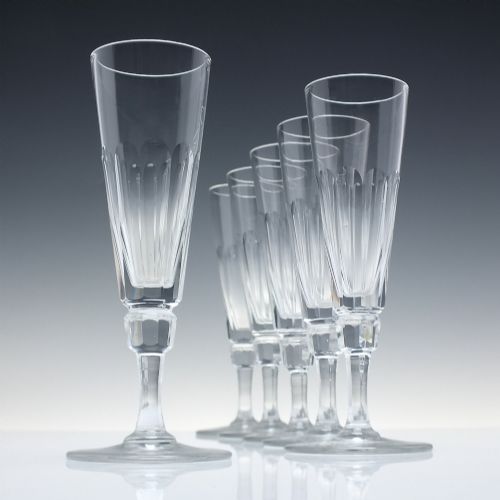
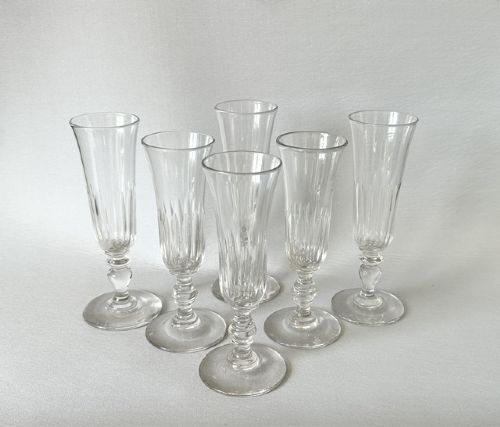
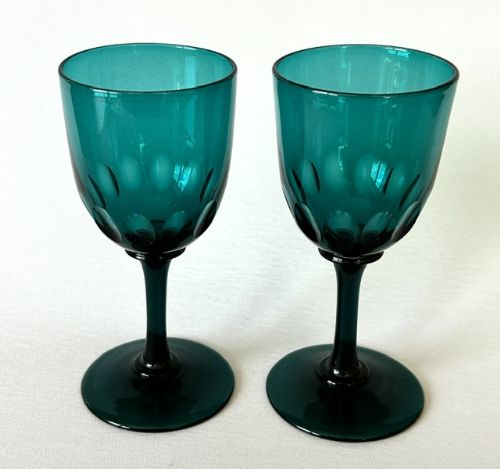
Georgian periods contribute facet-cut stems, engraved bowls, and heavy rummers, while Victorian eras bring matched sets of champagne flutes and richly hued cranberry or aqua dessert glasses. Continental workshops add Biedermeier greens, Bohemian forms, and Secessionist silhouettes.
The buyer meets individual goblets, matched pairs, and full sets of six across this collection, spanning clear lead crystal and vibrant cased glass. Forms stretch from tall champagne flutes down to compact cordial glasses and port glasses.
Materials and construction
Makers utilised lead glass and crystal to achieve heavy, clear blanks capable of holding deep wheel-cuts without fracturing. The introduction of lead oxide gave the material its characteristic refractive brilliance and density.
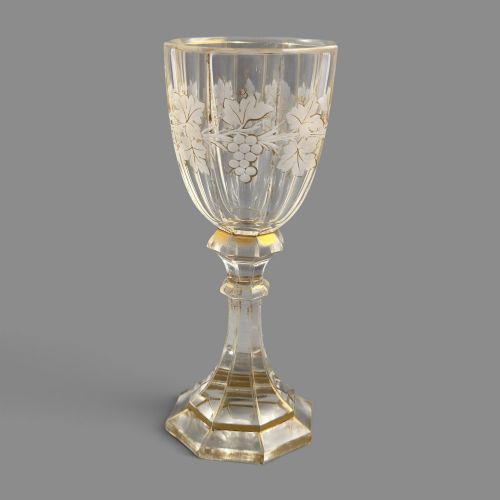
Hot-forming created the primary bowl and stem shape before specialised cold-working techniques took over. Artisans ground facets onto stems and wheel-engraved floral, symbolic, or geometric motifs onto the bowls.
Some pieces incorporate gilding applied to rims and panels, while others utilise cased glass where a coloured layer is fused over a clear base before cutting back to reveal the contrast.
Cut Stem Wine Glasses Retail Price Guide 2026
Typical asking prices for cut stem wine glasses among the pieces listed under this phrase on Sellingantiques today, from the lower quarter to the upper quarter. They describe what is for sale here now, not the wider market.
Some eighteenth-century glasses carry hidden political allegiances, bearing secret Jacobite rose engravings intended for quiet toasts in smoky rooms.
Distinctions in quality
Quality rests upon the crispness of the cutting and the clarity of the metal itself. Sharp, clean facet junctions that catch the light directly separate superior hand-cut stems from softer, more rounded moulding.
The weight and balance of the piece dictate its calibre, alongside the delicacy and precision of any associated wheel engraving. Original matching sets maintaining uniform height and bowl thickness command greater distinction than uneven assembled groups.
Moser Bohemian·James Giles·Otto Prutscher·Meyr’s Neffe
The Cut Stem Wine Glasses Glossary
- Facet cut
- A surface decorated by grinding flat planes into the glass, creating sharp edges that refract light. This technique is especially prominent on eighteenth-century English stems.
- Rummer
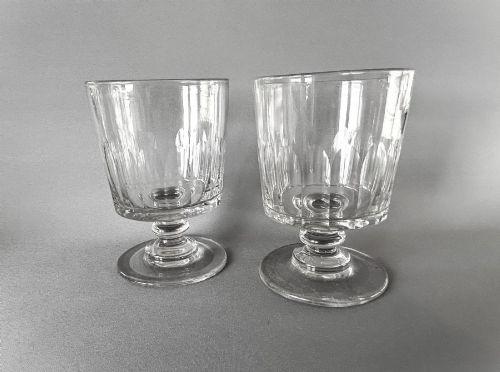
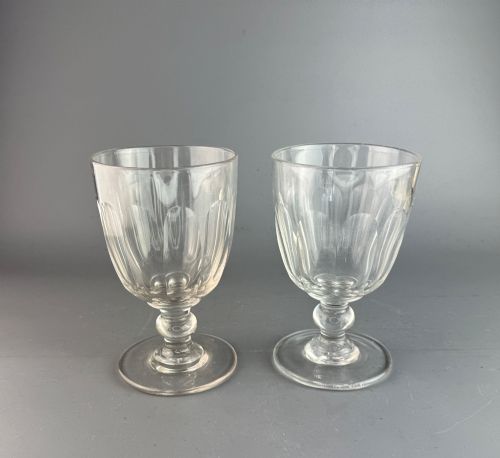
- A large, heavy drinking glass with a short stem and wide foot, used historically for ale, wine, or punch. These sturdy vessels frequently feature cut decoration.
- Cased glass
- Glass formed of two or more distinct layers of different colours fused together while hot. Cutting through the outer layer exposes the contrasting colour beneath.
- Jacobite engraving
- Secret political iconography etched onto eighteenth-century glassware to show loyalty to the exiled Stuart dynasty. Common motifs include roses, oak leaves, and specific Latin inscriptions.
- Baluster stem
- A thick, swelling stem shape reminiscent of architectural balusters, common on heavier drinking vessels from earlier periods.
Cut Stem Wine Glasses: Frequently Asked Questions
Can I use antique wine glasses daily?
Using these glasses requires care, hand-washing only in lukewarm water without abrasive sponges, and avoiding sudden temperature changes that can crack historical lead glass. Storing them safely away from crowded shelf edges prevents accidental chipping.
Their historical nature means they deserve gentle treatment during dinner parties or special toasts rather than routine dishwasher cycles. Treat them as functional history rather than modern utilityware.
What is the difference between a rummer and a wine glass?
Rummers possess significantly larger, wider bowls and sturdier, shorter stems designed originally for heartier drinks and communal toasts. Wine glasses tend to have more slender bowls and longer stems proportioned for smaller pours.
While rummers feel heavy and robust, standard wine glasses from the same eras focus on a more delicate profile suited to table settings. Both share similar cutting and faceting techniques depending on the period.
How do I date coloured Victorian glassware?
Victorian coloured glass, such as cranberry or aqua hues, relies on specific metallic oxides added to the batch during melting. The presence of mould seams combined with hand-applied finishing helps distinguish late nineteenth-century production from earlier free-blown tinted pieces.
Matched sets from this era often show high uniformity in colour saturation and precise wheel-cut patterns. The introduction of specific styles like Biedermeier or later Secessionist forms provides firm chronological boundaries.