


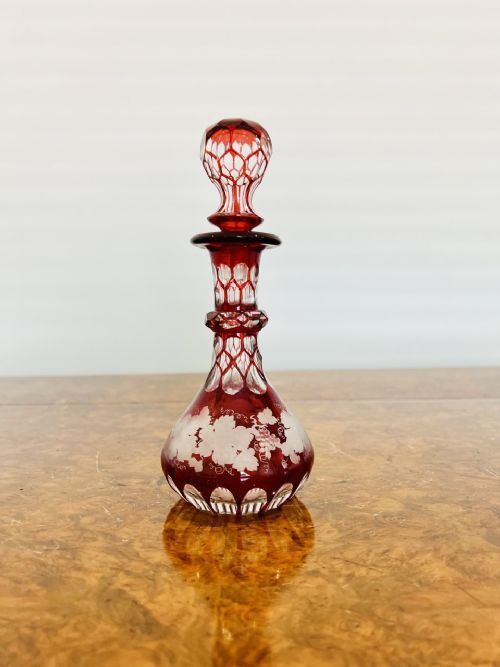


Cut Glass Scent Flask
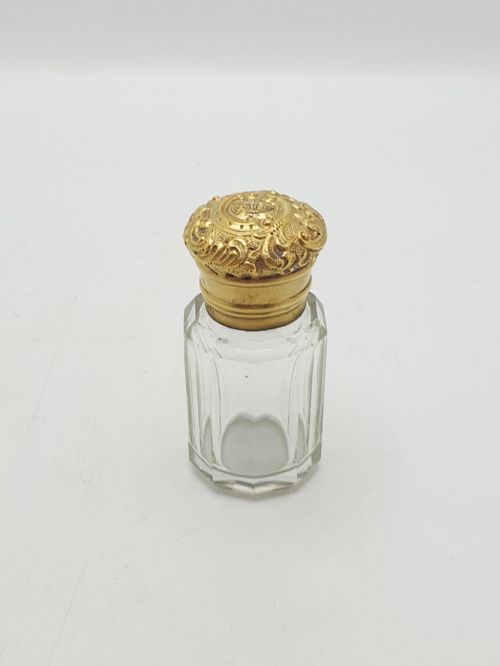
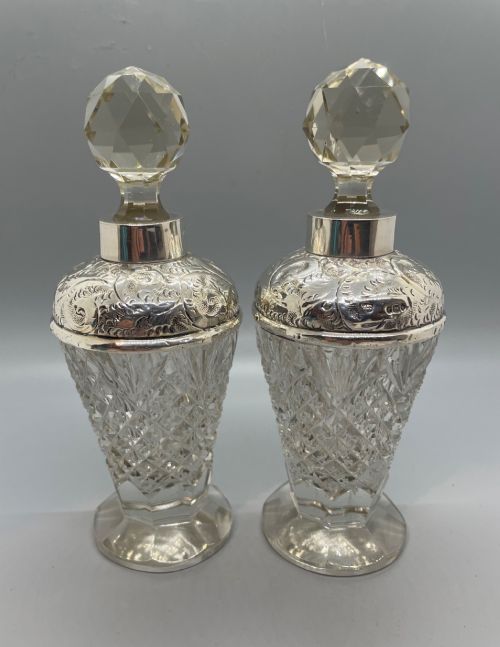
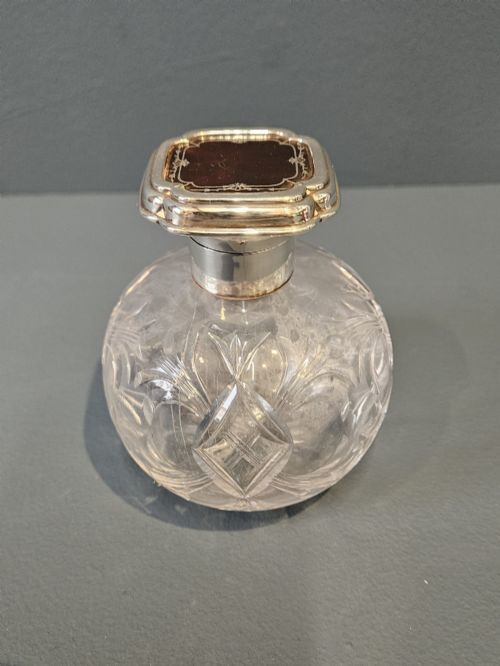
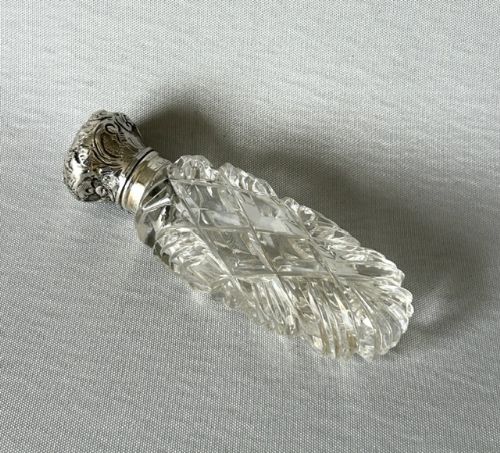
A cut glass scent flask is a portable vessel designed for perfume, combining heavy faceted crystal with precious metal mounts.
Cut Glass Scent Flask
A cut glass scent flask brings together utilitarian function and decorative elegance from the nineteenth and early twentieth centuries. These pocket-sized receptacles were intended for daily personal use or travel, often secured in fitted cases or suspended from chatelaines.
The specimens encountered here span the Victorian era, the Edwardian period, and the geometric lines of Art Deco. Victorian examples favour heavy faceted crystal paired with sterling silver, while later decades introduce coloured glass bodies and enamel lids.
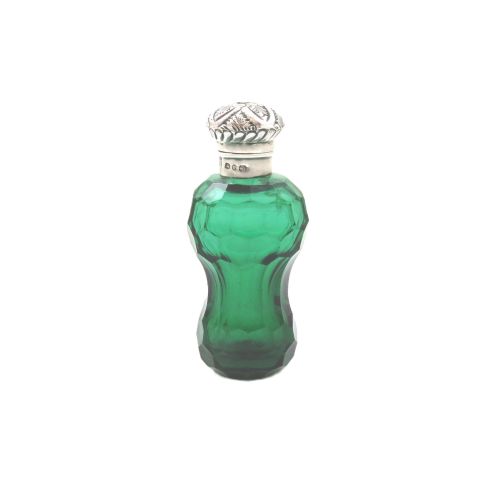
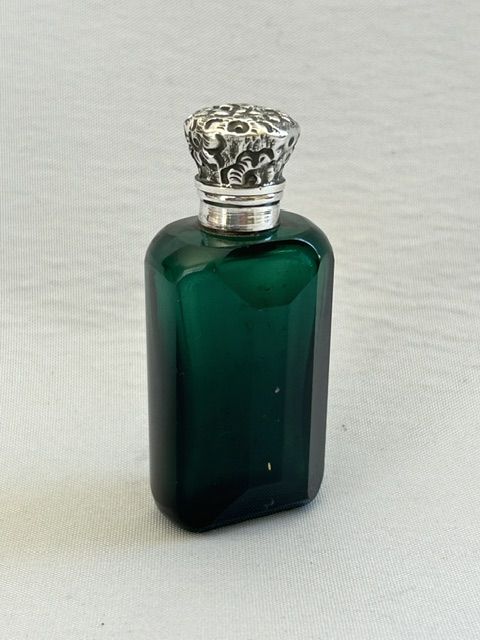
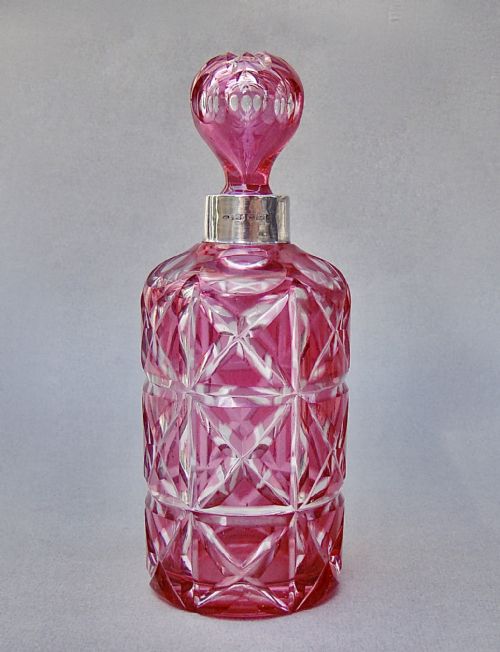
Makers and manufacturers from London, Birmingham, and continental workshops produced these items in various forms. Collectors meet everything from plain clear crystal cylinders to overlay glass in vibrant hues of green, cranberry, and amethyst.
Materials and construction methods
The bodies of these items rely upon heavy lead glass or crystal shaped by deep cutting, slicing, or wheel-engraving. Coloured glass variants often utilise overlay techniques, where a layer of tinted glass is fused over a clear or contrasting core before being cut away to reveal the pattern beneath.
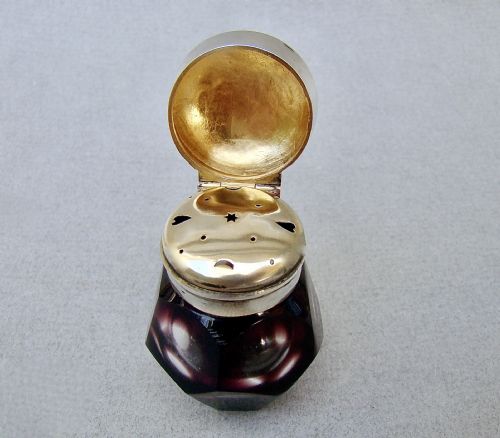
Silver mounts, hinged lids, and screw caps are worked in sterling silver or silver-gilt, frequently decorated with repoussé floral motifs or engine-turned engraving. Tortoiseshell, enamel, and guilloche panels occasionally inset the metal lids to add contrast and colour.
Gentlemen required lockable cologne bottles during Victorian rail travel to deter light-fingered valets from sampling their favourite scents.
Factors of distinction
Quality rests upon the crispness of the glass cutting and the weight of the metal mount. Sharp, deep facets catch the light cleanly, whereas softer mould-pressed imitations lack the optical clarity of hand-cut crystal.
The integration between the glass body and the metal collar determines the structural integrity. Superior examples feature securely seated screw threads or tightly closing hinged caps that maintain an airtight seal for volatile perfumes.
Harold Bushell & Co·Karl Palda·Henry Perkins·Barnsley & Co·S. Morden & Co·Finnigans of Bond Street
The Cut Glass Scent Flask Glossary
- Chatelaine
- A decorative belt hook worn with suspended utility items including scent flasks and chatelaine watches. This Victorian accessory allowed women to carry essential personal items hands-free.
- Guilloche
- A decorative technique where a precise mechanical pattern is engraved into a metal surface beneath translucent enamel. It provides a radiating geometric background for silver-topped bottles.
- Vinaigrette
- A small ornamental box or bottle containing a perforated grille over a sponge soaked in aromatic vinegar. These were used to revive individuals from fainting.
- Overlay glass
- A vessel formed from multiple fused layers of different coloured glasses. The outer layer is partially cut away to create contrasting two-tone designs.
- Silver-gilt
- Sterling silver that has been coated with a thin layer of gold. This finish offered a rich appearance and protected the metal from tarnishing.
Cut Glass Scent Flask: Frequently Asked Questions
What is a cut glass scent flask?
A cut glass scent flask is a small personal container designed to hold liquid perfume, featuring a faceted glass body and a protective metal lid. They were widely used in the nineteenth and early twentieth centuries for daily grooming.
These items ranged from simple pocket bottles to elaborate vanity pieces meant for dressing tables. The combination of heavy glass and precious metal made them both practical and decorative.
How were they used?
Owners carried them in pockets, handbags, or travel cases to refresh fragrance throughout the day. Some designs included double-ended configurations for holding smelling salts alongside perfume.
Others were fitted specifically for gentlemen's cologne or attached to chatelaines for immediate access. The tight closures prevented evaporation of expensive floral essences.
How do I date a scent flask?
Dating relies heavily on the hallmarks stamped onto the silver mounts, which indicate the assay office, city, and year of manufacture. Stylistic shifts between Victorian florid decoration and Art Deco geometric enamel also provide clear chronological markers.
Changes in glass colours, such as the popularity of cranberry and Bristol green in the nineteenth century versus blue and amber tones later on, help narrow the period.
How do I care for antique glass?
Gentle cleaning with warm water and mild soap preserves the crystal and silver components without harming historic surfaces. A soft cloth helps dry the metal mounts and prevent moisture accumulation in hinged lids.
Harsh chemical dips should be avoided to protect any enamel panels or fragile internal threads. Storing them away from direct sunlight keeps coloured glass vibrant.