
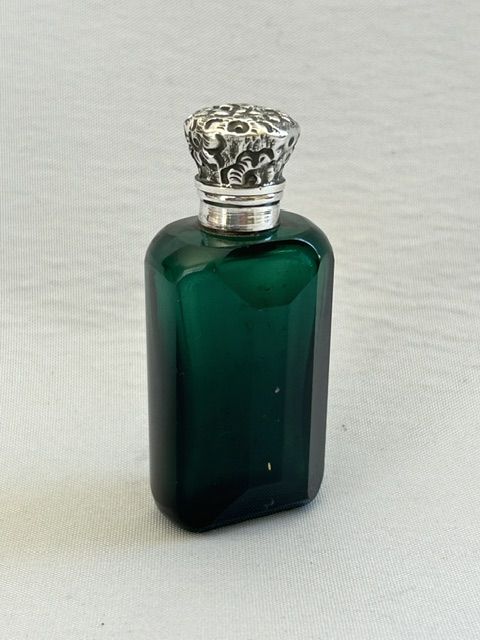
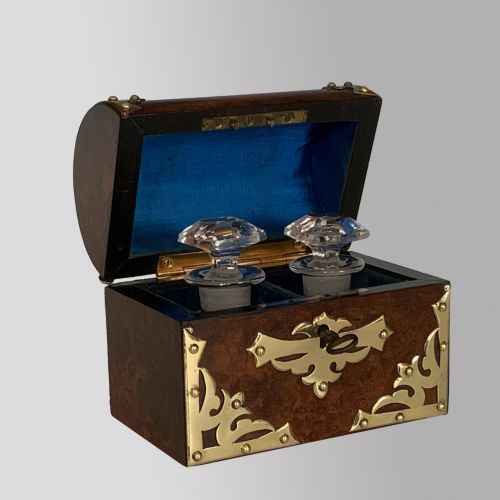


Cut Glass Dressing Table Bottle
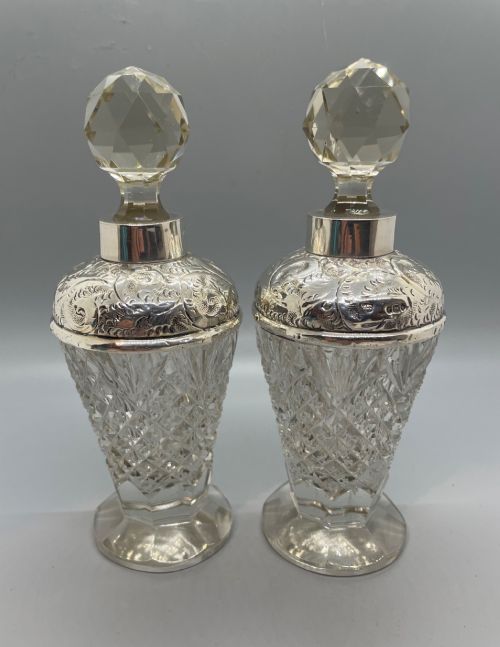
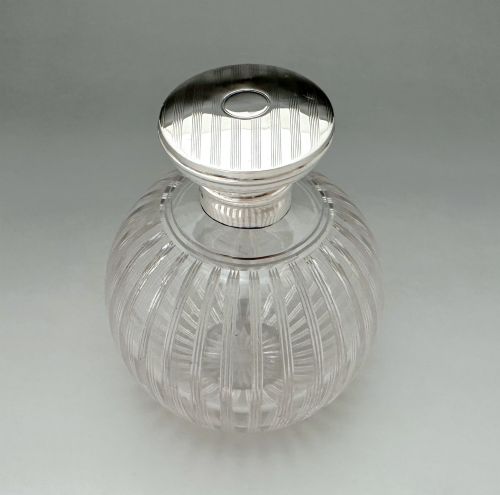
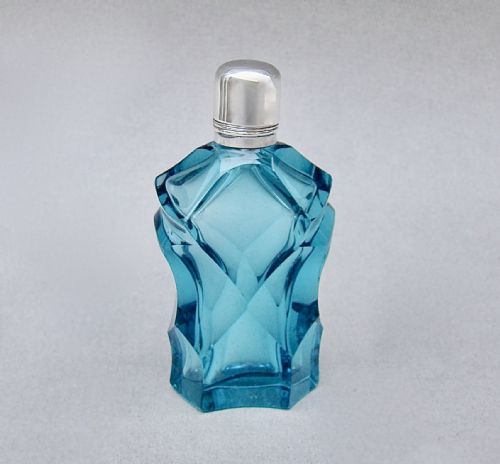
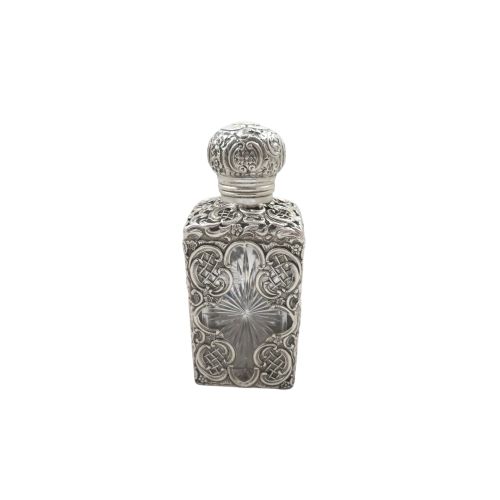
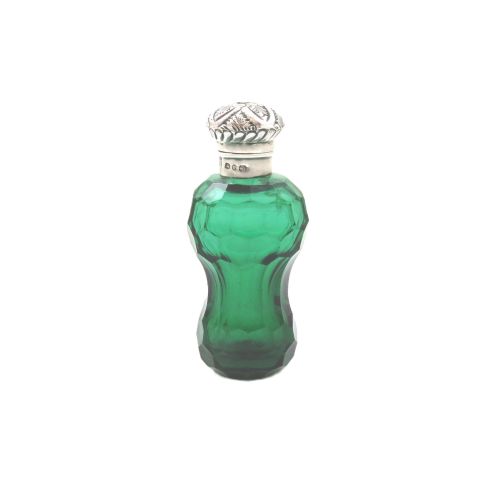
A cut glass dressing table bottle sits on the vanity to hold scent and catch the light through silver collars and coloured glass.
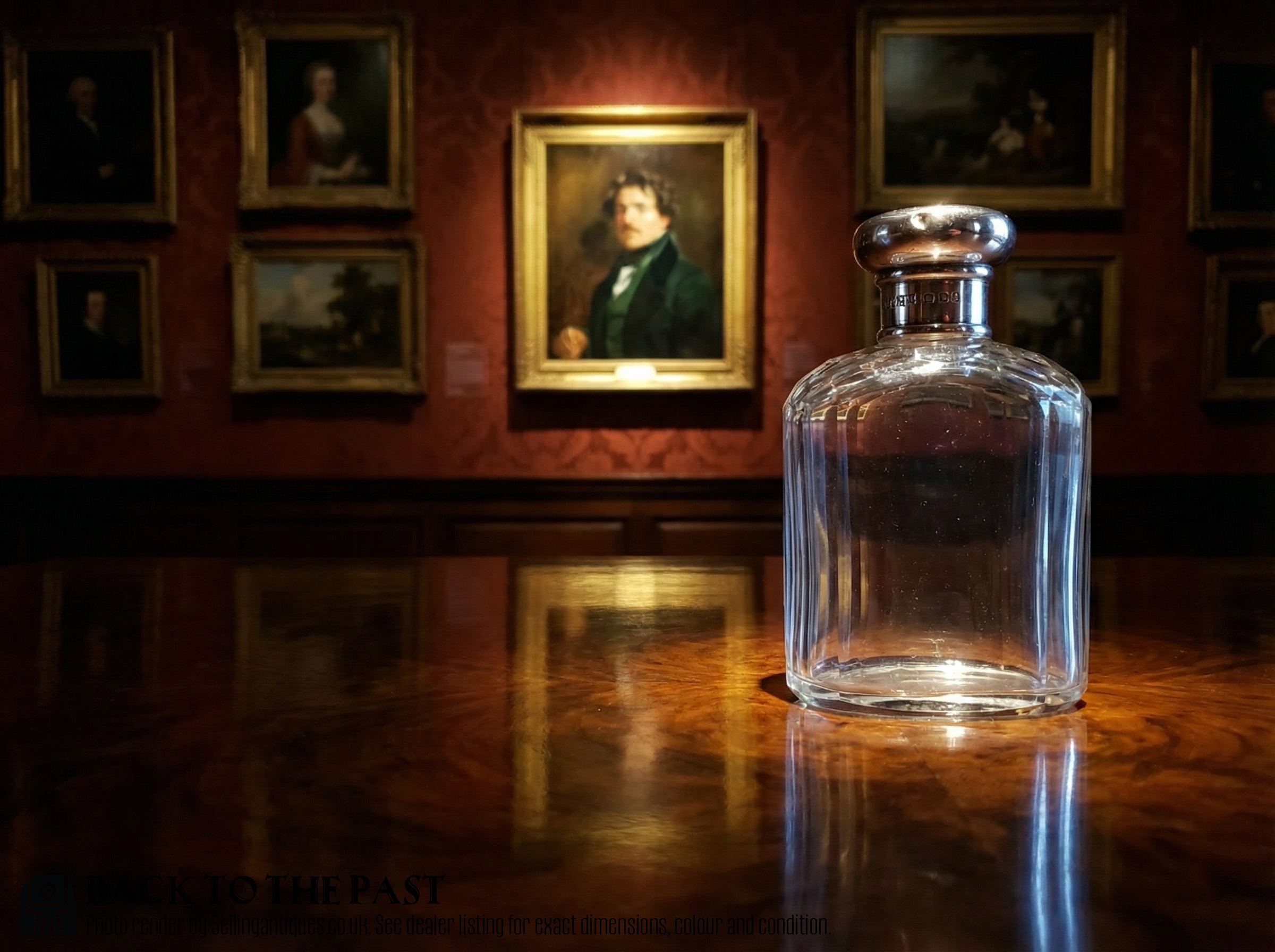
Cut Glass Dressing Table Bottle
A cut glass dressing table bottle is a small vessel designed for perfume, cologne or toilet water, often found with a matching stopper or a hinged metal lid. The pieces on this page span the Victorian, Edwardian and Art Deco periods, stretching from the early nineteenth century through to the nineteen-thirties.
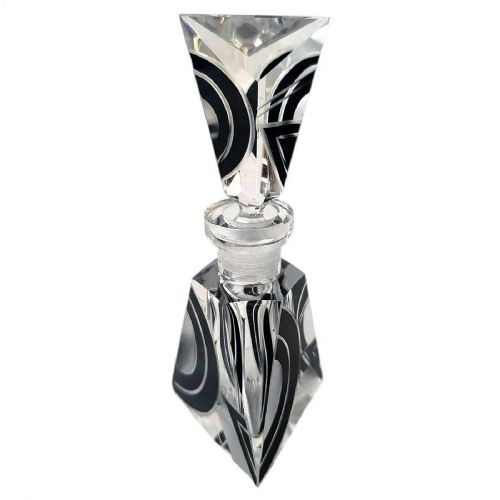
The most common form to meet here is the Victorian or Edwardian cut glass scent bottle fitted with a sterling silver collar or cap, alongside later geometric Art Deco designs from makers working in glass and enamel.
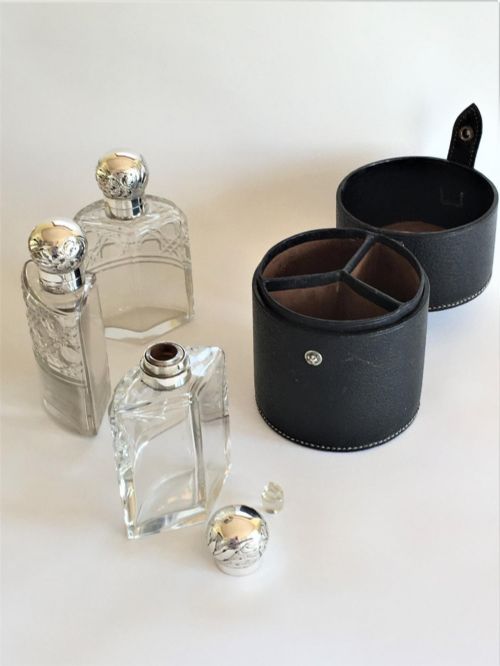
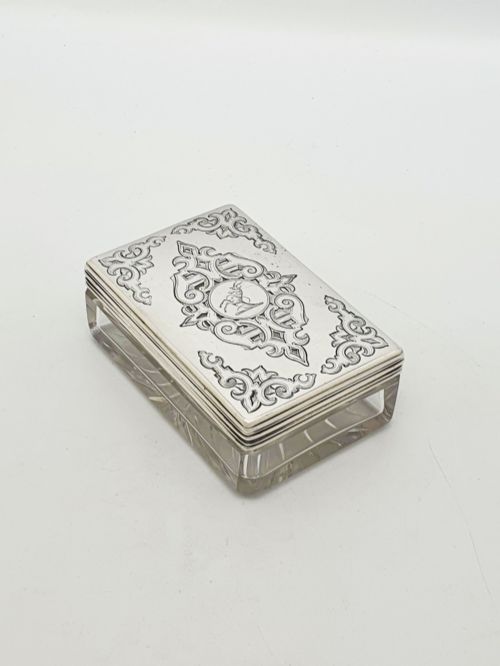
Beyond standalone bottles, the selection includes travelling trios in cased sets, atomisers, and related dressing table accessories such as trinket boxes and vanity jars.
Materials and technique
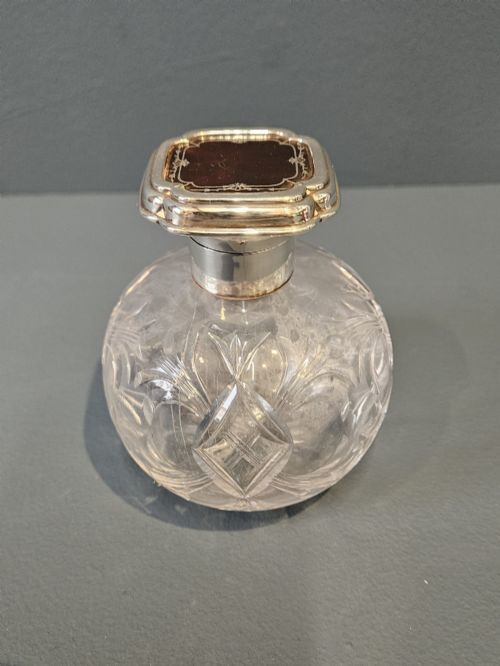
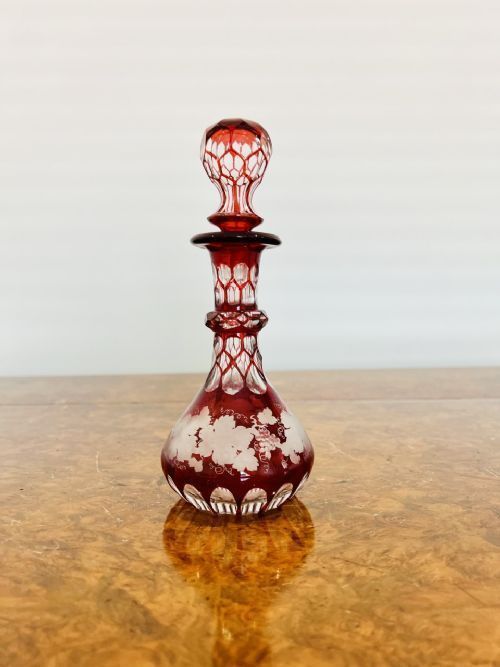
Makers shaped the bottles from heavy lead crystal or coloured glass, using wheel-cutting techniques to carve deep geometric patterns, flutes and star bottoms that refract light.
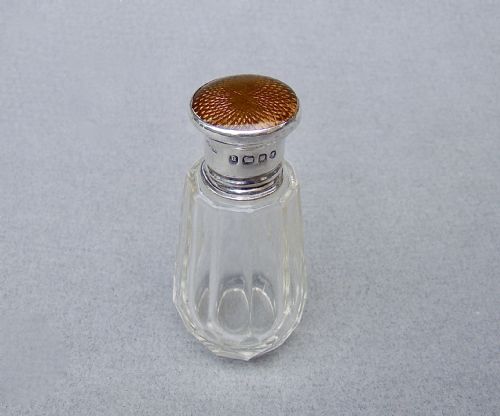
Mounts, collars and hinged lids were fashioned from sterling silver, frequently carrying Birmingham or London hallmarks, while select pieces incorporate brass, tortoiseshell, velvet or vibrant enamel work.
Design and execution
Quality rests in the crispness of the glass cutting and the weight of the metal mount, where deeper facets and heavier silver plating distinguish finer work from simpler commercial output.
The integration of decorative elements like guilloche enamel, tortoiseshell inlays or overlay glass creates a distinct hierarchy, moving from utilitarian containers to decorative dressing table showpieces.
Henry Perkins·Karl Palda·Barnsley and Co·Jonathan Douglas·Mappin and Webb
The Cut Glass Dressing Table Bottle Glossary
- Guilloche
- A decorative mechanical engraving technique that produces precise, intricate recurring geometric patterns beneath translucent enamel.
- Sterling silver
- A silver alloy containing ninety-two point five percent pure silver by mass, standard for British hallmarked dressing table mounts.
- Bristol green
- A deep, rich shade of green glass traditionally produced in the Bristol area during the eighteenth and nineteenth centuries.
- Atomiser
- A spray mechanism fitted to a perfume bottle, allowing the contents to be diffused in a fine mist.
Cut Glass Dressing Table Bottle: Frequently Asked Questions
What is a dressing table bottle?
A dressing table bottle is a small glass container intended to hold perfume or cologne on a bedroom vanity.
These vessels often feature protective silver lids or collars to preserve the fragrance and prevent evaporation.
How do I date a silver mounted bottle?
Dating relies heavily on the hallmarks stamped onto the silver collars or lids, which indicate the assay office, standard and year letter.
Stylistic cues in the glass cutting, such as Victorian hobnail patterns versus Art Deco geometric lines, provide further confirmation.
Are stoppers usually original?
Many surviving bottles retain their original matching ground-glass stoppers, though replacements are common due to breakage over decades of use.
A snug fit and matching cut patterns generally indicate a stopper has belonged to the bottle since manufacture.
How should I clean glass and silver?
Glass bodies respond well to warm water and gentle soap, taking care to keep moisture away from delicate internal cement or paper labels.
Silver mounts require a soft cloth and a conservative polish to avoid rubbing the hallmarks or staining adjacent enamel and glass.