





Cut Glass Candlestick Holder
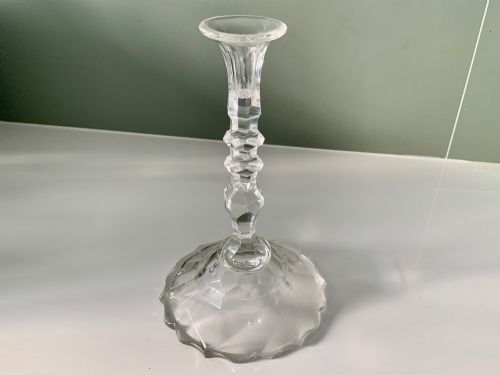
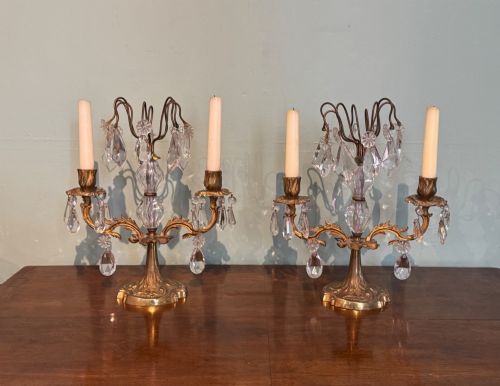
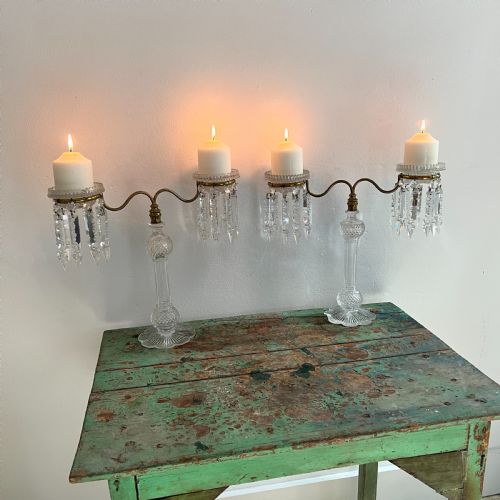
These cut glass candlestick holder examples catch the flame with deep facets and hanging drops.
Cut Glass Candlestick Holder
When you search for a cut glass candlestick holder, you are looking at items designed to support candles while refracting light through faceted surfaces. The pieces seen here span from the Georgian and Regency periods through to the Victorian, Edwardian, and 1930 eras.
You will most commonly meet pairs of table lustres and candlesticks, often featuring cut crystal or clear glass alongside brass, gilt brass, and ormolu mounts. Some examples incorporate hanging drops or storm shades to protect the flame.
The selection ranges from simple taper sticks to elaborate candelabra and novelty designs such as Clarke's Patent Cricklite pieces. Ruby red glass and bronze mountings also appear among the Victorian and continental specimens.
Materials and construction
The primary material is lead glass or crystal, shaped by cutting deep facets into the surface to maximise light reflection. Manufacturers combined this clear or ruby red glass with metal components such as brass, gilt brass, bronze, and ormolu.
Metal mounts and bases secure the glass shafts and nozzles, while glass lustres suspend crystal drops from collars using wire or pins. Patent designs like Cricklite assemblies integrated specialised glass shades and candle holders into brass frames.
Cut Glass Candlestick Holder Retail Price Guide 2026
Typical asking prices for cut glass candlestick holder among the pieces listed under this phrase on Sellingantiques today, from the lower quarter to the upper quarter. They describe what is for sale here now, not the wider market.
Some Victorian designs incorporate horns of plenty to hold your desk inkwell.
Judging quality in cut glass
Quality rests upon the crispness of the cutting and the clarity of the glass itself. Sharp, deep facets and heavy lead glass distinguish superior examples from simpler pressed or moulded alternatives.
The integration of the metal mounts, whether brass, gilt brass, or ormolu, dictates the refinement of the piece. Complete sets of matching hung lustres and undamaged storm shades also separate standard items from finer examples.
The Cut Glass Candlestick Holder Glossary
- Lustre
- A ornamental candlestick or candelabra hung with cut glass prisms or drops. These pendants catch and scatter candlelight across the room.
- Taper stick
- A small candlestick designed specifically for holding a thin wax taper. They were frequently utilised for melting sealing wax on letters.
- Cricklite
- A patented glass candlestick or candelabra assembly, often associated with Clarke, utilising protective glass shades. They became popular during the Victorian era for safe table lighting.
- Ormolu
- Gilded bronze used as a decorative mount or base on 19th-century lighting. The technique gives a rich gold-coloured finish to metal elements.
- Lead glass
- Heavy glass containing lead oxide that increases brilliance and softness for cutting. It forms the foundation of the best faceted candlesticks.
Cut Glass Candlestick Holder: Frequently Asked Questions
What is a lustre?
A lustre is a type of candlestick or candelabra fitted with hanging glass prisms or drops.
These drops are designed to catch and refract the light of the candle.
How do I date a glass candlestick?
Dating relies on the style of the cutting, the metal mounts, and overall proportions.
Georgian and Regency examples show different facet patterns compared to Victorian or Edwardian pieces.
What are Cricklite candlesticks?
Cricklite pieces are patented Victorian lighting fixtures featuring specialised glass shades.
They were produced by Clarke and often combine cut glass with brass frames.
How should I clean cut glass?
Cleaning requires warm water and mild soap, avoiding harsh chemicals that might harm metal mounts.
Lustre drops should be removed and washed individually to prevent damage.