


Cut Crystal Silver Bowl
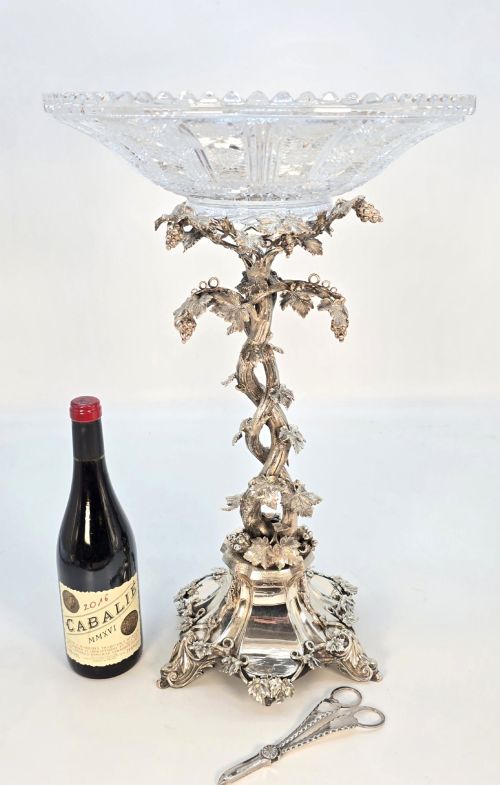
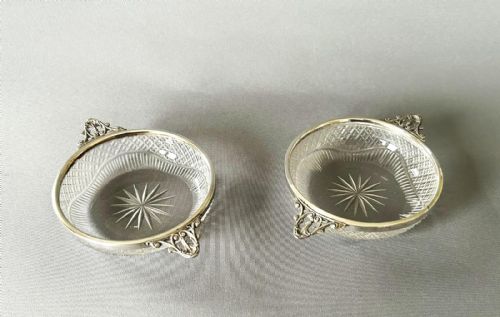
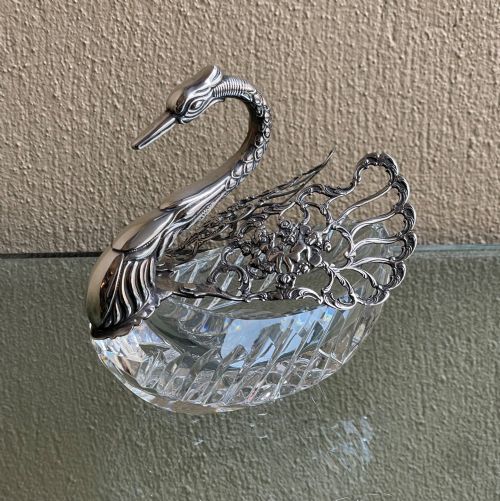
A cut crystal silver bowl brings heavy faceted glass and gleaming metal together on the table, offering a traditional centrepiece for fruit or flowers.
Cut Crystal Silver Bowl
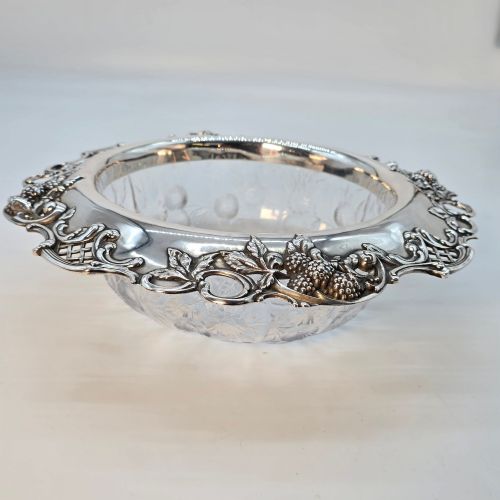
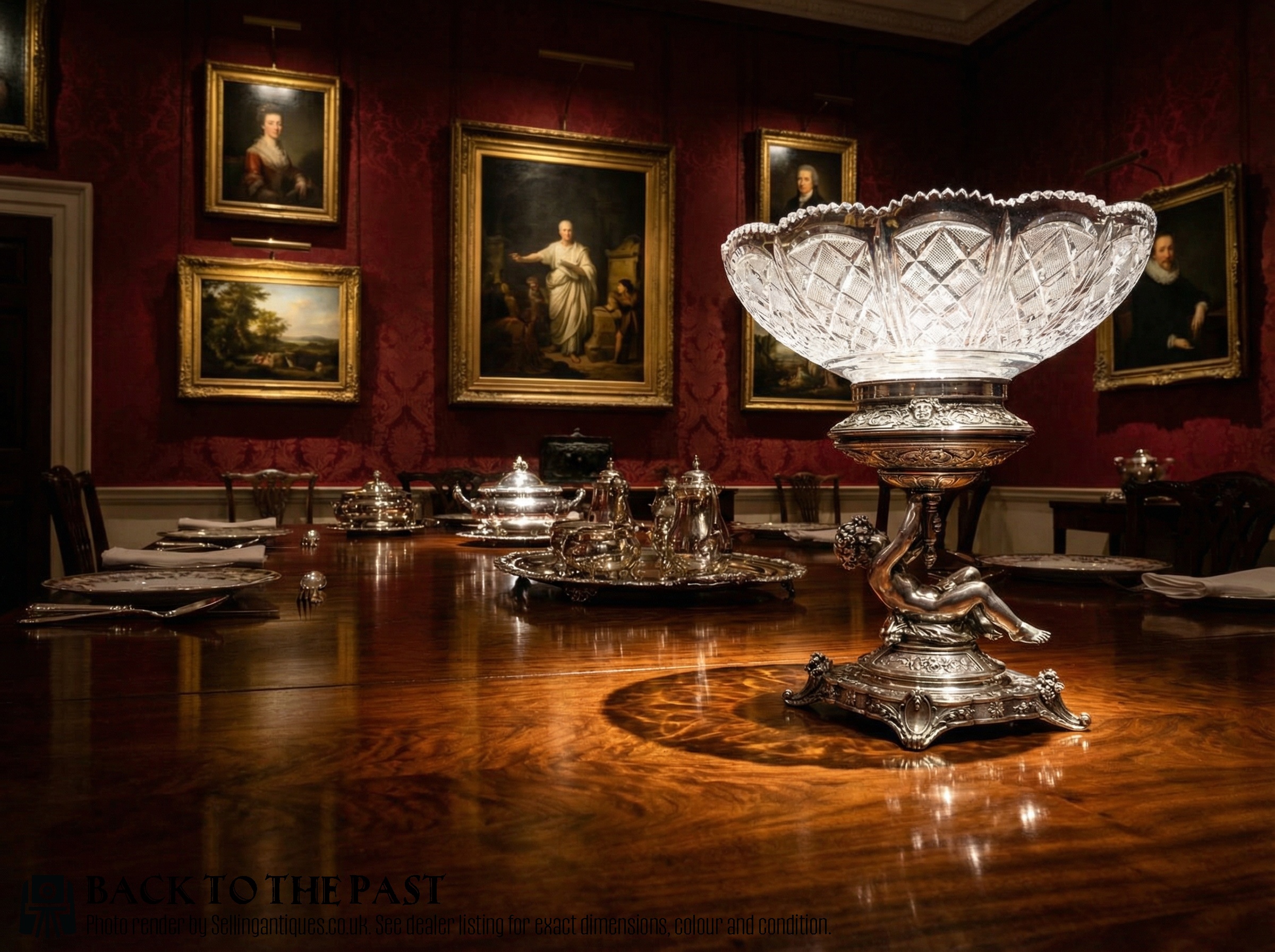
A cut crystal silver bowl combines heavy glass vessels with precious metal mounts, spans periods from the Victorian era through Art Deco to the mid-century, and takes the form of table centrepieces, fruit bowls, and lidded jars.
Buyers seeking a cut crystal silver bowl will most frequently encounter Edwardian and Victorian examples alongside 1930s pieces, ranging from small dressing table pots to grand serving dishes.
Materials and construction
Maker's workshops combined heavy lead crystal or cut glass with sterling silver, silver plate, or Old Sheffield plate, often securing mounts directly to the glass rims or threading swing handles through fitted collars.
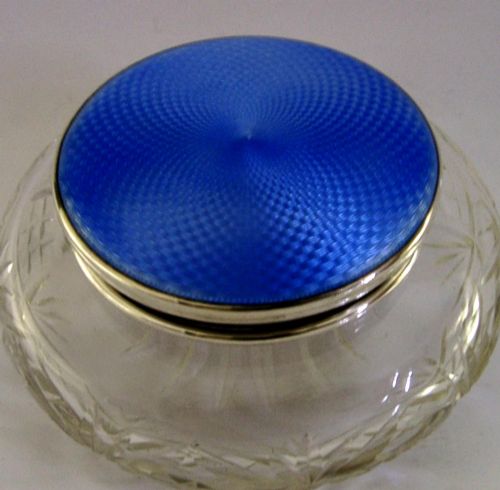
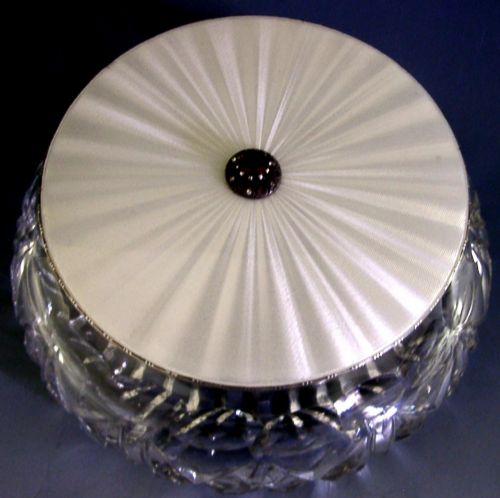
Many lidded boxes and vanity jars incorporate coloured enamel, guilloche work, or tortoiseshell set into the silver tops, adding decorative contrast to the deep facets of the glass below.
Sailors and naval officers clearly favoured nautical themes, commissioning grand silver-plated centrepieces complete with anchors and marine motifs.
Craftsmanship and weight
Quality rests in the depth and crispness of the glass cutting, where sharp, clean facets catch the light far better than shallow, rounded press-moulded patterns.
The weight of the crystal and the gauge of the silver mount distinguish finer pieces, alongside the precision with which metal collars and hinged lids fit the glass rims.
Tiffany and Co·William Comyns·Christofle et Cie
The Cut Crystal Silver Bowl Glossary
- Cut crystal
- High-clarity lead glass shaped by abrasive wheels to form deep geometric patterns that catch the light. The sharp facets create brilliant prismatic reflections.
- Sterling silver
- An alloy containing ninety-two point five percent silver by mass, hallmarked to guarantee its standard. It provides the durable, polished rims and lids found on finer vessels.
- Silver plate
- A base metal such as copper or Britannia metal coated with a thin layer of silver. This technique offered the visual weight of precious metal at a lower cost.
- Guilloche
- A decorative technique where a precise, intricate geometric pattern is mechanically engraved into metal beneath a translucent layer of enamel. It frequently adorns the lids of dressing table jars.
- Epergne
- A large, multi-tiered centrepiece featuring a central basket flanked by smaller hanging dishes or bowls. These elaborate stands combined cut glass with silver or plated mounts for formal dining tables.
Cut Crystal Silver Bowl: Frequently Asked Questions
How do I clean a cut crystal silver bowl?
Wash the glass gently in warm soapy water using a soft cloth, taking care to keep harsh polishes away from any enamel or tortoiseshell panels.
Dry the metal mounts thoroughly immediately after washing to prevent water spotting on the silver or plated surfaces.
How can I date my silver and cut glass piece?
Examine the metal mounts for British hallmarks, which include date letters, assay office marks, and maker's stamps that reveal the exact year of testing.
Style indicators such as Art Deco geometric enamelling or heavy Victorian Rococo casting also narrow down the period of manufacture.
Are these bowls suitable for serving food?
Most glass bowls and crystal dishes remain entirely food-safe and suit fruit, salads, or confectionery just as they did originally.
Check whether the metal rim or silver plate shows wear down to the base metal before using the vessel for acidic foods.
What is the difference between crystal and glass?
Crystal contains a proportion of lead oxide that increases the weight, refractive index, and clarity of the material compared to standard soda-lime glass.
This higher lead content allows cutters to carve deeper, sharper facets that produce distinct ringing tones when struck lightly.