

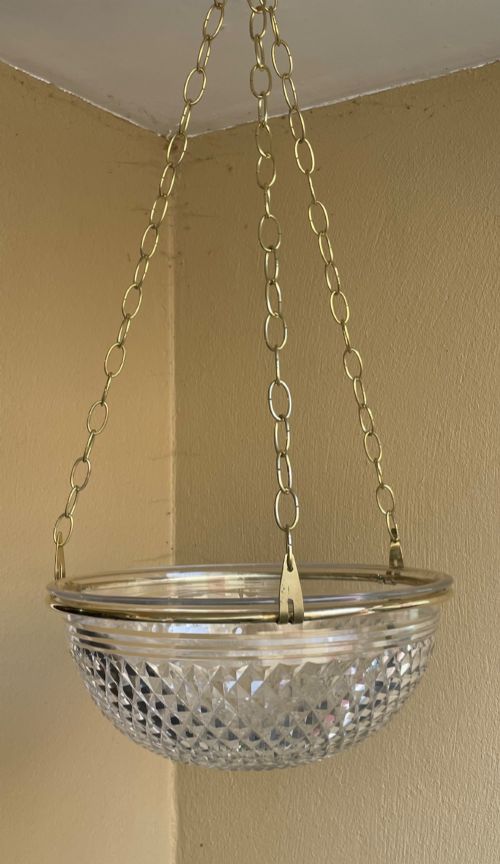


Cut Crystal Pendant Lamp
These cut crystal pendant lamp pieces offer brilliant overhead illumination through faceted glass and brass or bronze mounts dating from the Victorian era to the 1930s.
Cut Crystal Pendant Lamp
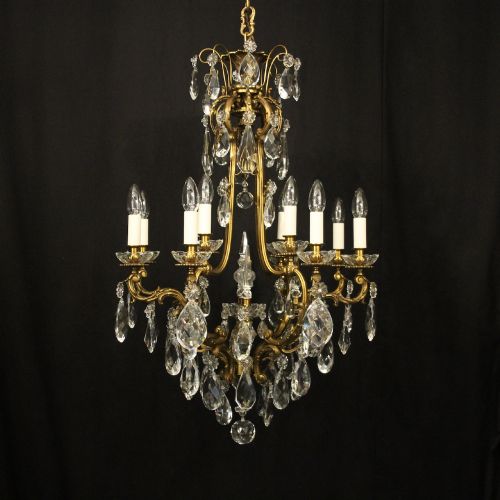
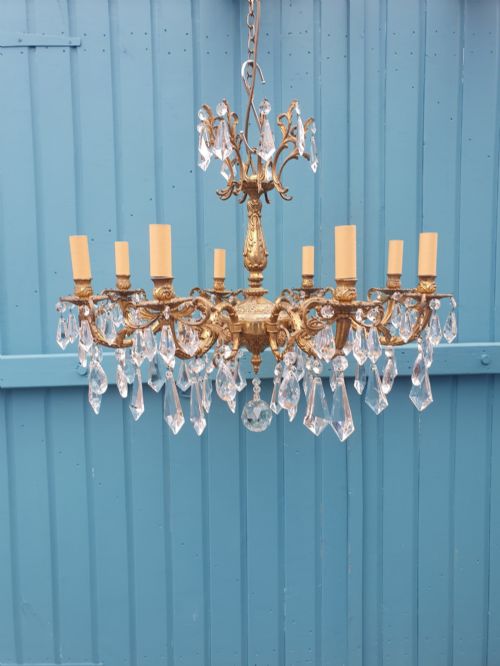
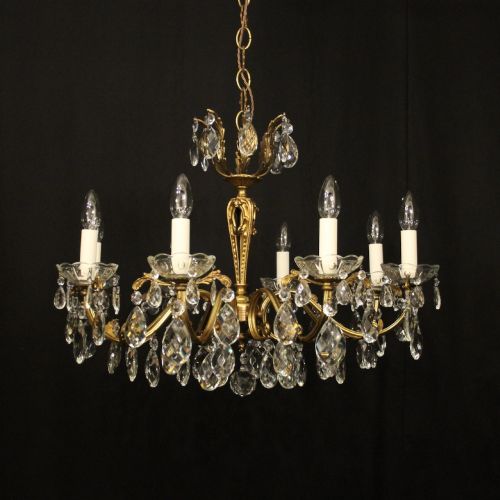
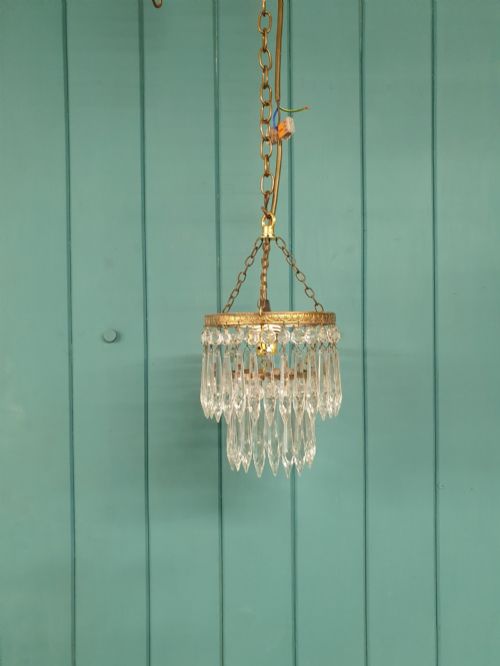
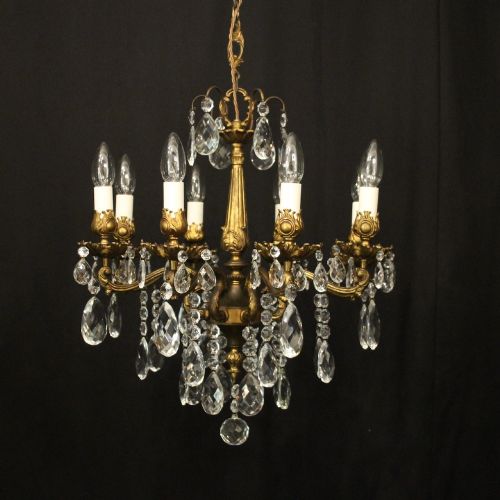
A cut crystal pendant lamp suspension light brings architectural focus and sparkle to a room, drawing the eye upward with hanging prisms and glass drops. When exploring a cut crystal pendant lamp selection, buyers encounter formats ranging from compact single-bulb fixtures to multi-armed chandeliers and basket lights. These ceiling fixtures often span historical periods including the Victorian era, Edwardian period, and the 1920s and 1930s.
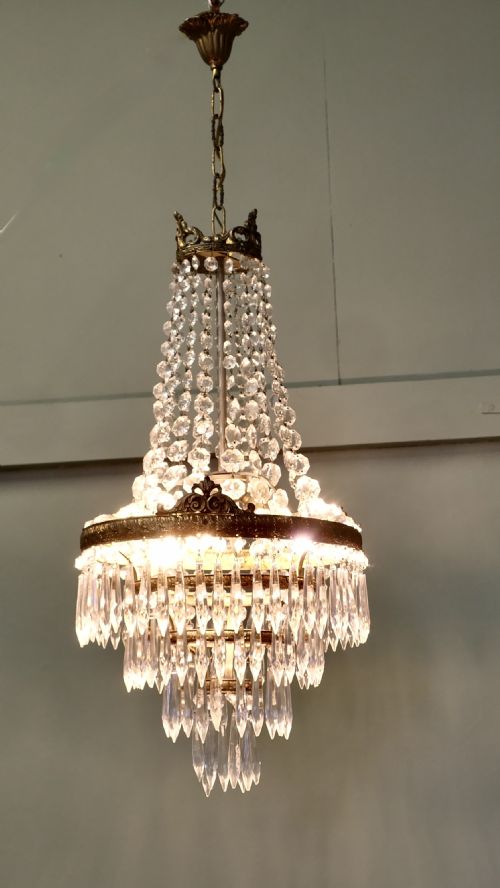
The regional origins on this page stretch across English and French workshops, utilising traditional lighting configurations like tent-and-bag designs, waterfall drops, and dome-topped plafonniers. Smaller examples measure a modest several inches across, while grander multi-arm installations extend to substantial proportions. Such diversity allows a cut crystal pendant lamp to suit hallways, bedrooms, and principal reception rooms alike.
Materials and construction methods
Makers constructed the structural frames of these light fittings using cast and spun metals, predominantly brass, gilt bronze, gilt brass, and chrome. These metal armatures support the weight of numerous glass elements while providing decorative mounts, chains, and ceiling canopies.
The refractive components consist of cut glass, crystal, and specialised drops shaped into prisms, beads, and swags. Artisans faceted these glass pieces by hand to maximise light dispersion from the internal bulb configurations.
Cut Crystal Pendant Lamp Retail Price Guide 2026
Typical asking prices for cut crystal pendant lamp among the pieces listed under this phrase on Sellingantiques today, from the lower quarter to the upper quarter. They describe what is for sale here now, not the wider market.
The listings on this site span manufacturing dates from 1850 through the 1930s, featuring Edwardian and Victorian aesthetic periods.
Distinctions in craftsmanship and design
The refinement of the glass cutting and the clarity of the crystal separate standard production from superior examples. Finely cut prisms display sharp, clean facets that scatter light cleanly, whereas lower tiers feature softer edges and minor inclusions within the glass.
Metalwork execution similarly dictates grade, with heavy cast bronze or gilt brass frames offering greater structural integrity than pressed metal alternatives. The complexity of the drop arrangement, such as intricate tent-and-bag assemblies or dense bead swags, denotes a higher level of artisan labour.
The Cut Crystal Pendant Lamp Glossary
- Plafonnier
- A ceiling-mounted or close-hung light fixture with a bowl or dome-shaped glass shade. These sit flush or semi-flush against the ceiling surface.
- Prism
- A geometric cut glass pendant designed to refract light into spectral colours. They hang from the main frame using small wire loops.
- Tent and bag
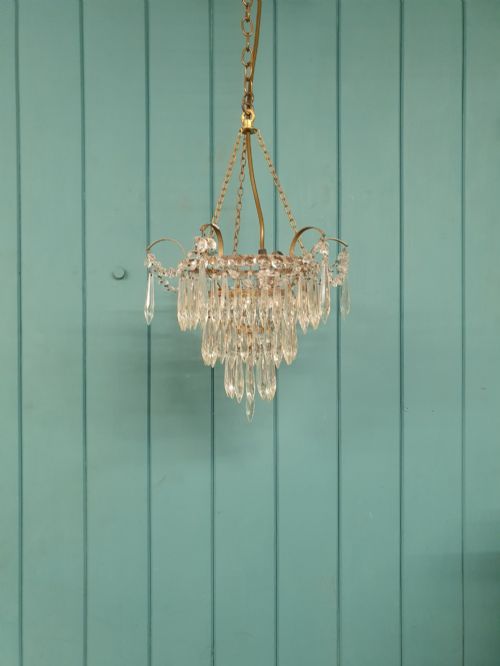
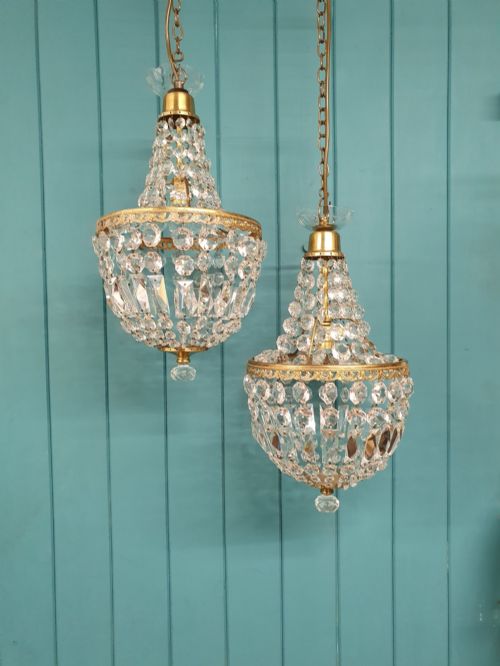
- A lighting configuration where strings of glass beads form a tent shape at the top, falling down into a gathered bag of drops below. This style creates a layered cascade of crystal.
- Ormolu
- Finely chased and gilt bronze mounted on decorative objects and light fittings. The technique produces a rich golden surface finish.
- Waterfall chandelier
- A lighting design where rows of glass drops cascade downward in overlapping tiers. The arrangement resembles falling water.
Cut Crystal Pendant Lamp: Frequently Asked Questions
How do I clean a crystal pendant light?
Maintenance involves gentle wiping of individual glass drops with a mild cleaning solution while the fixture hangs in place. Technicians often advise supporting each drop from beneath to avoid straining the holding wires.
Power must remain switched off during the process to ensure safety. Using a lint-free cloth preserves the polished surface of the crystal and the surrounding metal mountings.
Are these lights suitable for low ceilings?
Compact forms like plafonniers, dome-top lights, and small spike chandeliers work effectively in spaces with restricted vertical clearance. These designs mount closer to the ceiling than multi-tiered or heavily draped drop chandeliers.
Buyers should check the overall drop dimension listed for each individual fixture. Adjusting suspension chains can also alter the hanging height to fit a specific room.
Can antique crystal lights take modern bulbs?
Most antique ceiling fixtures accept standard modern lamp holders through professional rewiring. Electricians can update internal wiring to meet current safety standards while retaining the original exterior metalwork.
LED bulbs that mimic the warmth of traditional lighting are commonly utilised today. These modern alternatives generate less heat, protecting fragile vintage glass and fabric components.
How do I date an antique chandelier?
Dating relies on examining the metal composition, casting style, and wiring methods employed in the piece. Edwardian and Victorian examples often feature heavy cast brass or bronze frames with hand-cut lead crystal drops.
Later 1920s and 1930s designs incorporate alternative metal finishes like chrome or lighter stamped brass mounts. Comparing the drop patterns with established period styles provides further chronological guidance.