



Cut Crystal Liquor Bottle
A cut crystal liquor bottle brings weight and brilliance to a sideboard, holding spirits behind heavy lead glass and polished metal mounts.
Cut Crystal Liquor Bottle
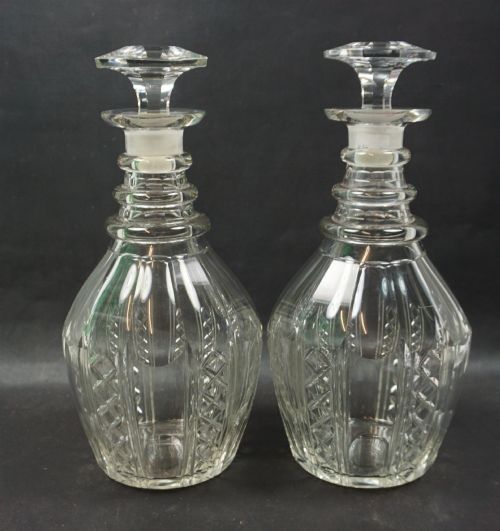
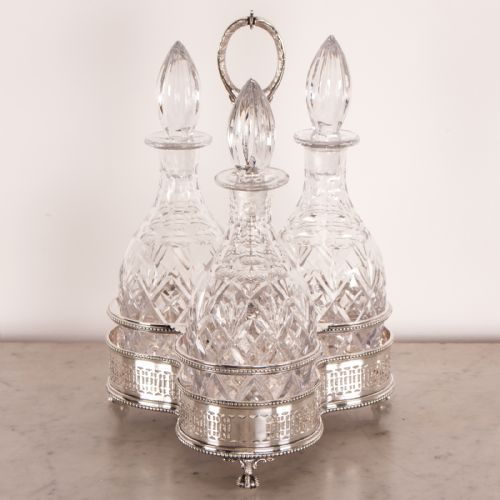
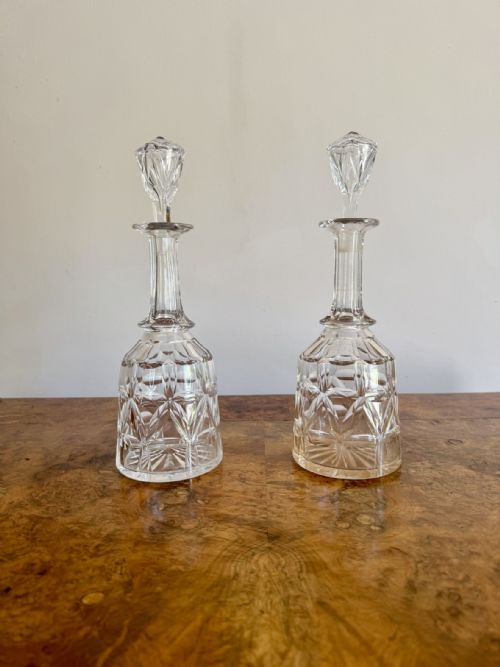
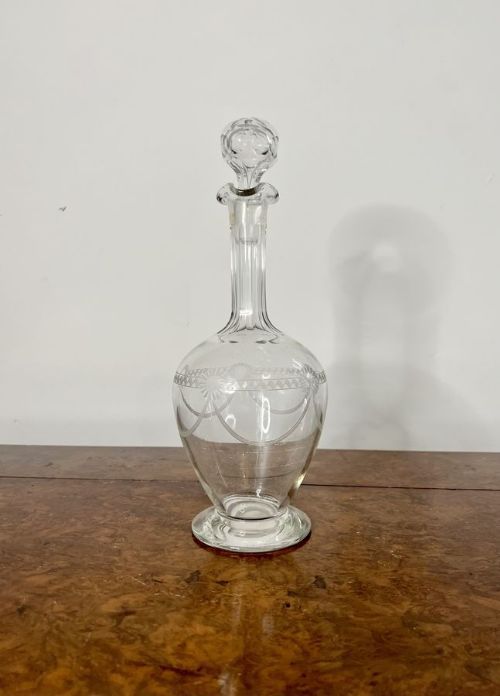
A cut crystal liquor bottle encompasses a variety of heavy serving vessels designed for spirits, appearing on this page as Victorian decanters, Edwardian spirit bottles and secure tantaluses housed in oak or fitted stands. These pieces range from simple bell-shaped glass forms to elaborate sets mounted in silver plate, sterling silver or brass.
The most common examples encountered here date from the nineteenth and early twentieth centuries, spanning the Victorian and Edwardian eras. Buyers will find single bottles, matched pairs and multi-bottle sets equipped with original stoppers or locking mechanisms.
Makers and manufacturers utilised durable materials such as lead crystal and cut glass, often accented with sterling silver collars, silver plate or oak frames to secure the contents. The selection highlights functional barware intended to display whisky, brandy and rum with considerable presence.
Glass cutting and metal mounting
Craftsmen shaped these vessels using traditional blowing and heavy cutting techniques on lead crystal or plain glass. Deep facets, flutes and optical blowing created brilliant refractive patterns across the surface of the bottle.
Mounts and collars of sterling silver, silver plate, or gilt bronze were applied to the necks and bases. Secure frameworks utilised oak timber and brass hardware to construct locking tantalus stands.
Cut Crystal Liquor Bottle Retail Price Guide 2026
Typical asking prices for cut crystal liquor bottle among the pieces listed under this phrase on Sellingantiques today, from the lower quarter to the upper quarter. They describe what is for sale here now, not the wider market.
Listings span the nineteenth and twentieth centuries, featuring lead crystal, cut glass, sterling silver, silver-plate and oak.
Clarity, weight and mount craftsmanship
Quality rests upon the depth and crispness of the glass cutting, the weight of the lead crystal, and the clarity of the material. Superior examples display sharp, clean facets without cloudiness or surface wear.
The standard of metalwork distinguishes finer pieces, seen in hallmarked sterling silver collars, substantial silver-plated stands, and tightly fitted oak tantaluses with functioning locks.
Walker & Hall·James Powell·Elkington·Betjemann Brothers·Philip Ashberry·Hukin and Heath
The Cut Crystal Liquor Bottle Glossary
- Tantalus
- A locking wooden or metal stand that holds spirit decanters securely in place so the bottles cannot be removed without a key. The design allowed hosts to display expensive liquor while restricting access.
- Lead crystal
- A type of glass containing metallic lead oxide, which increases the weight, refractive index and clarity of the material. This composition is well suited for deep geometric cutting.
- Optical blown
- A glassblowing technique where molten metal is inflated inside a ribbed or patterned mould to create subtle vertical flutes or optic effects in the walls of the vessel.
- Silver plate
- A layer of silver fused to a base metal foundation, commonly utilised for the collars, handles and stands of late nineteenth-century barware.
- Hallmark
- An official stamp or series of marks applied to precious metal components, indicating the standard of silver, the maker and the assay office.
Cut Crystal Liquor Bottle: Frequently Asked Questions
What is a tantalus?
A tantalus is a locking wooden or metal frame designed to hold spirit decanters securely. It prevents guests or servants from pouring drinks without the key.
Most examples incorporate oak and brass hardware, enclosing the bottles tightly while leaving the cut crystal necks visible.
How do I identify Victorian pieces?
Victorian decanters typically feature heavy lead crystal with deep diamond cutting or star motifs on the base. They often include broad silver-plated collars or sit within ornate stands.
Proportions tend to be robust and substantial, reflecting the manufacturing styles of the nineteenth century.
Are stoppers usually original?
Many pieces retain their matching faceted glass stoppers, which are often numbered to correspond with the body of the bottle. Replacement stoppers do occasionally occur due to breakage over time.
Examining the grind of the stopper peg against the interior neck helps determine whether the pair has stayed together.
How should I clean antique glass?
Gentle hand washing with warm water and mild soap preserves the clarity of lead crystal and protects any silver collars from harsh detergents. Avoid sudden temperature changes to prevent cracking.
Allowing the bottles to dry completely upside down prevents water spots inside the vessel.