




Cut Crystal Flask
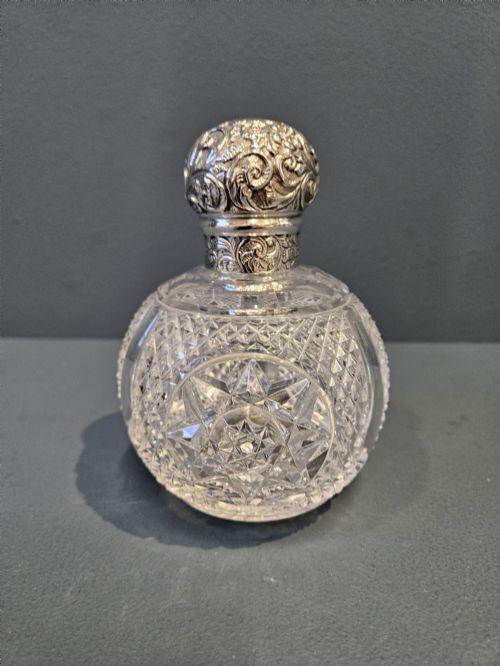
A cut crystal flask holds perfume or spirit with heavy glass facets that catch the light.
Cut Crystal Flask
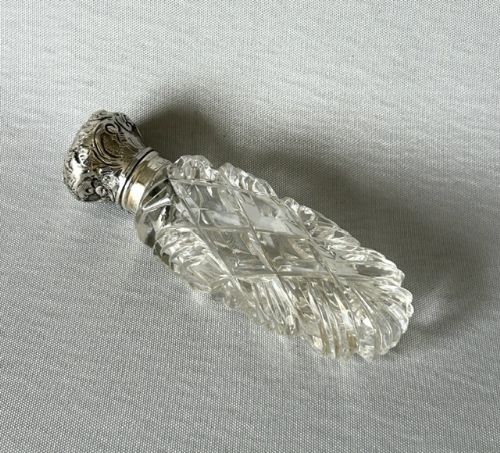
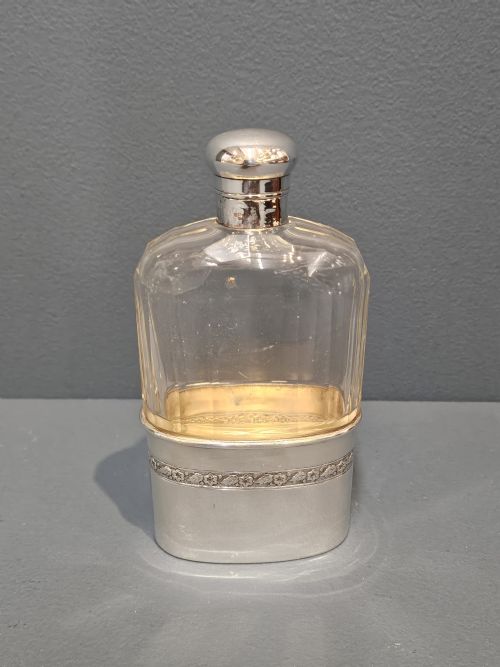
A cut crystal flask is a functional vessel designed for scent, cologne, or travel spirits, combining heavy glass bodies with metal mounts. When looking for a cut crystal flask, buyers encounter forms ranging from pocket perfume bottles and scent bottles to saddle flasks and decanters. The pieces span periods from the nineteenth century through the Edwardian era and Art Deco years.
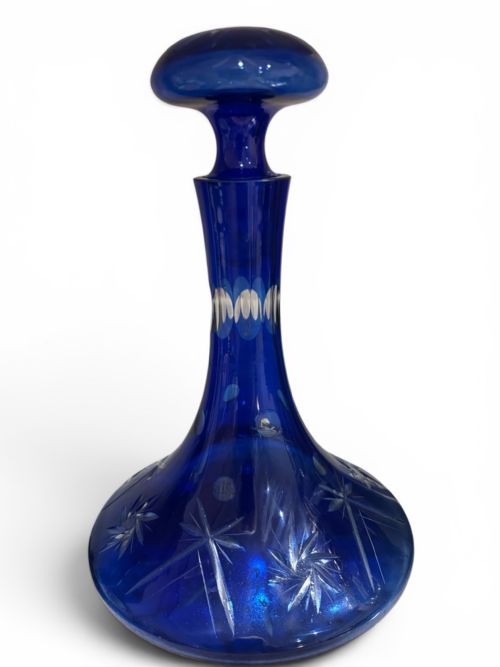
Victorian and Edwardian examples often feature deep facet cutting paired with sterling silver lids, while Art Deco pieces tend toward geometric blue or amber glass. Bohemian production appears in ruby, cranberry, and cobalt hues alongside clear crystal bodies. These objects serve dressing tables, pockets, and travel kits with equal measure.
The assortment includes specialised items such as gentleman's cologne bottles, explorer's saddle flasks in leather cases, and delicate scent containers with enamel decoration. Most pieces integrate silver or silver gilt collars, screw caps, or hinged tops. The variety reflects nineteenth and early twentieth-century habits of personal grooming and travel.
Materials and construction
Makers shaped these vessels from heavy glass or crystal, often applying coloured overlays in cranberry, cobalt, ruby, or green before cutting through the surface to reveal clear material underneath. The cutting process involved wheel-engraving geometric patterns, flutes, and diamonds into the thick walls of the blank. This weight ensured stability on dressing tables and durability during transit.
Metal components typically consist of sterling silver, silver gilt, or base metals fitted as collars, screw caps, or hinged lids. Enamel work, tortoiseshell inlays, and guilloché patterns frequently embellish the silver mounts, particularly on French and English pieces from the late nineteenth century and the Edwardian period.
Leather cases frequently accompany travel variants such as saddle flasks, protecting the glass body while allowing the container to slide into a fitted pouch. Internal stoppers of ground glass or cork ensured a tight seal for liquids carried in pockets or bags.
Cut Crystal Flask Retail Price Guide 2026
Typical asking prices for cut crystal flask among the pieces listed under this phrase on Sellingantiques today, from the lower quarter to the upper quarter. They describe what is for sale here now, not the wider market.
Some Victorian gentlemen required lockable cologne bottles to prevent servants from sampling their expensive spirits.
Judging quality in glass and mounts
Quality rests on the crispness of the glass cutting and the weight of the crystal blank. Deeper, sharper facets catch the light cleanly, while softer edges indicate hurried or later production. The clarity of the glass itself matters, with superior examples showing no internal bubbles or cloudiness.
The metal mountings reveal much about the standard of the piece, particularly the thickness of the sterling silver and the precision of the hinge or screw thread. Intricate guilloché enamel work and well-preserved tortoiseshell inlays demand advanced artisan skill. Maker marks stamped into the silver provide evidence of workshop origin and standard.
Condition of the interior and the original stopper influences the integrity of the piece. Intact glass daubers, clean interiors free from staining, and secure lids that close flush demonstrate careful preservation.
Harold Bushell and Co·Karl Palda·Barnsley and Co·S Morden and Co
The Cut Crystal Flask Glossary
- Cut glass
- Glassware shaped by grinding and polishing facets into the surface using rotating wheels. This technique creates geometric patterns that refract light.
- Guilloché enamel
- Enamel applied over engine-turned metalwork, creating repeating geometric patterns visible beneath a translucent coloured layer. It appears frequently on early twentieth-century scent bottle lids.
- Saddle flask
- A portable glass flask designed to slide into a leather case for equestrian travel. The bottom is often rounded or capped in metal to withstand movement.
- Overlay glass
- Glass made by fusing a layer of coloured glass over a clear or contrasting body before cutting away sections. This exposes the underlying colour in patterns.
- Silver gilt
- Sterling silver coated with a thin layer of gold. It provides a rich interior or exterior finish on bottle mounts.
Cut Crystal Flask: Frequently Asked Questions
What is a cut crystal flask used for?
These vessels were originally made to carry perfume, smelling salts, or spirits while travelling or for daily use on a dressing table. The heavy glass and secure silver lids prevented leakage in pockets or luggage.
Today, collectors use them as decorative vanity items or display them alongside barware and antique glass collections.
How do I date a cut crystal flask?
Dating relies on a combination of hallmarks on the silver mounts, glass colours, and stylistic markers such as Art Deco geometry or Victorian ornamentation. Maker marks and date letters stamped into the silver provide precise years for English pieces.
Form and manufacturing techniques also offer clues, as heavy hand-cut lead crystal predominated in the nineteenth century while colourful geometric styles emerged around nineteen thirty.
Are the glass stoppers usually original?
Many surviving pieces retain their original ground glass stoppers or internal daubers, which were custom-fitted to each neck during manufacture. Finding a matching inner stopper adds to the completeness of the object.
Replacement corks or modern stoppers do appear on pieces that saw heavy use over the decades.
How should I clean a cut crystal flask?
Cleaning requires warm water and mild soap, avoiding harsh abrasives that might scratch the silver or dull the glass surface. Cotton buds help reach internal residues in narrow necks.
Silver mounts should be polished with care to avoid transferring cleaning agents onto the glass or enamel panels.