



Cut Crystal Champagne Glasses
Cut crystal champagne glasses are drinking vessels and coolers defined by deep wheel cuts, emerging in Victorian, Edwardian, and Art Deco forms.
Cut Crystal Champagne Glasses
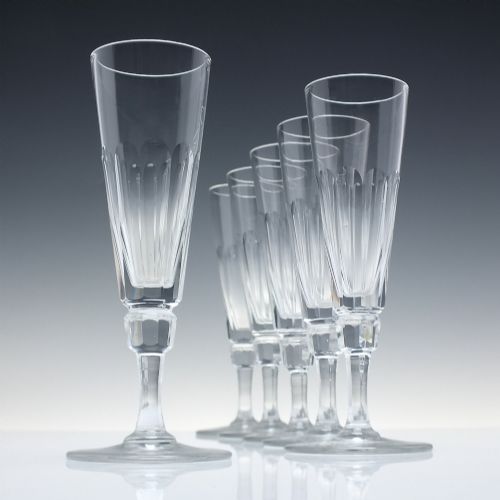
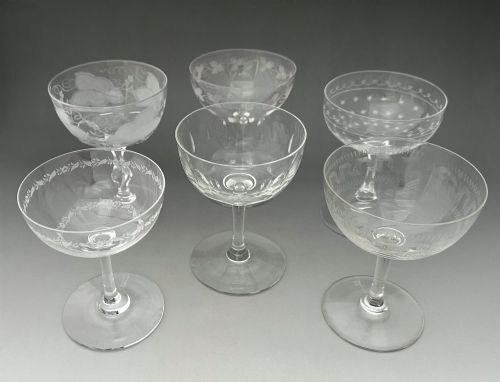
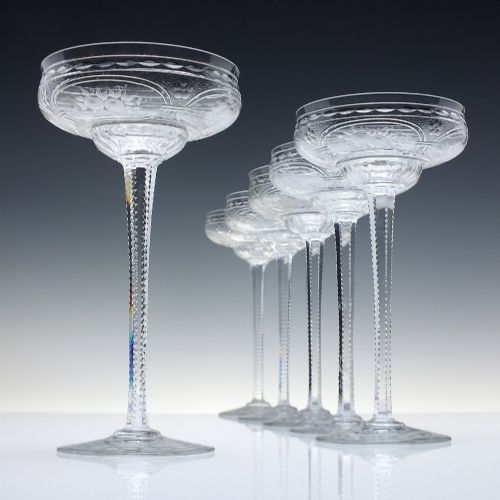
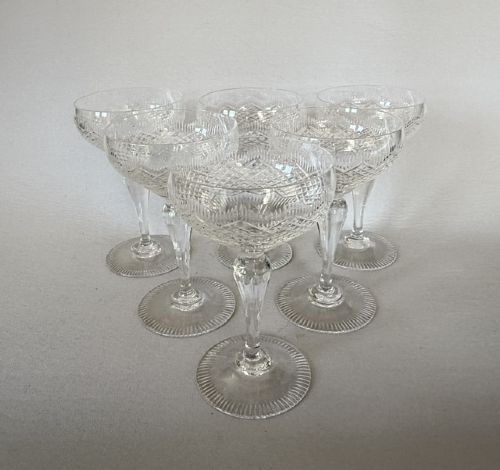
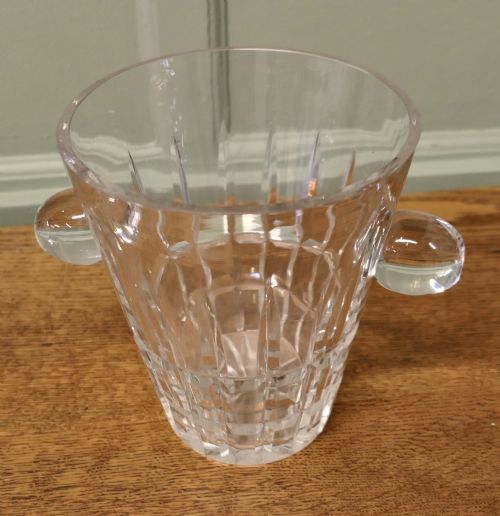
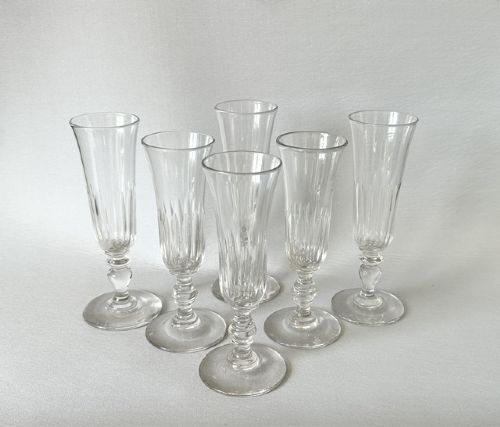
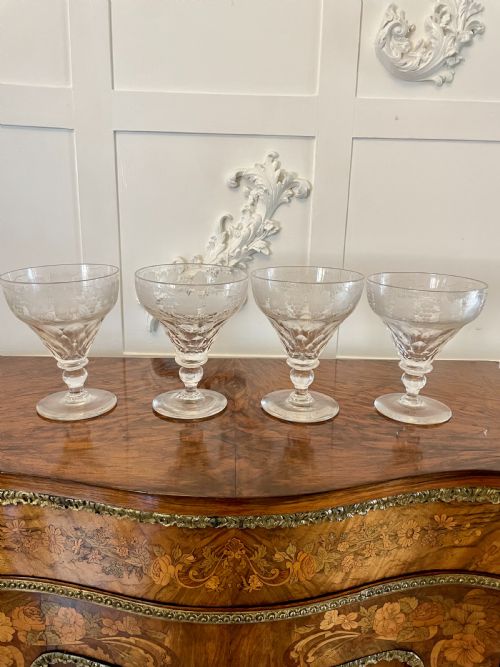
Cut crystal champagne glasses encompass a range of drinking vessels and coolers associated with festive dining across the nineteenth and twentieth centuries. Buyers seeking cut crystal champagne glasses will encounter forms spanning Victorian champagne flutes and bowls, Edwardian coupes, and heavy Art Deco ice coolers.
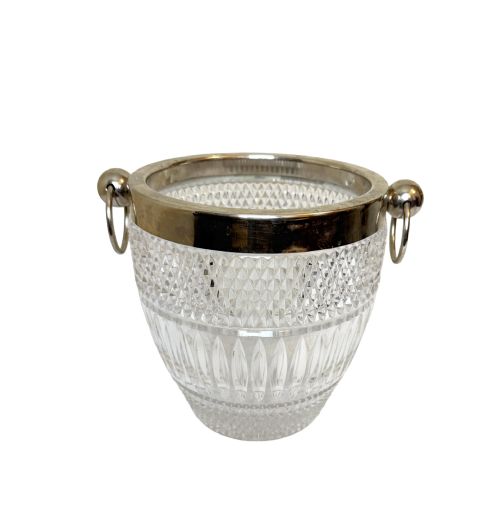
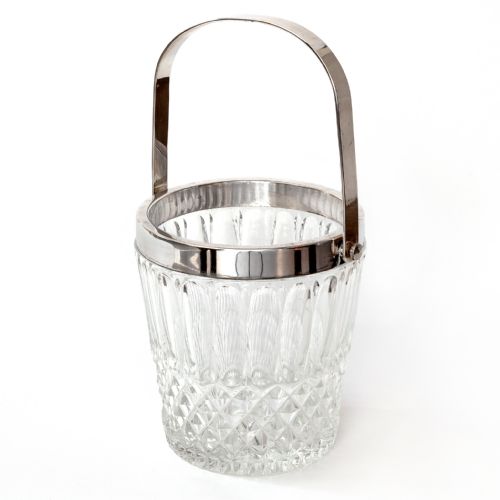
The selection includes matched sets of small bowls, large facet cut coupes, and tall flutes alongside associated silver plate and gilt bronze mounted ice buckets. Pieces appear from English, French, and Bohemian makers, representing periods from the Regency era through to the nineteen-forties.
How they were made
These items are shaped from lead crystal, cut glass, and standard glass, often mouth-blown before receiving their decorative facets. Makers employed wheel-cutting techniques to carve geometric patterns, flutes, and botanical engravings directly into the material.
Certain vessels combine glass with metal mounts, incorporating silver plate, silver-plate, or gilt bronze collars and handles. Coloured examples utilise overlay methods, layering green, cranberry, or red crystal over clear glass before cutting through the surface.
Cut Crystal Champagne Glasses Retail Price Guide 2026
Typical asking prices for cut crystal champagne glasses among the pieces listed under this phrase on Sellingantiques today, from the lower quarter to the upper quarter. They describe what is for sale here now, not the wider market.
Dolphins and convolvulus flowers swim and wind their way across nineteenth-century crystal, proving that antique drinkers loved nature just as much as we do.
What varies in quality
Quality rests upon the crispness of the wheel cutting and the weight of the crystal used in the vessel. Superior examples display deep, sharp facets that catch the light cleanly, alongside well-proportioned stems and balanced bowls.
The presence of secondary materials such as silver plate mounts or fine hand engraving alters the character of a piece. Consistency across a matched set elevates desirability compared to single items or assembled groups.
Richardsons·Moser·Otto Prutscher
The Cut Crystal Champagne Glasses Glossary
- Champagne coupe
- A shallow, broad-bowled glass designed for sparkling wine, prevalent in Victorian and Edwardian services. These open bowls predate the modern tall flute.
- Lead crystal
- A glass composition containing metallic oxide, prized for its high refractive index and heavy feel. This material allows for deeper, sharper facet cutting.
- Facet cut
- A decorative surface finish consisting of multiple flat, polished planes ground into the glass. These cuts create sharp light refractions across the body of the vessel.
- Overlay
- A technique where a layer of coloured glass is fused over a clear crystal base. Subsequent cutting removes parts of the top layer to reveal the clear glass beneath.
- Silver plate
- A thin coating of silver applied over a base metal, commonly utilised for the handles, rims, and mounts of champagne buckets and coolers.
Cut Crystal Champagne Glasses: Frequently Asked Questions
How do I identify Victorian champagne flutes?
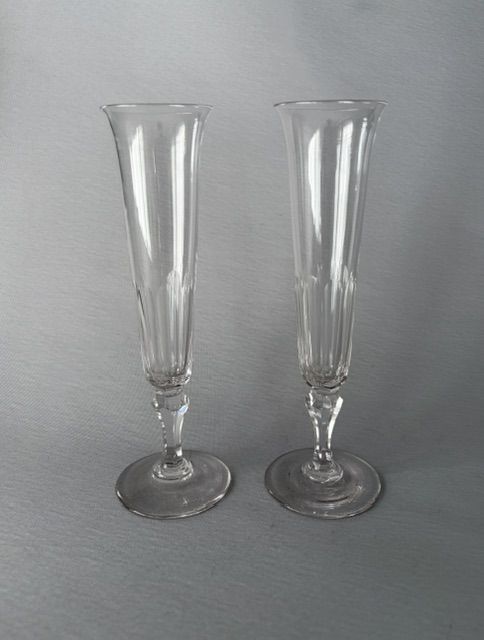
Victorian champagne flutes generally present taller, narrower bowls than later Edwardian coupes, often featuring hand-cut facets or engraved botanical motifs. They reflect the dining customs of the nineteenth century when sparkling wines were served differently.
Examine the weight and clarity of the crystal alongside the style of the stem. Earlier nineteenth-century examples often display simpler, heavier cutting compared to the refined Edwardian variations.
What is the difference between coupes and flutes?
Coupes offer a wide, shallow bowl suited to the etiquette of the late Victorian and Edwardian periods. Flutes provide a taller, narrower vessel designed to retain carbonation.
Both forms appear frequently in cut crystal, allowing collectors to choose based on historical period or table presentation preferences.
How do I care for antique crystal glassware?
Antique crystal requires careful hand washing in warm water using mild detergent. Avoid sudden temperature changes to prevent thermal shock to the glass.
Store pieces securely with adequate spacing between items to protect delicate rims and engraved surfaces from chipping.
Are Art Deco ice buckets made of crystal?
Art Deco ice buckets frequently utilise heavy lead crystal or cut glass combined with silver plate mounts. These pieces date from the nineteen-twenties and nineteen-forties.
They serve as functional coolers for champagne, matching the aesthetic of contemporary glassware sets.