


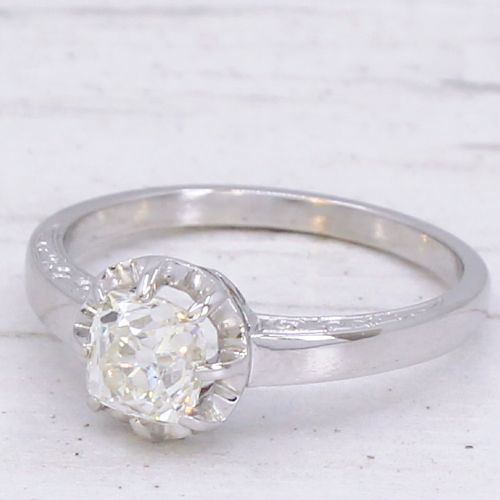


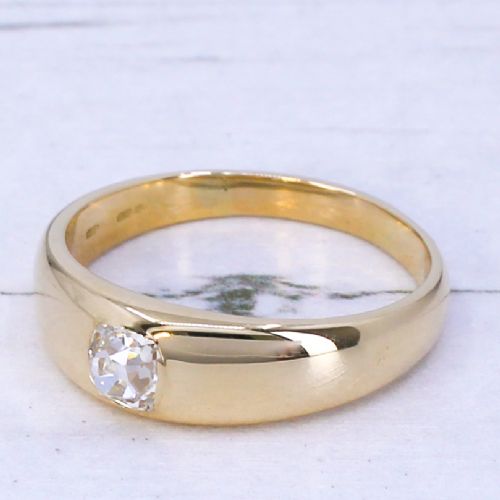


Cushion Solitaire Gold Ring
A cushion solitaire gold ring offers the soft, romantic geometry of an antique cushion-cut stone held in warm metal.
Cushion Solitaire Gold Ring
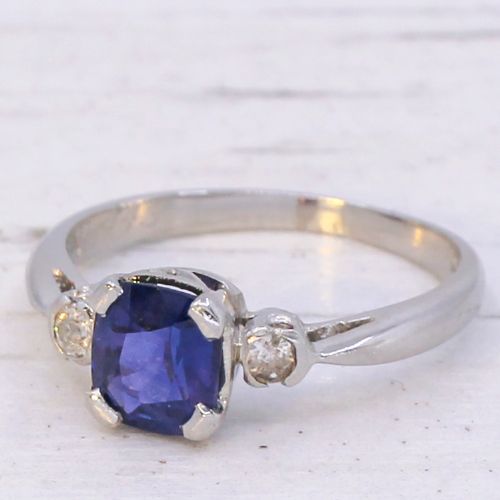
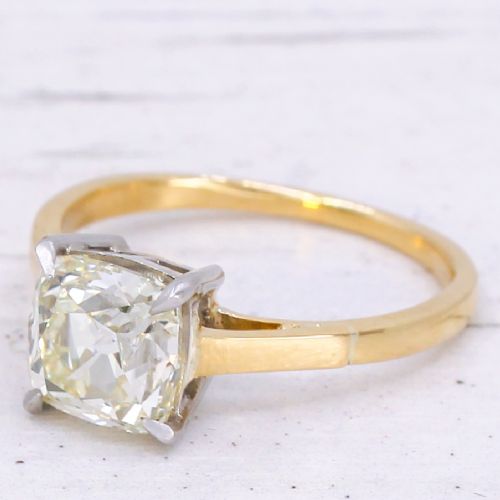
A cushion solitaire gold ring centres on a single stone shaped with rounded corners and curved sides, known as a cushion or old mine cut. These pieces span periods from the Georgian and Victorian eras through Edwardian, Art Deco, and Mid-Century designs, reflecting centuries of hand-cut gem artistry.
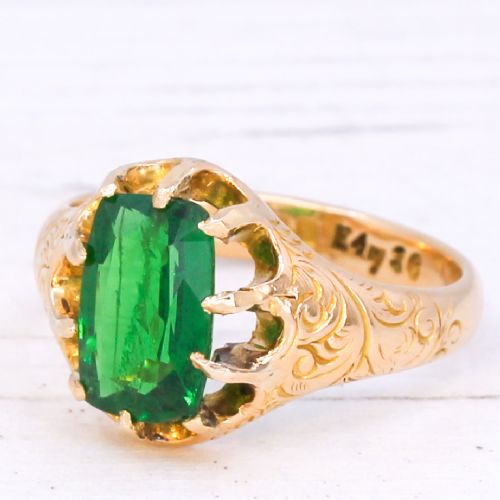
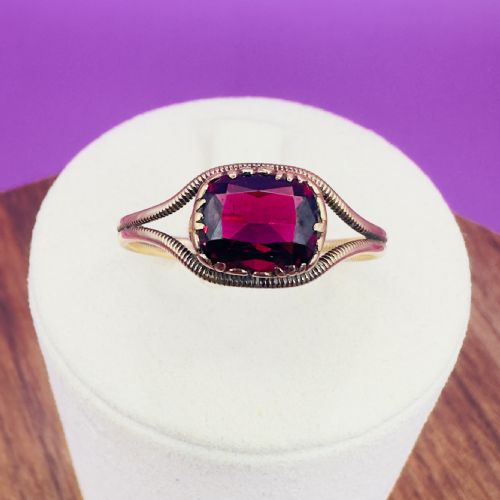
Most examples found here combine yellow gold, white gold, or platinum settings with diamonds, though garnet, tsavorite, sapphire, emerald, orange sapphire, and amethyst also appear. The single-stone focus places entire emphasis on the optical character of the central gem and the proportion of the metal band.
Buyers seeking this phrase most frequently encounter early twentieth-century Art Deco interpretations alongside late Victorian and Edwardian pieces. These configurations frequently pair older cushion-cut diamonds with substantial gold or platinum claws to elevate the stone.
How they were made
Goldsmiths shaped these rings using traditional hand-forging and casting techniques in yellow gold, white gold, platinum, and occasionally fifteen-carat or nine-carat gold alloys. Metalwork from the Georgian and Victorian periods often displays hand-beaten shanks and detailed gallery wire supporting the central stone.
Central gems were cut by hand rather than by modern machinery, resulting in characteristic high crowns, small tables, and open culets that catch candlelight and low illumination. Stones like old mine cuts and cushion cuts were shaped to maximise weight retention and sparkle under historical lighting conditions.
Cushion Solitaire Gold Ring Retail Price Guide 2026
Typical asking prices for cushion solitaire gold ring among the pieces listed under this phrase on Sellingantiques today, from the lower quarter to the upper quarter. They describe what is for sale here now, not the wider market.
What varies in quality
Quality rests in the proportional harmony between the central cushion-cut stone and its metal mount, along with the crispness of hand-cut facets. A superior example demonstrates skilled symmetry in the stone cutting and robust, well-preserved metalwork around the prongs and shoulders.
The integrity of the original setting and the clarity of gemological characteristics, such as those verified by independent reports, separate standard workshop output from exceptional survivals. Minimal alteration to the original band over the decades preserves the historical character of the piece.
The Cushion Solitaire Gold Ring Glossary
- Cushion cut
- A diamond or gemstone shape featuring rounded corners and larger facets resembling a pillow. This historic cut creates a softer, deeper reflection than modern brilliant styles.
- Old mine cut
- An early form of cushion diamond cut dating from the eighteenth and nineteenth centuries, characterised by a nearly square girdle, high crown, and small table facet.
- Solitaire
- A ring setting designed to showcase a single central gemstone without accompanying side stones. This minimalist arrangement focuses attention entirely on the principal gem.
- Culet
- The small flat facet at the bottom tip of an antique gemstone. Hand-cut stones frequently display a visible open culet when viewed through the table.
- Platinum
- A dense, strong white metal utilised heavily in Edwardian and Art Deco mountings to hold diamonds securely with minimal visible metal.
Cushion Solitaire Gold Ring: Frequently Asked Questions
What periods do these rings come from?
The pieces span multiple historical eras, including Georgian, Victorian, Edwardian, Art Deco, and Mid-Century decades. Each period brings distinct metal colours and mounting styles to the design.
Art Deco examples often utilise platinum and white gold with geometric lines, while Victorian and Georgian pieces favour yellow gold and organic motifs.
Are all the centre stones diamonds?
While diamonds represent the majority of listings, several rings feature coloured gemstones as the central solitaire. Examples include natural emeralds, sapphires, garnets, tsavorite, and amethysts.
These coloured stones are set into gold or platinum mounts using the same cushion cuts and single-stone configurations as the diamond variants.
How can I tell an old cushion cut from a modern one?
Older cushion cuts typically exhibit smaller table facets, higher crowns, and larger culets visible through the top of the stone. These geometric differences produce a distinctive, softer scintillation pattern.
Modern cuts prioritise absolute brilliance, whereas antique cushion and mine cuts display a chunkier, deeper pattern of light return.