

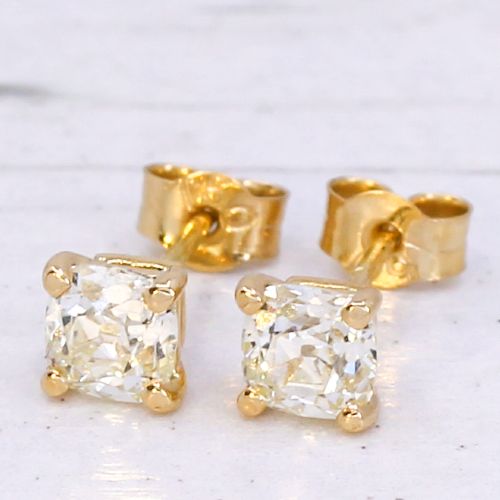
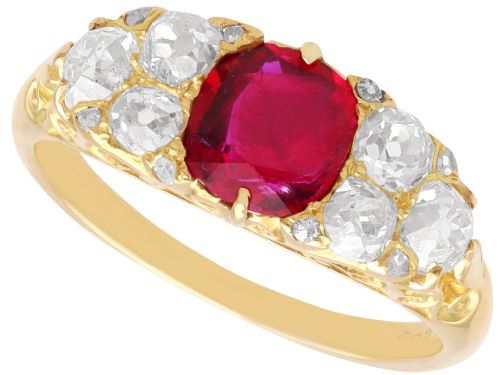
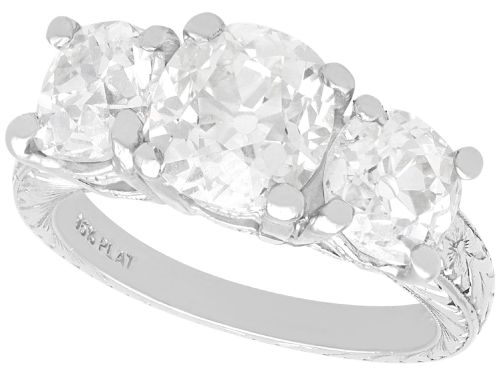
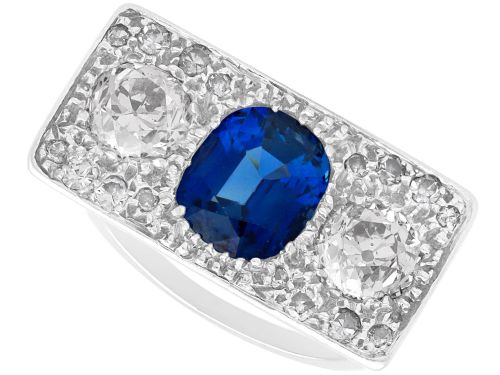
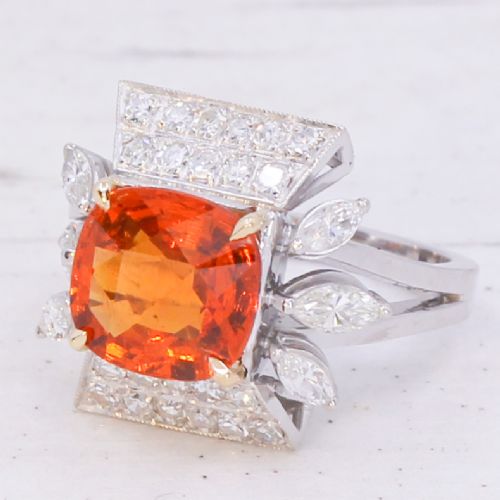
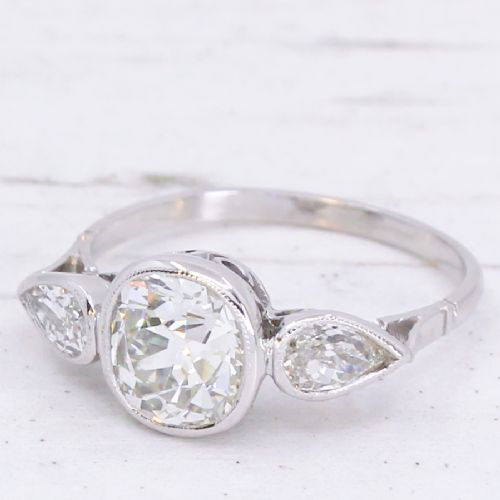
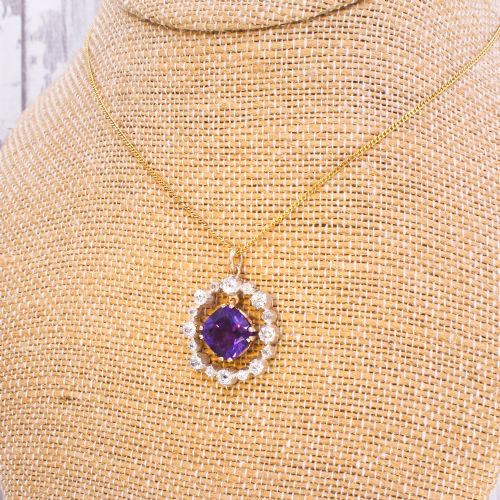
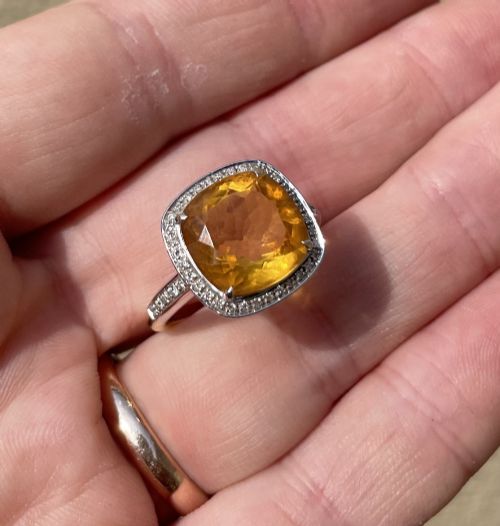

Cushion Cut Diamond
Discover a cushion cut diamond through antique and vintage pieces that combine soft pillow shapes with centuries of hand-cut brilliance.
Cushion Cut Diamond
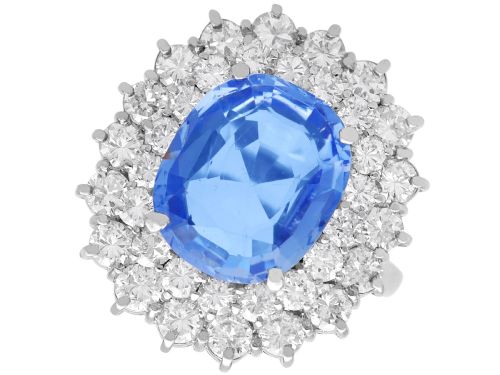
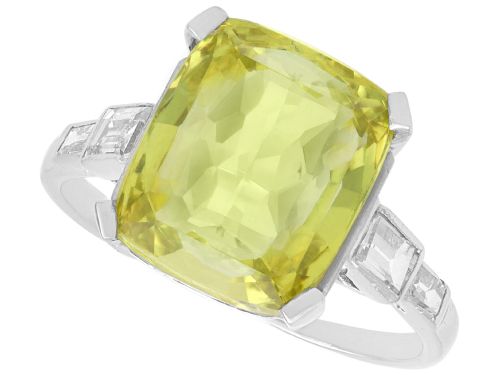
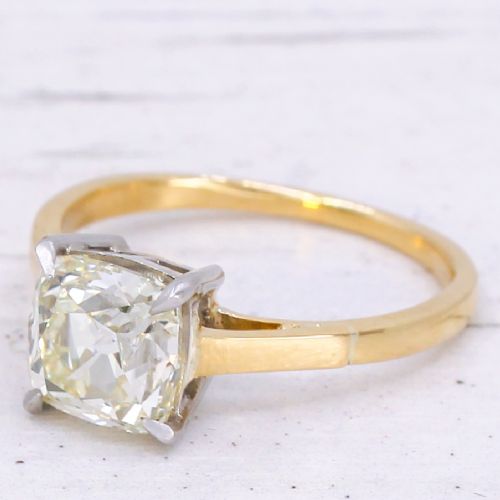
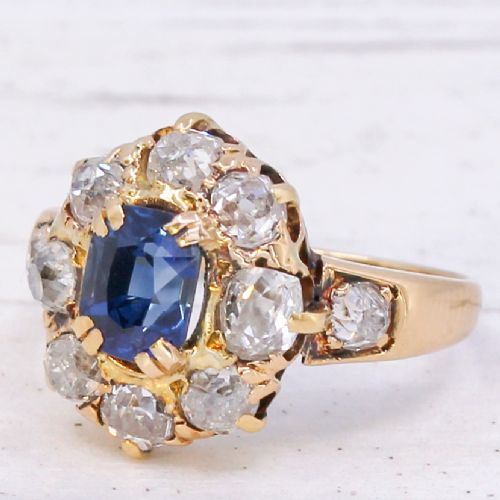
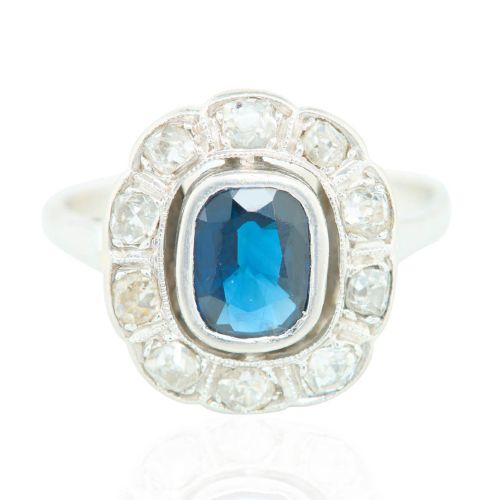
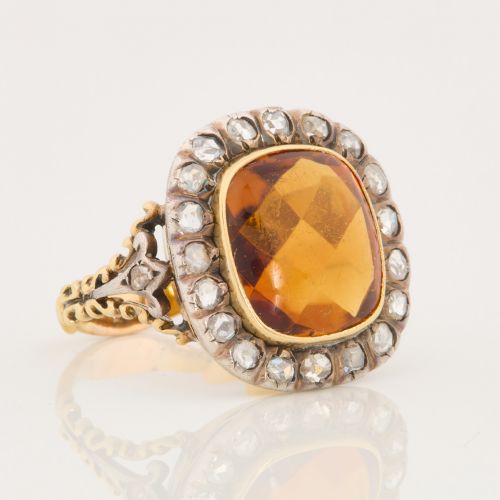
When you search for a cushion cut diamond, you are looking at stones defined by their gently rounded corners and larger facets, which produce a softer, deeper candlelit sparkle than modern brilliant cuts. The examples on this page span from the Georgian and Victorian eras through the Edwardian, Art Deco, and Mid-Century periods, appearing primarily in engagement rings, cluster rings, and elegant pendants.
You will most frequently encounter these stones set alongside natural sapphires, rubies, or additional diamonds in platinum and yellow gold mountings. Whether mounted as a solitary stone in a geometric Art Deco setting or surrounded by a floral cluster of smaller gems, each piece showcases the distinct hand-forged character of historic jewellery production.
How They Were Made
Goldsmiths shaped these mountings using durable platinum alongside various carats of yellow and white gold, often pairing silver with gold in the earliest Victorian pieces to enhance the whiteness of the metal beneath old cut stones. Jewelers hand-fabricated these settings to securely house individual stones, utilising grain, bezel, and claw settings tailored to the irregular contours of antique gems.
The diamonds themselves were shaped by hand before modern machinery existed, resulting in characteristic high crowns, small tables, and deep culets that set antique cushion and old mine cuts apart from contemporary machine-cut stones.
Cushion Cut Diamond Retail Price Guide 2026
Typical asking prices for cushion cut diamond among the pieces listed under this phrase on Sellingantiques today, from the lower quarter to the upper quarter. They describe what is for sale here now, not the wider market.
Gemstones paired with these diamonds include natural sapphires, rubies, garnets, aquamarines, and amethysts.
What Varies in Quality
The standard of a piece depends heavily on the harmony between the central diamond and its surrounding setting, where precise metalwork and balanced proportions elevate a design from simple manufacture to fine craftsmanship. Original unheated coloured gemstones, such as Kashmir or Ceylon sapphires paired with old cut diamonds, command greater regard among collectors for their natural origin and certified provenance.
The Cushion Cut Diamond Glossary
- Old mine cut
- An early form of diamond cut featuring a roughly square girdle, high crown, and large culet, designed under candlelight to maximise warmth and scintillation.
- Transition cut
- A diamond cut utilised during the period when cutters moved away from old styles towards modern brilliant geometry, retaining deep proportions with slightly larger tables.
- Trilogy ring
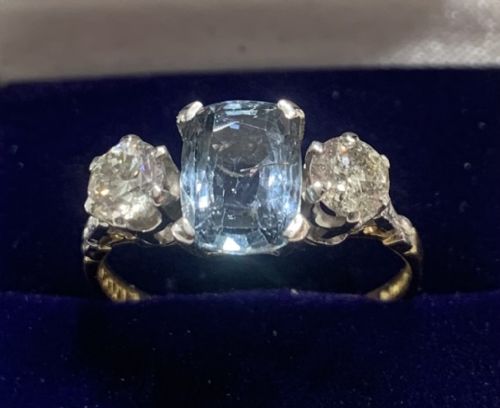
- A ring set with three principal stones, often interpreted symbolically to represent the past, present, and future of a relationship.
- Cluster ring
- A design featuring a central gemstone encircled by a border of smaller accent stones, frequently diamonds framing a sapphire, ruby, or tourmaline.
- Culet
- The small facet at the very bottom of a gemstone, historically left large and visible in antique cuts to allow light to pass straight through the base of the stone.
Cushion Cut Diamond: Frequently Asked Questions
How do I care for my antique ring?
Antique jewellery requires gentle handling due to the delicate nature of historic settings and softer precious metals. Avoid wearing your pieces during strenuous manual tasks or exposing them to harsh household chemicals.
Professionals recommend periodic checks of the claws and mountings to ensure the stones remain secure. Clean them gently using warm soapy water and a soft brush rather than ultrasonic machines.
What is the difference between old mine and cushion cuts?
Old mine cuts are an older form of cushion cut, typically possessing a squarer outline, a smaller table facet, and a much steeper crown angle. They were cut entirely by hand to retain maximum weight from the rough crystal.
Standard cushion cuts can span a wider chronological window and may exhibit slightly more rectangular proportions or modified pavilion faceting depending on the exact decade they were shaped.
Can I wear an engagement ring daily?
Many buyers wear these historic rings every day, provided the piece is robust and has been inspected by a jeweller to confirm the settings are secure. Platinum and higher carats of gold offer strong daily durability for antique mountings.
For exceptionally fragile or delicate Edwardian and Victorian designs, reserving the piece for special occasions helps protect the intricate handiwork from unnecessary wear.
How can I tell the era of a setting?
The era of a piece is usually identified through a combination of manufacturing techniques, metal choices, and the specific style of the gemstone cutting. Georgian and early Victorian pieces often feature closed-back foils or heavy hand-carved shanks, whereas Art Deco mountings favour geometric platinum framework.
Official hallmarks, maker marks, and stylistic clues like millegrain edging or floral cluster arrangements further help narrow down the exact decade of manufacture.