






Curved Wood Vanity
These curved wood vanity pieces combine fluid lines with practical dressing room storage, offering a sophisticated focal point for a bedroom.
Curved Wood Vanity
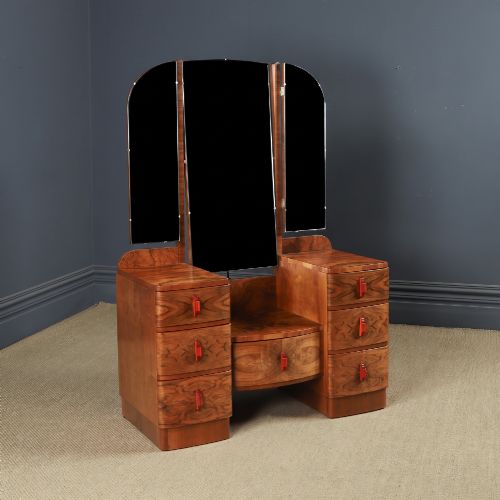
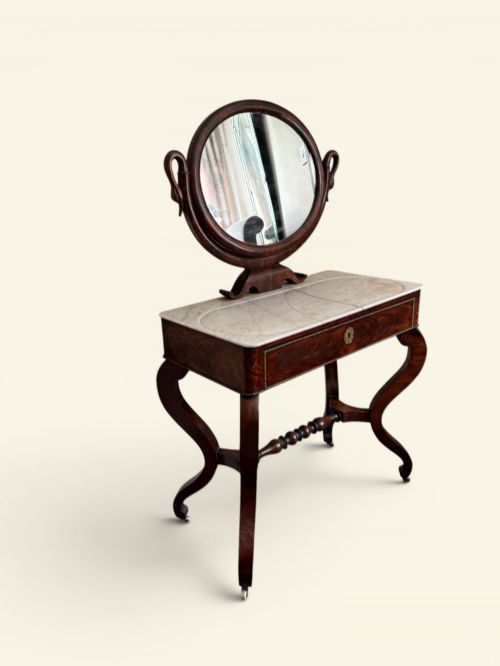
A curved wood vanity functions as a dedicated dressing table, bringing together soft lines and fitted mirrors for daily grooming routines. These pieces span centuries of design, ranging from Georgian mahogany forms to streamlined Art Deco walnut models.
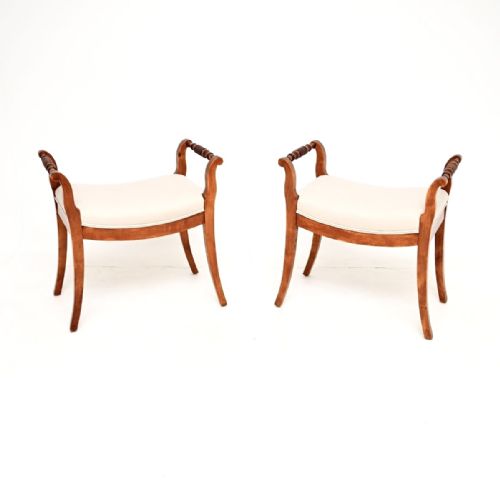
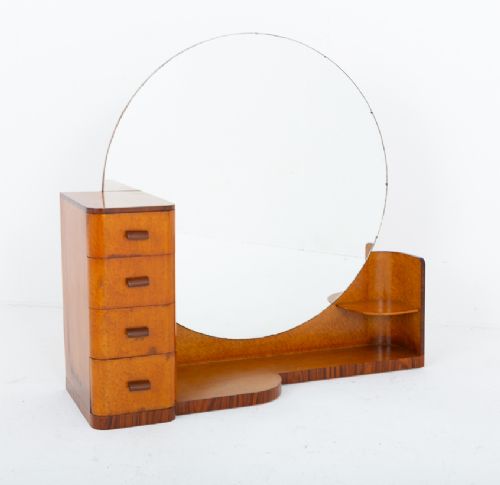
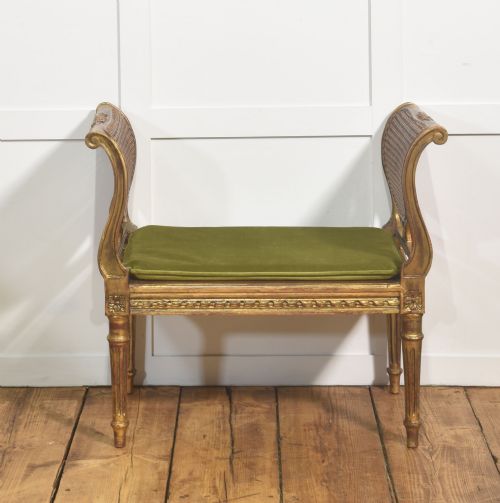
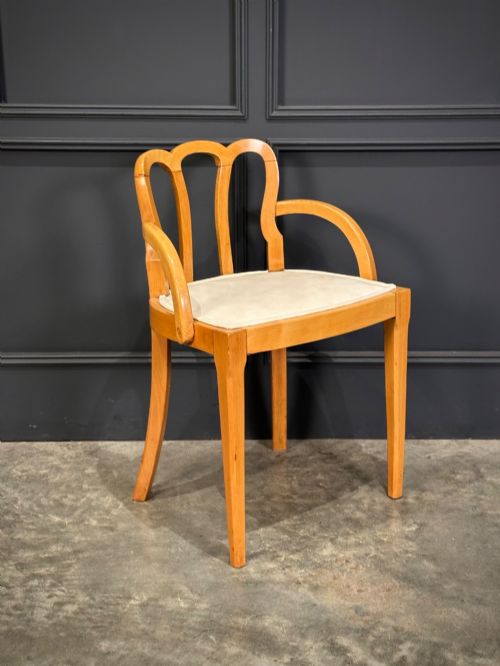
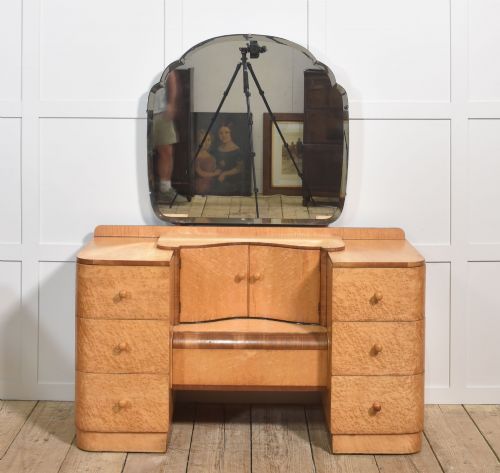
The version most commonly met on this page is the Art Deco dressing table, often constructed in figured walnut, maple, or sycamore with integrated mirrors. Accompanying seating such as stools and benches frequently pairs with these vanities, sharing the curved aesthetic.
How they were made
Cabinet makers utilised select timbers such as walnut, mahogany, satinwood, and birds eye maple to construct these dressing tables and associated seating. Selected veneers were laid to accentuate natural grain patterns, particularly across curved drawer fronts and pedestal bases.
Glass and mirror glass were integrated into pivoting frames or wall-mounted units above the dressing surface, whilst secondary materials like brass, giltwood, and cane added structural detail and decorative contrast.
Curved Wood Vanity Retail Price Guide 2026
Typical asking prices for curved wood vanity among the pieces listed under this phrase on Sellingantiques today, from the lower quarter to the upper quarter. They describe what is for sale here now, not the wider market.
Listings feature periods spanning from the eighteenth century through to Art Deco designs of the 1930s.
What varies in quality
The distinction between tiers rests upon the selection of timber figure, the precision of the curved joinery, and the handling of the veneer. Superior examples display seamless grain matching across complex radiused surfaces and drawer banks.
Maker attribution and period integrity further elevate a piece, alongside the original condition of the glass, hardware, and structural framing. Finer works incorporate thoughtful proportions that balance the weight of the mirror with the pedestal base.
Harry and Lou Epstein·Betty Joel
The Curved Wood Vanity Glossary
- Veneer
- A thin layer of choice wood applied over a base timber to provide a decorative surface. This technique allows cabinet makers to display complex grain patterns across curved drawer fronts.
- Pedestal
- A structural support column or base block set beneath the main body of a dressing table. In Art Deco pieces, twin pedestals often flank a central kneehole space.
- Kidney shaped
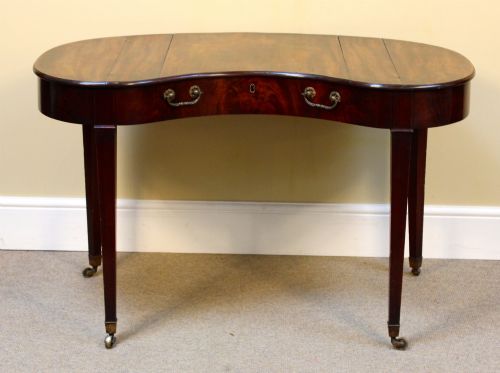
- A curved furniture outline resembling a kidney bean, frequently seen in desks and dressing tables. This contour allows the user to sit closer to the central mirror.
- Biedermeier
- A Central European style spanning the nineteenth century characterised by utilitarian comfort and clean lines. Pieces from this aesthetic often highlight pale birch timbers.
- Giltwood
- Timber treated with gold leaf or metallic paint to create a lustrous decorative finish. This material appears on neoclassical frames and decorative stools.
Curved Wood Vanity: Frequently Asked Questions
What is a curved wood vanity?
A curved wood vanity is a dressing table featuring softened lines, rounded pedestals, or kidney-shaped tops designed for personal grooming. These items incorporate wood veneers and integrated mirrors to serve as both functional furniture and decorative centrepieces.
Such pieces range from eighteenth-century mahogany examples to streamlined Art Deco creations in walnut and maple. They frequently include matching stools or chairs designed to fit beneath the kneehole.
How do I date a dressing table?
Dating a dressing table involves examining the primary timbers, construction methods, and stylistic cues present in the design. Georgian examples often rely on solid mahogany and straightforward joinery, whereas nineteenth-century pieces may introduce exotic veneers and elaborate turning.
Twentieth-century Art Deco pieces utilise distinct geometric or curved forms, modern synthetic finishes, and contrasting woods like sycamore and birds eye maple. Hardware, drawer construction, and mirror mountings further indicate the period of manufacture.
How were these vanities used?
These vanities served as dedicated spaces for morning routines, hair styling, and the application of cosmetics. The integrated mirrors and drawers provided convenient access to grooming accessories and jewellery.
In period bedchambers, they functioned as personal desks as well as dressing stations. Accompanying low stools or window seats allowed the user to sit comfortably at the lowered kneehole.
How do I style a vanity?
Styling a vanity involves balancing functional lighting and mirror placement with decorative objects such as perfume trays or small porcelain dishes. Pairing the table with a complementary stool or upholstered chair ensures visual harmony within the room.
Allowing the natural grain of the wood to remain the focal point keeps the arrangement uncluttered. Positioning the piece near natural light enhances the reflective quality of the mirror and highlights the timber figure.