
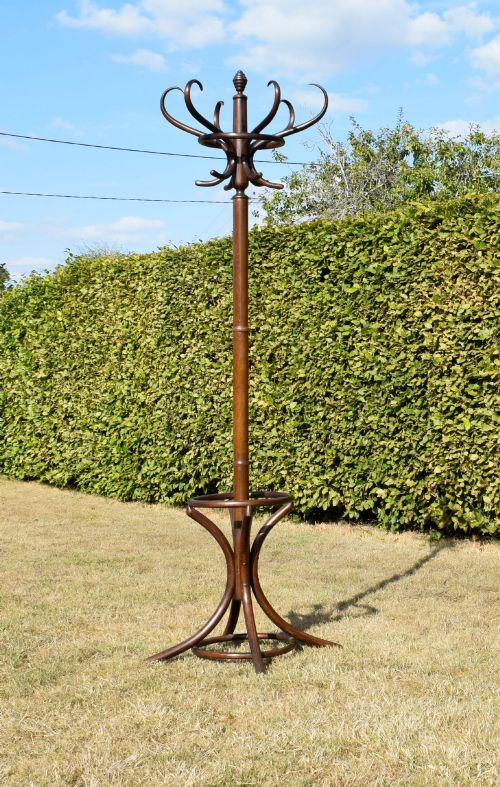
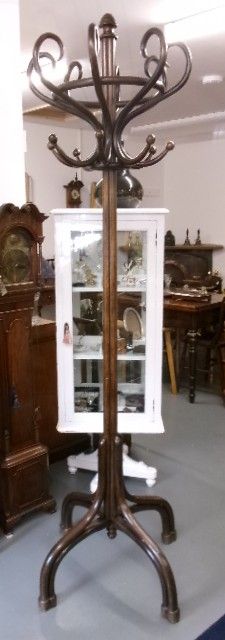
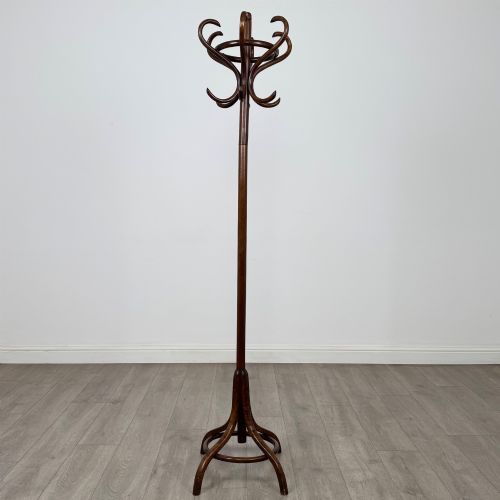
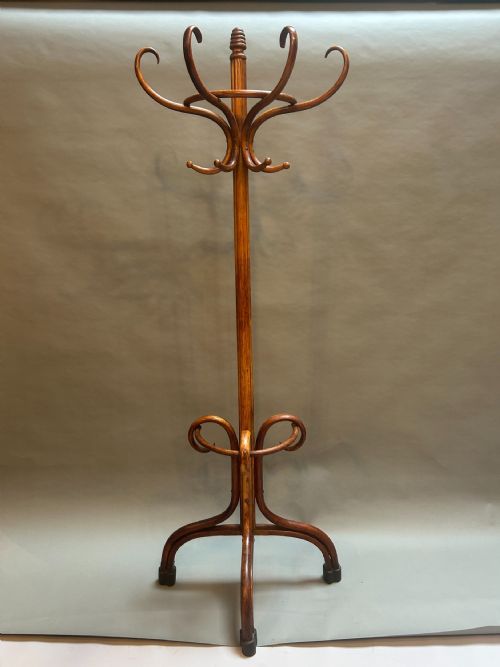


Curved Wood Hall Tree
A curved wood hall tree brings immediate architectural grace to an entrance, offering practical hanging space forged from pliable timber.
Curved Wood Hall Tree
When you search for a curved wood hall tree, you encounter sturdy vertical structures designed to hold hats, coats, and garments in a hallway. These pieces provide a functional focal point for an entryway while occupying minimal floor space.
On this page, you are most likely to meet bentwood examples spanning the Victorian, Edwardian, and 1930 periods. The forms include tall coat stands, hat stands, and combined wall-standing hall racks originating from the 19th and 20th centuries.
How they were made
These items rely heavily on beech and beechwood, subjected to specialised steam-bending techniques that allow solid timber to form smooth, sweeping curves without snapping. This method defines the bentwood and Thonet style traditions seen across the inventory.
Wood finish and stained wood treatments enhance the natural grain of the material, while metal components occasionally appear for structural support or specialised hanging hooks. The construction balances lightness of form with the necessary weight-bearing capacity for heavy winter garments.
Current listings feature pieces spanning the 1890s through to 1930, predominantly constructed from beech and finished with stained wood.
What varies in quality
The distinction between standard examples and the finest pieces often rests on the fluidity of the steam-bent arches and the overall heft of the timber used. Heavier quality structures display superior rigidity and more complex scrollwork at the crown.
Proportion and scale also separate ordinary items from larger, more substantial hall stands designed for grander Victorian and Edwardian vestibules. The precision of the joinery and the depth of the wood finish complete the hierarchy.
The Curved Wood Hall Tree Glossary
- Bentwood
- Wood that has been shaped by heating it with steam and bending it into curved forms. This technique is central to the creation of traditional coat stands.
- Beech
- A dense, hard timber commonly utilised for its exceptional response to steam-bending. It forms the structural core of many Edwardian and Victorian examples.
- Demi Lune
- A half-moon shape used to describe the footprint or profile of certain hat stands. This design allows the piece to sit flush against an entryway wall.
- Thonet Style
- Furniture design associated with the pioneering steam-bending methods developed by Michael Thonet. It is characterised by elegant, sweeping wooden curves.
Curved Wood Hall Tree: Frequently Asked Questions
What is a curved wood hall tree?
A curved wood hall tree is a tall freestanding or wall-standing piece of furniture used primarily for hanging hats, coats, and scarves in an entrance hall.
These items utilise steam-bent timber to create branching hooks and supportive frames that combine utility with decorative Victorian or Edwardian design.
How do I place one in a small hallway?
Compact bentwood stands with demi lune profiles or slim vertical shafts fit neatly against narrow walls without obstructing foot traffic.
Positioning the stand near the main entrance ensures wet coats and hats have an immediate home upon entering the house.
How do I date a bentwood stand?
Dating relies on observing construction methods, timber choices, and stylistic markers associated with Victorian, Edwardian, and later 1930 production periods.
Earlier 19th-century and c.1900 examples often display heavier timber proportions and distinct manufacturer characteristics compared to later iterations.
Are these stands sturdy enough for heavy coats?
Solid beech construction and wide-spreading base legs provide the necessary stability to support multiple heavy winter overcoats.
Distributing weight evenly across the upper hooks ensures the tall vertical frame remains balanced during daily use.