



Curved Tier Side Table
These curved tier side table examples are practical occasional pieces, offering stepped surfaces in walnut, mahogany, and oak for compact modern and historic interiors.

Curved Tier Side Table
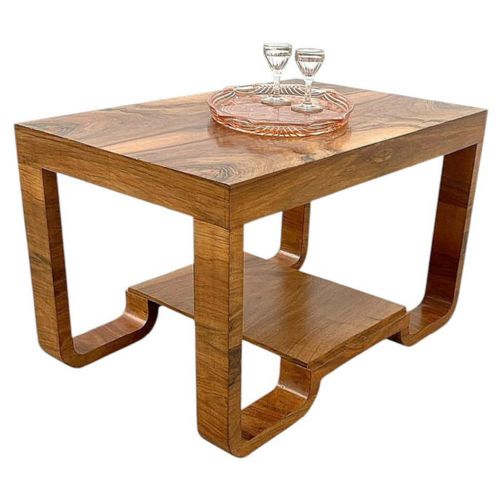
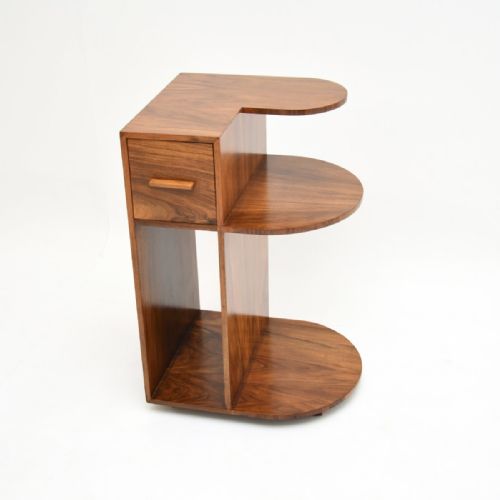
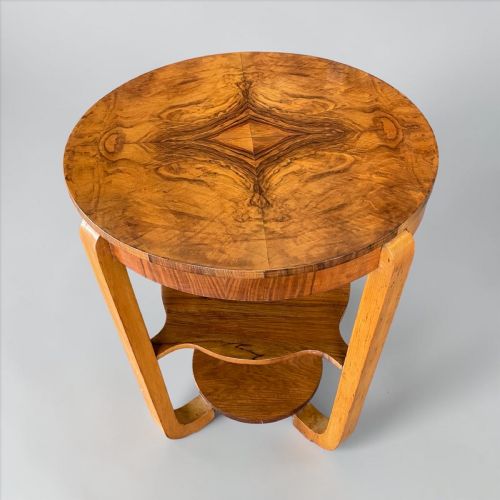
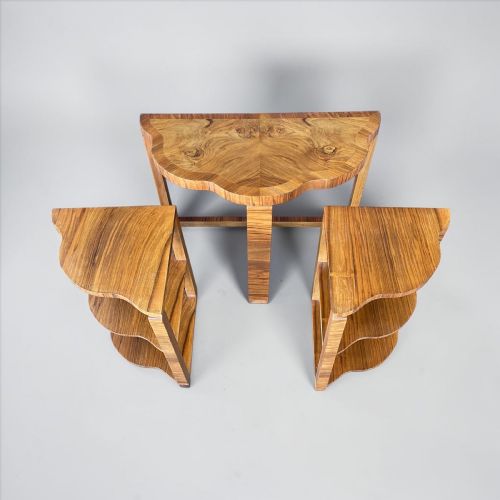
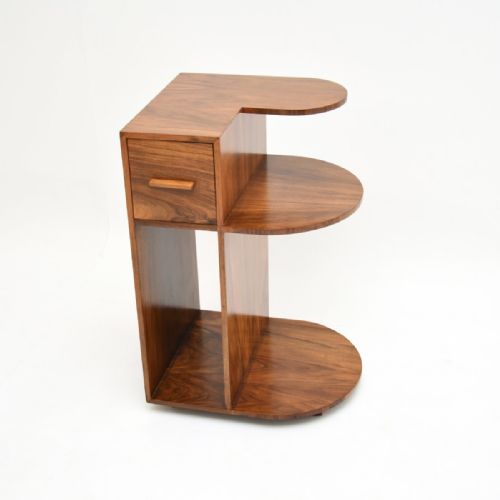
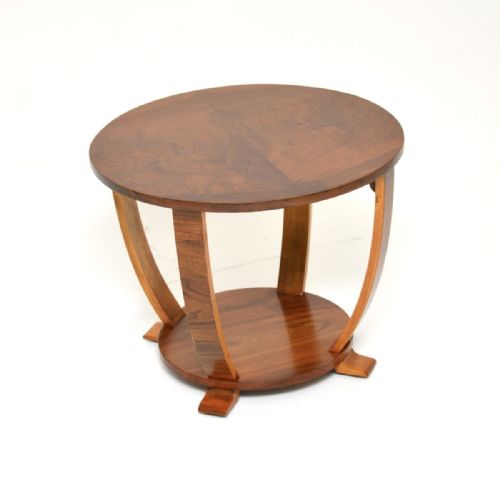
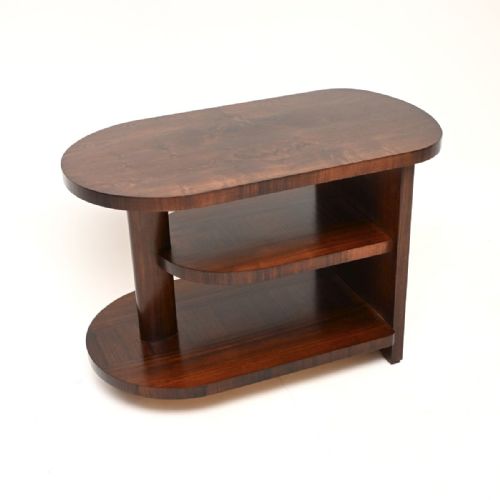
A curved tier side table typically presents as an occasional table, coffee table, or nest of tables featuring multiple descending or ascending levels. The most common form on this page belongs to the Art Deco period, constructed around 1930 in figured walnut, rosewood, or oak.
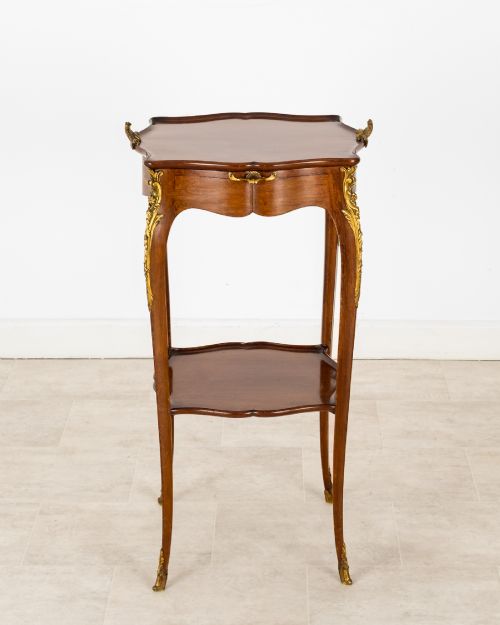
Beyond the predominant 1930 examples, the selection includes earlier nineteenth-century forms such as a Georgian mahogany corner washstand, a Louis XV Revival ormolu mounted mahogany side table, and a Sheraton Revival mahogany centre table from 1890. An Art Nouveau variant incorporates decorative tiles into an oak framework.
The primary function of these pieces involves providing accessible display or resting surfaces within domestic spaces without dominating the room. The tiers allow for varied placement of objects across different vertical planes.
Materials and construction
Construction relies heavily on solid woods and applied veneers, with walnut and mahogany forming the foundation of most items. Craftsmen utilised walnut veneer and general wood veneer to cover structural cores, creating striking grain patterns particularly visible on 1930 pieces.
Ormolu mounts appear on French nineteenth-century furniture, providing cast bronze gilt ornamentation applied to mahogany surfaces. Ebonised details are also utilised alongside solid oak in specific modernist or revivalist designs.
Curved Tier Side Table Retail Price Guide 2026
Typical asking prices for curved tier side table among the pieces listed under this phrase on Sellingantiques today, from the lower quarter to the upper quarter. They describe what is for sale here now, not the wider market.
Separating the top tier from the rest
Quality in these multileveled surfaces rests on the selection and matching of the veneer. Figured walnut with symmetrical grain patterns distinguishes finer pieces from plain timber surfaces.
The integration of secondary materials such as ormolu mounts or decorative tiles indicates higher workshop standards. Construction joinery and the stability of stacked tiers determine the structural longevity of each item.
François Linke·Gilbert Rohde
The Curved Tier Side Table Glossary
- Veneer
- A thin layer of choice wood glued to a base panel. This technique allows makers to display decorative grain patterns.
- Ormolu
- Gilded bronze used for decorative mounts on furniture. It appears on French nineteenth-century pieces.
- Occasional table
- A small, movable table designed for specific, intermittent uses in a room. These form a large portion of the available items.
- Nest of tables
- A set of several tables of graduating sizes that stack beneath one another. They save floor space when not fully deployed.
Curved Tier Side Table: Frequently Asked Questions
What is a curved tier side table?
A curved tier side table is a multi-level surface designed for holding objects in a living space. Most examples date from the Art Deco period around 1930.
These pieces use stacked tiers to maximise display area while maintaining a compact footprint. Materials range from figured walnut and rosewood to solid oak.
How do I style a multi-tier table?
Multi-tier tables suit corners or beside seating where varied surface heights are useful. They accommodate lamps, books, or decorative objects across different levels.
Matching the wood tone to existing furniture helps integrate the piece into a room. Art Deco designs pair well with neutral interiors.
Are these tables solid wood?
Many tables utilise wood veneers over a structural core, particularly those from the 1930s. Figured walnut and general wood veneer provide decorative grain patterns.
Some pieces, such as specific oak variants, incorporate solid timber construction alongside ebonised or tiled elements.
How do I identify Art Deco tables?
Art Deco tables from around 1930 often feature geometric curves, stepped tiers, and figured walnut or rosewood veneers. They lack the ornate carving of earlier Victorian or revival styles.
Clean lines and smooth finishes characterise this modernist aesthetic, distinguishing it from nineteenth-century furniture.