

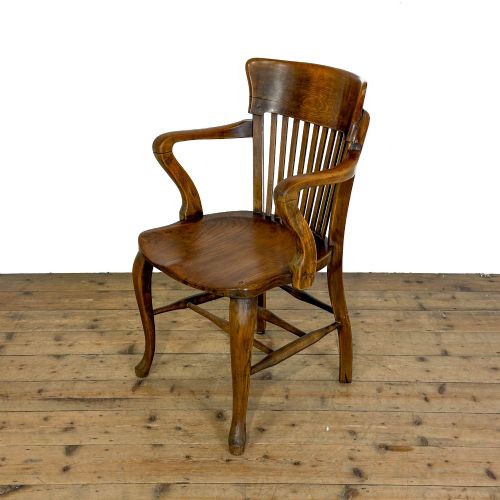
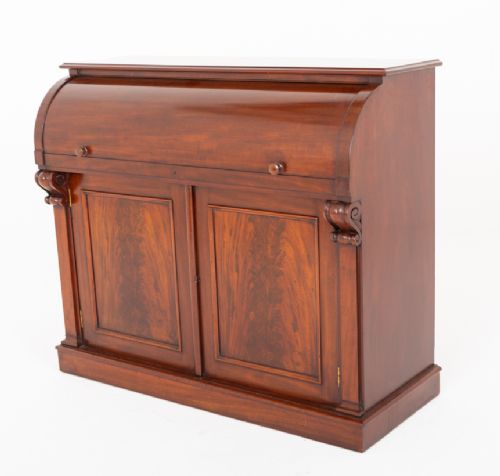
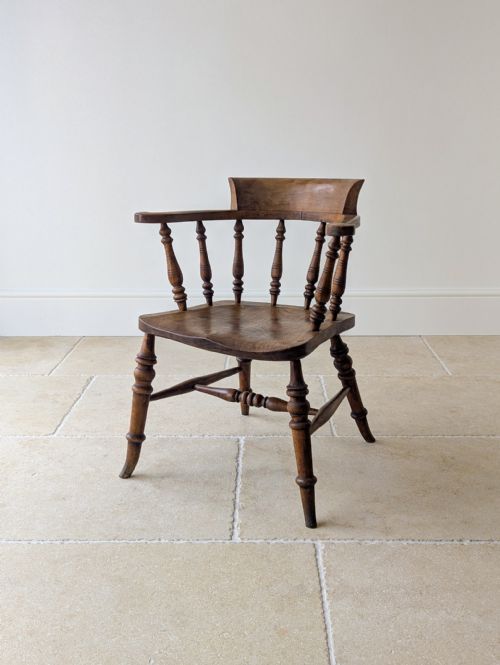
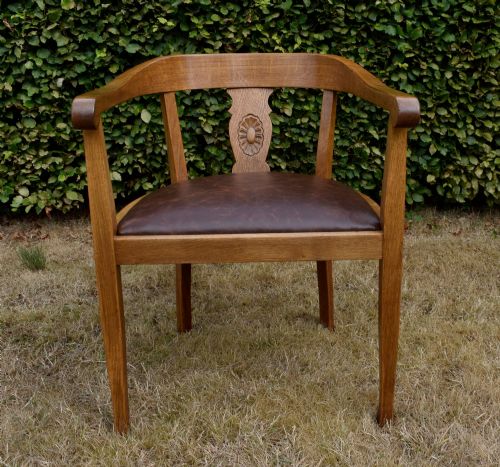
Curved Office Desk
A curved office desk offers generous work space with a graceful outline, pairing practical storage with distinctive period craftsmanship.
Curved Office Desk
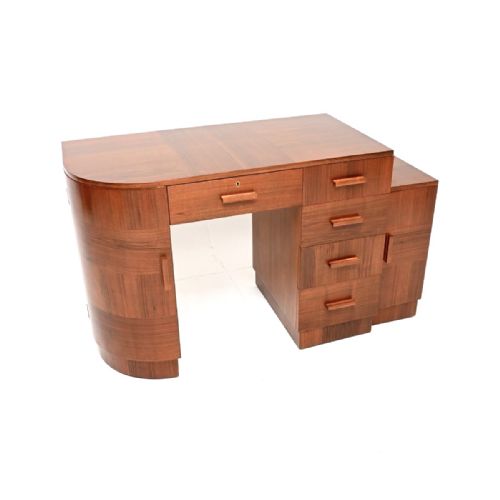
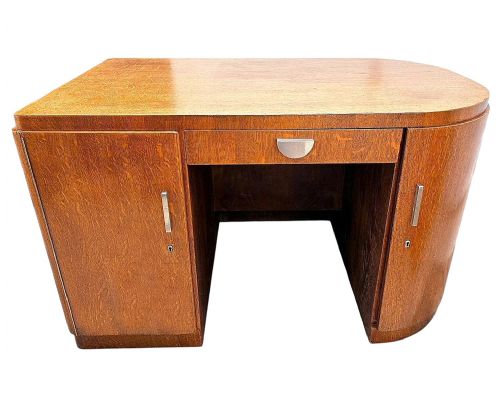
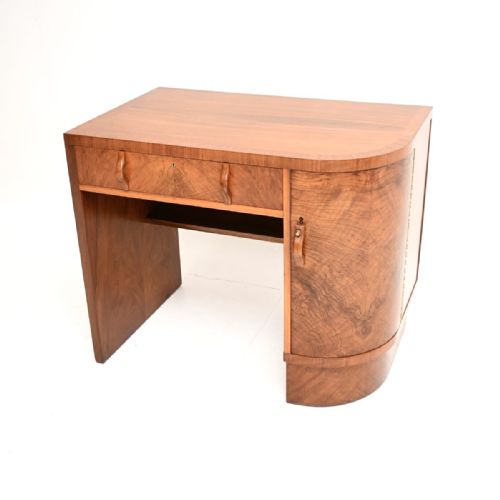
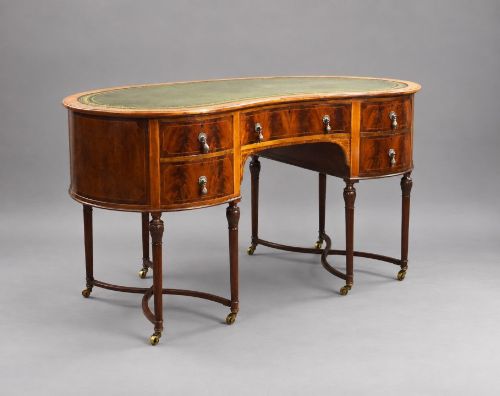
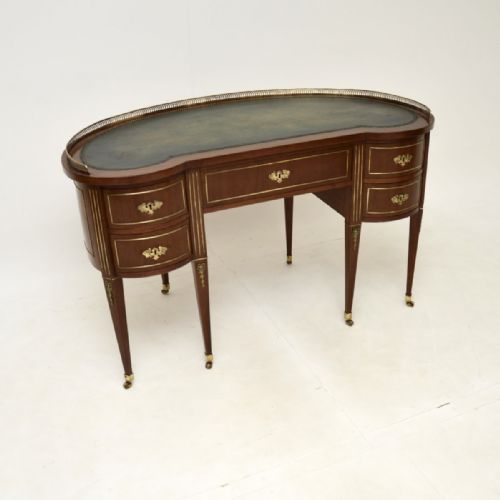
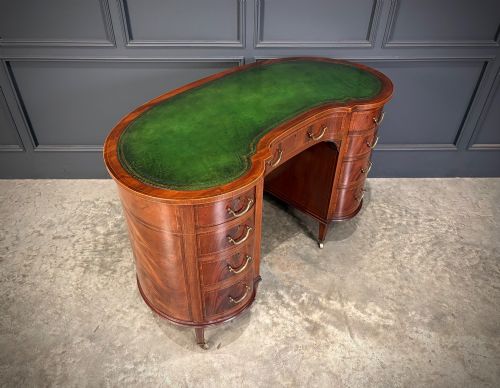
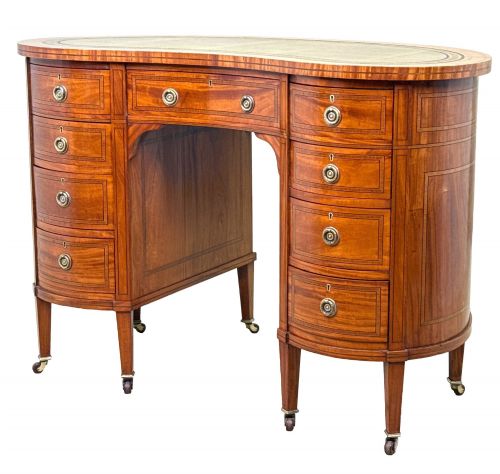
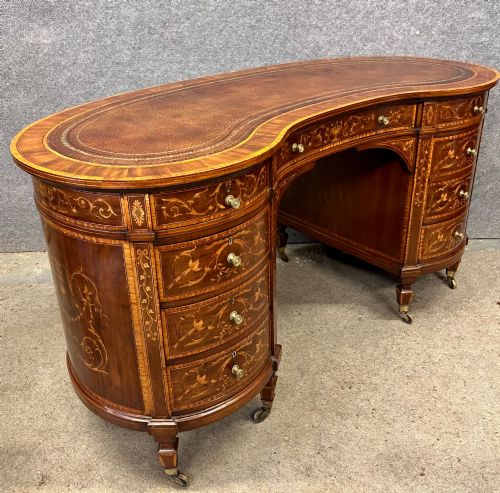
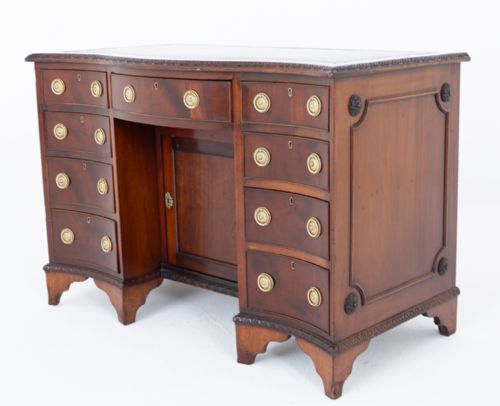
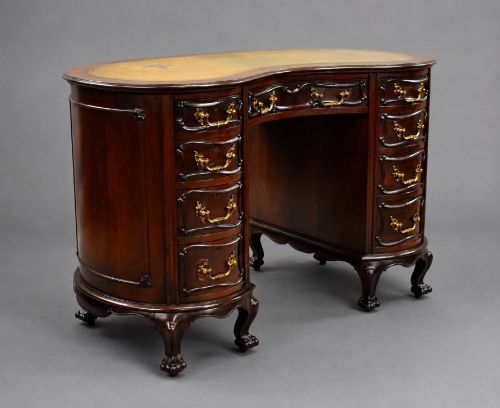
A curved office desk represents a functional workspace designed with sweeping lines, encompassing kidney-shaped writing tables and serpentine pedestals. These pieces bring both elegance and utility to a room through thoughtful forms that soften conventional angles.
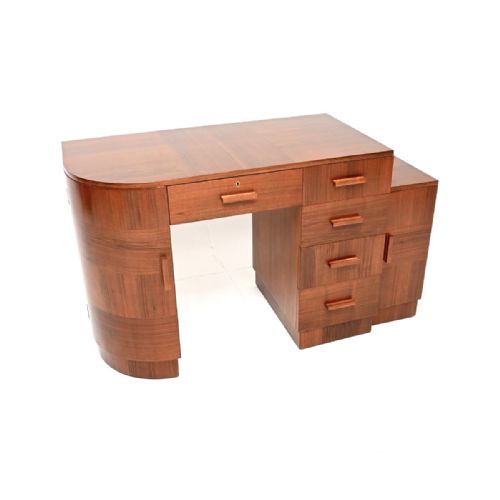
The selections available here span multiple eras, featuring robust Victorian examples alongside streamlined Art Deco designs in figured walnut. Edwardian kidney-shaped desks also feature prominently, often inlaid with fine timbers.
Materials and construction
Cabinet makers utilised dense hardwoods such as mahogany, oak, and walnut, frequently applying figured veneers to create striking grain patterns across large surfaces. Satinwood and burr elm additionally appear on select writing tables and chairs.
Leather inserts frequently surface on writing surfaces, providing a durable and tactile writing plane bordered by subtle brass or inlaid details. Structural support relies on solid timber framing, swivel mechanisms, and curved mouldings shaped by hand.
Curved Office Desk Retail Price Guide 2026
Typical asking prices for curved office desk among the pieces listed under this phrase on Sellingantiques today, from the lower quarter to the upper quarter. They describe what is for sale here now, not the wider market.
Early office innovators enjoyed spinning freely on solid mahogany swivel chairs before ball bearings were even common.
Distinctions in quality
Quality rests heavily on the selection of timber veneers and the precision of the joinery used to form complex, sweeping curves. Superior examples display seamless transitions along serpentine edges and well-figured grain matched symmetrically across the top.
The integrity of original swivel mechanisms, fitted drawer linings, and intact leather surfaces further separates standard workshop output from exceptional furniture. Details like fine inlay work and robust structural framing indicate superior maker execution.
Wolfe and Hollander·Maurice Adams·Edward William Godwin
The Curved Office Desk Glossary
- Kidney-shaped desk
- A writing table featuring a curved, bean-like outline that wraps around the user. This form gained particular popularity during the Edwardian and late Victorian periods.
- Serpentine desk
- A piece featuring a front edge composed of alternating convex and concave curves. This shaping requires advanced cabinet-making skill.
- Pedestal desk
- A heavy freestanding writing table supported by two upright banks of drawers. The top surface spans across both pedestals.
- Swivel desk chair
- A rotating office seat mounted on a central pivot base, often equipped with adjustable height mechanics. These chairs frequently utilise solid mahogany, oak, or walnut.
- Figured walnut
- Timber cut to reveal complex, highly decorative grain patterns such as curls or flames. This material defines many Art Deco pieces.
Curved Office Desk: Frequently Asked Questions
How do I choose the right size?
Consider the floor area available and whether the desk will sit against a wall or float in the centre of a room. Kidney-shaped and pedestal forms require adequate surrounding space to appreciate their curved profiles.
Measure doorways and stairwells beforehand, as solid timber pedestal desks and large writing tables rarely dismantle fully for transport.
How should I care for the leather top?
Keep leather writing surfaces away from direct sunlight to prevent drying and fading over time. Regular dusting with a soft cloth maintains the material.
Apply a neutral leather balm periodically to preserve suppleness, avoiding harsh chemical cleaners that strip historical patination.
Can I use an antique chair daily?
Period desk chairs and swivel armchairs are built from solid hardwoods designed for rigorous daily use. Check the swivel action and leg joints to ensure stability before heavy sitting.
Most antique office seating accommodates modern weight comfortably when the underlying timber frame remains sound and uncompromised.
How do I identify Art Deco style?
Art Deco pieces from the nineteen thirties rely on streamlined geometry, smooth surfaces, and highly figured walnut veneers. They lack excessive Victorian carving in favour of clean architectural silhouettes.
Matching accessories such as Bakelite desk lamps often accompany these streamlined workspaces to complete the period aesthetic.