

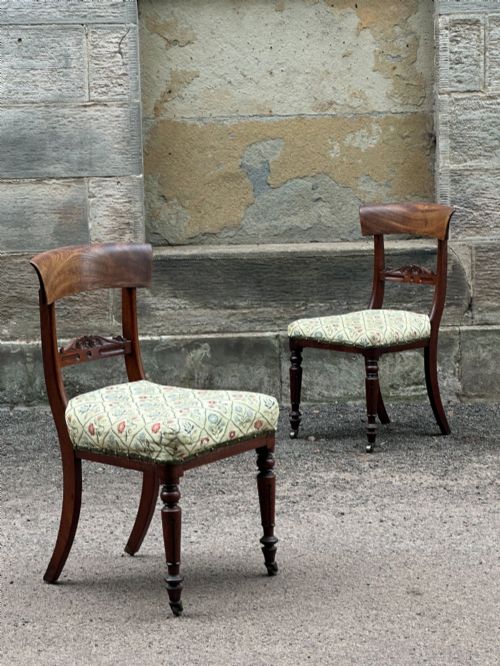

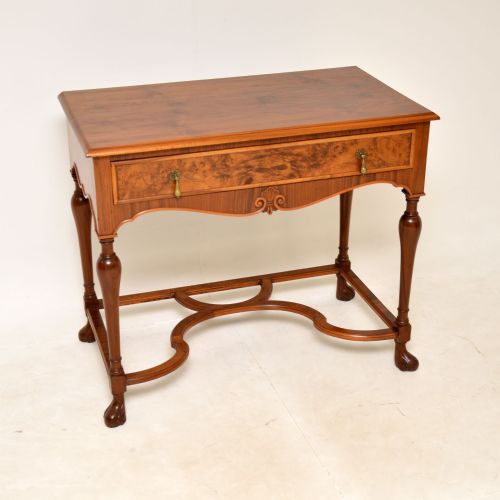
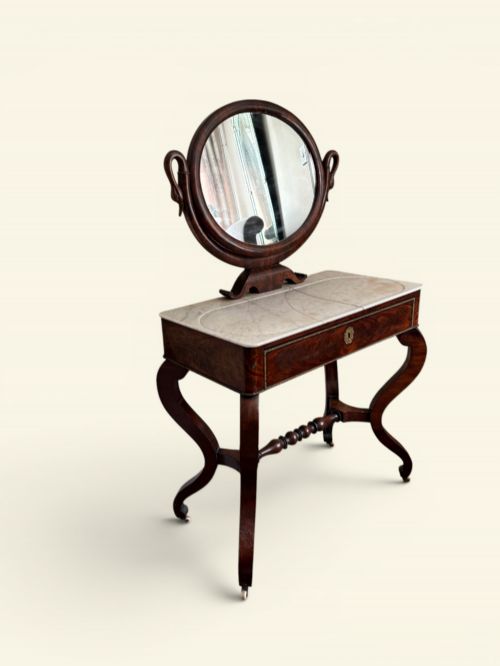
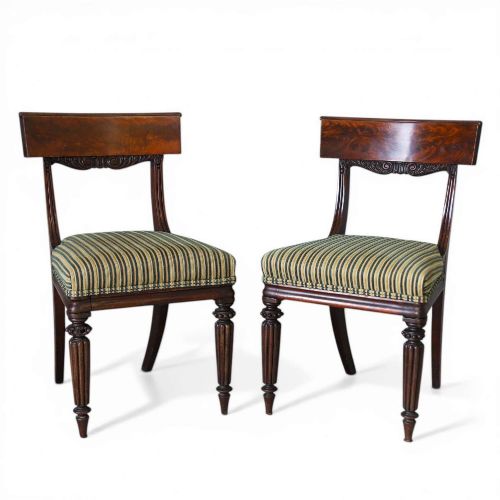
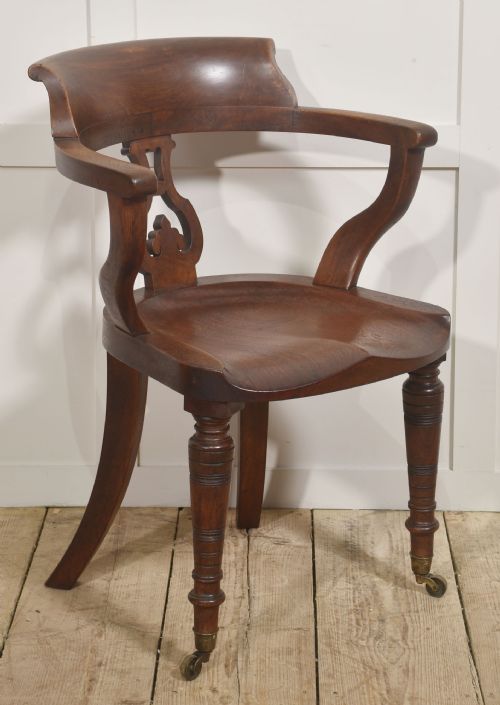


Curved Leg Desk
A curved leg desk offers sweeping lines and practical workspaces, drawing on Georgian, Victorian and Edwardian traditions to anchor a study.
Curved Leg Desk
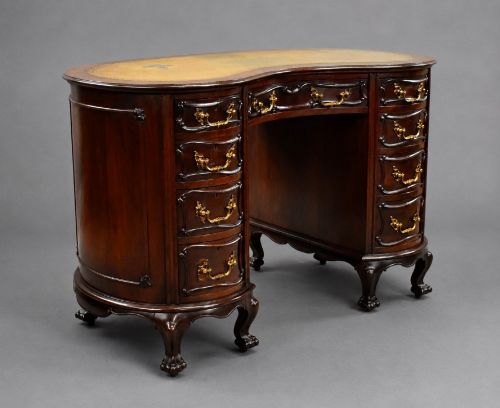
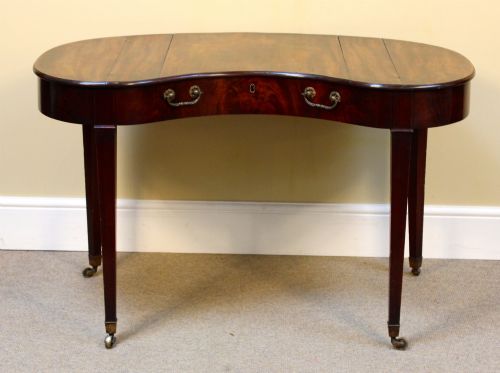
A curved leg desk provides a functional writing surface supported by shaped legs, appearing across Georgian, Victorian, Edwardian and Art Deco periods. Buyers searching for a curved leg desk encounter diverse silhouettes, from kidney shaped writing tables to cylinder top desks and Carlton House forms.
The evidence shows mahogany and walnut as dominant timbers, alongside satinwood and oak, often paired with leather writing surfaces or brass hardware. Pieces span simple domestic tables to elaborate desks featuring multiple drawers and serpentine fronts.
Originating in formal workshops, these desks reflect stylistic shifts from the symmetry of the Georgian era through the ornate Victorian period to the streamlined forms of the 1920s and 1930s.
Materials and Construction
Cabinet makers utilised dense hardwoods like mahogany and walnut, frequently selecting figured veneers or burr walnut to create visually rich surfaces. Solid oak and satinwood also feature in framing and secondary elements.
Desks incorporate functional inserts such as tooled leather writing panels, brass handles, and occasionally marble tops or cane work. Joinery techniques range from dovetailed drawers to turned and sabre legs supporting the writing platform.
Curved Leg Desk Retail Price Guide 2026
Typical asking prices for curved leg desk among the pieces listed under this phrase on Sellingantiques today, from the lower quarter to the upper quarter. They describe what is for sale here now, not the wider market.
Listings feature mahogany, burr walnut, satinwood and oak, demonstrating the wide variety of timbers employed across Victorian and Georgian furniture.
Evaluating Execution and Proportion
Quality rests in the precision of the joinery and the selection of timber, where matched veneers and figured grain indicate superior cabinet work. The grace of the leg curve and the harmony of the overall proportions distinguish finer examples.
Original hardware, sound drawer construction, and intact leather inserts elevate a piece beyond standard utilitarian furniture, marking the distinction between everyday production and accomplished craftsmanship.
The Curved Leg Desk Glossary
- Kidney shaped desk
- A writing table featuring a curved, kidney shaped top that wraps around the user. This form became popular during the Victorian and Edwardian periods.
- Carlton House desk
- A fitted writing desk with a curved superstructure of small drawers and compartments enclosing the writing surface. Edwardian makers frequently produced inlaid satinwood versions.
- Cylinder top desk
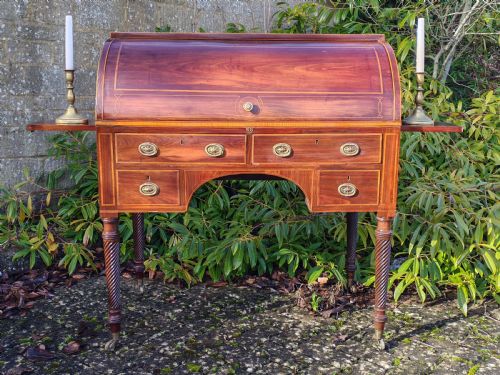
- A writing desk enclosed by a rolling quarter-cylinder shutter that conceals the desk interior. Georgian examples often showcase fine mahogany construction.
- Sabre leg
- A curved, outwardly sweeping furniture leg that tapers towards the foot. This support style appears frequently on Regency desks and chairs.
- Escritoire
- A small writing cabinet or desk used for correspondence. These pieces often incorporate drop-front writing surfaces and internal pigeonholes.
Curved Leg Desk: Frequently Asked Questions
What periods do these desks date from?
The selection spans the Georgian, Victorian, Edwardian and Art Deco eras, with pieces reflecting the design priorities of each century.
Craftsmanship and materials shift from solid mahogany Georgian forms to figured walnut and satinwood expressions in later decades.
How are leather inserts maintained?
Leather writing surfaces benefit from periodic treatment with appropriate balms to preserve suppleness and colour.
Avoid excessive moisture and direct heat sources to protect the aged hide from cracking.
Are these desks suitable for daily work?
Many historical desks accommodate modern writing tasks, though kneehole dimensions vary across different periods.
Checking the height and clearance ensures comfortable use with contemporary seating.
How do I identify a kidney shaped table?
The top curves inward on one side to form a crescent shape designed to partially enclose the seated user.
This distinct outline is found on both Victorian writing tables and twentieth-century console furniture.