

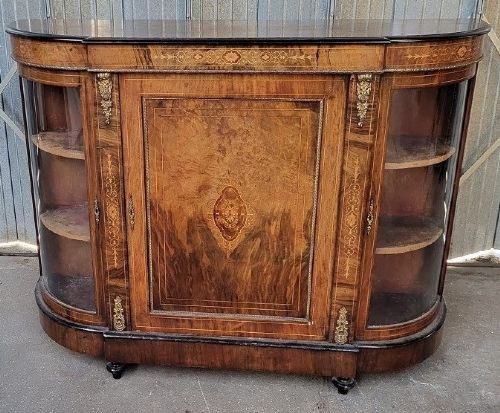


Curved Glass Side Cabinet
A curved glass side cabinet brings substantial presence and polished display space into a room, uniting timber grain with transparent frontage.
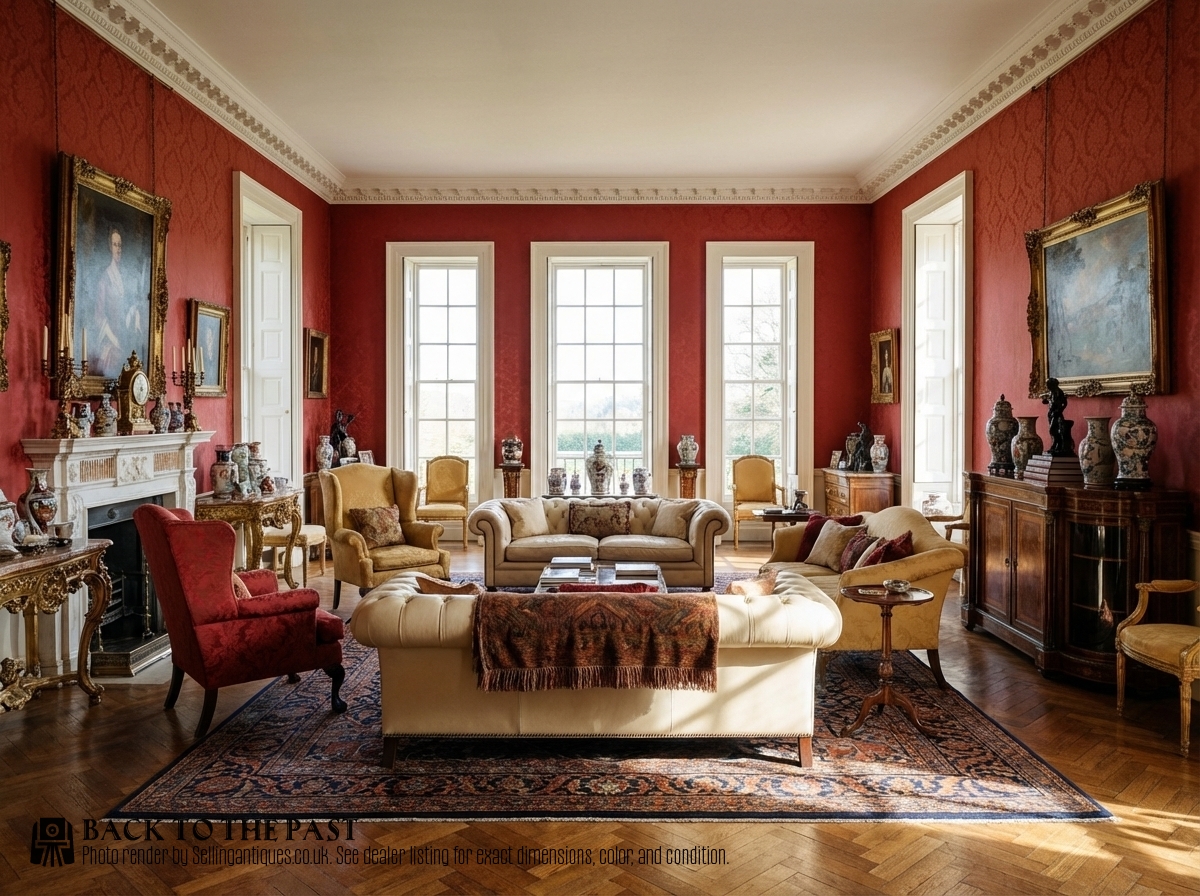
Curved Glass Side Cabinet
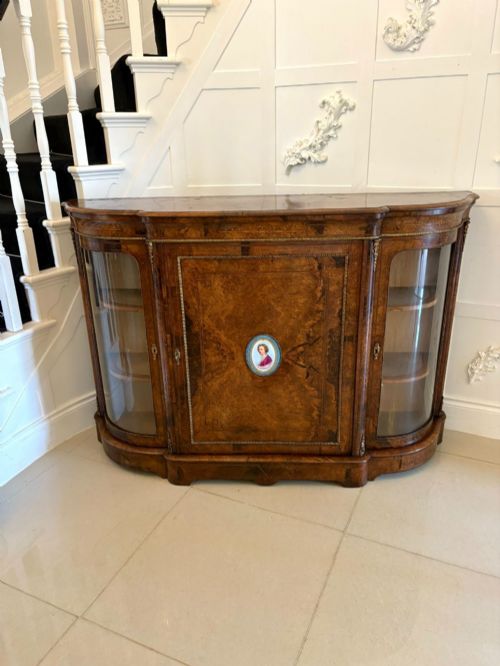
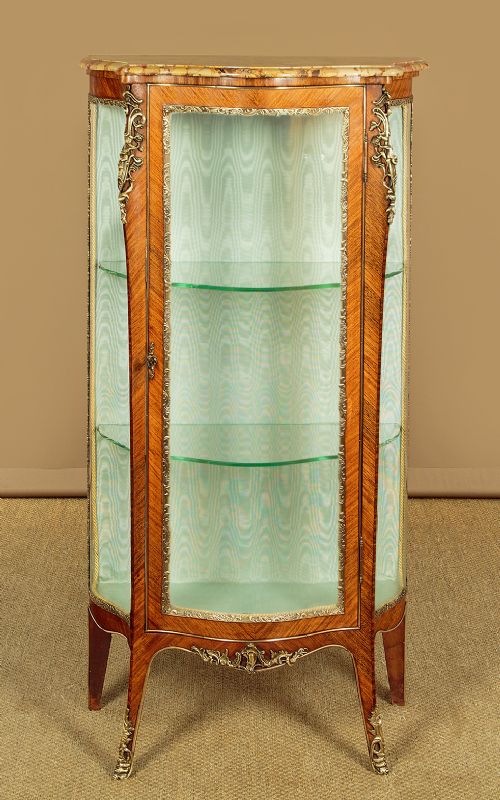
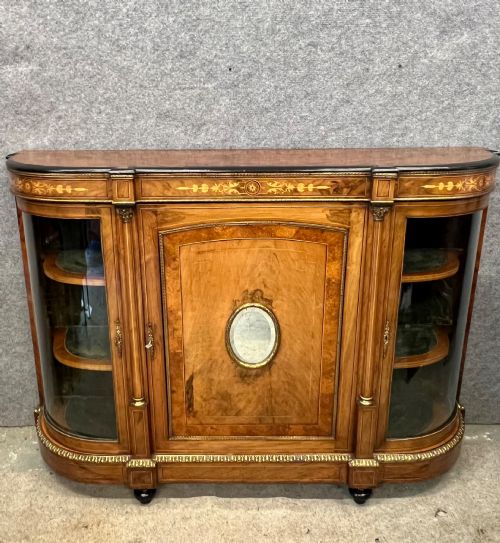
When you search for a curved glass side cabinet, you encounter disciplined nineteenth-century furniture forms including credenzas, vitrines, and display cabinets. These pieces combine enclosed storage with glazed central or flanking sections designed to showcase curated objects.
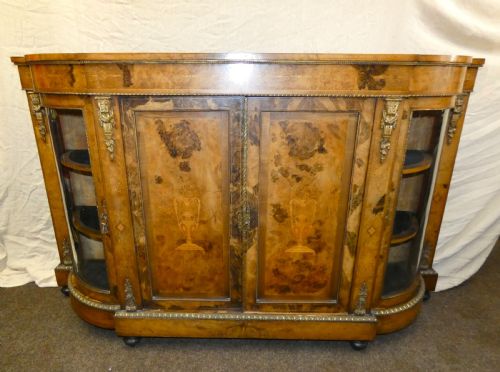
The versions most common on this page stem from the Victorian era and lean heavily on burr walnut, ebonised wood, and marquetry. Makers of the period often incorporated bowed or serpentine fronts alongside glass panels to soften the linear geometry of a room.
Materials and construction methods
Cabinet makers utilised richly figured timbers such as burr walnut, satinwood, and mahogany, applying careful cross-banding and boxwood inlay to articulate the surfaces. Carcase construction relied on seasoned hardwoods to support heavy glass doors and stone or timber tops.
Decorative elements frequently include cast ormolu mounts, gilt bronze, and delicate marquetry panels set into the timber. Transparent sections employ curved glass panes housed securely within rebated wooden framing or brass mouldings.
Makers occasionally added curved glass panels simply to let polite afternoon light bounce off porcelain tea services.
Assessing quality and execution
The distinction between standard production and exhibition grade work lies in the depth of figure in the timber and the precision of the marquetry. Superior examples exhibit seamless continuity in grain patterns across doors and panels.
Hardware weight and metalwork chasing also differentiate tiers of manufacture. Heavy fire-gilt ormolu and finely detailed pietra dura inserts separate ambitious workshop commissions from simpler commercial output.
The Curved Glass Side Cabinet Glossary
- Credenza
- A low dining or reception room cabinet designed for storage and display, typically featuring cupboards flanking a central glazed door.
- Ormolu
- Gilt bronze mounts applied to furniture edges and panels for decorative enrichment, common in French revival and Victorian pieces.
- Marquetry
- Inlaid patterns of contrasting veneers assembled to create pictorial or geometric designs across the cabinet surfaces.
- Burr walnut
- Timber taken from the gnarled growth of a walnut tree, prized for its swirling, highly figured grain pattern.
- Serpentine
- A shaped furniture front featuring a convex centre flanked by concave curves, creating a gentle undulating line.
Curved Glass Side Cabinet: Frequently Asked Questions
What is a curved glass side cabinet?
A curved glass side cabinet is a nineteenth-century storage and display furniture piece, often taking the form of a credenza or vitrine with bowed glazed doors.
These items were built to hold porcelain, glassware, or decorative objects while adding architectural presence to a formal interior.
How were these cabinets used?
Original nineteenth-century interiors utilised these cabinets in dining rooms and parlours to store tableware and exhibit valued possessions behind protective glass.
Today, they serve similar display functions in residential settings while acting as focal points through their figured timber veneers.
How do I date a cabinet?
Dating relies on identifying stylistic markers, construction techniques, and timber choices typical of specific decades such as the Victorian period or later revivals.
Secondary woods inside the carcase and the style of the marquetry or brass mounts provide further chronological clues.
How do I care for burr walnut?
Burr walnut benefits from stable room environments away from direct heat sources and strong sunlight that can dry out the polished timber.
Applying a traditional wax polish occasionally maintains the lustre of the grain without building up heavy chemical residues.