
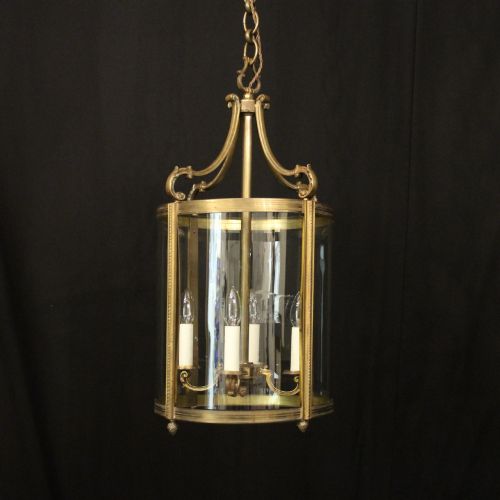
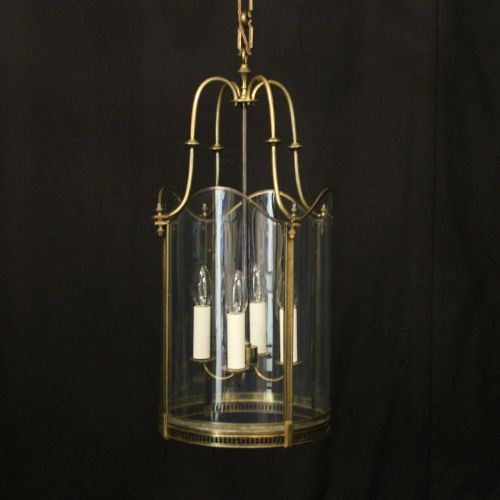
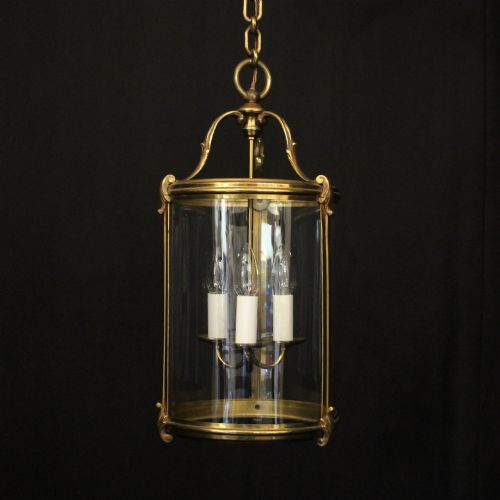
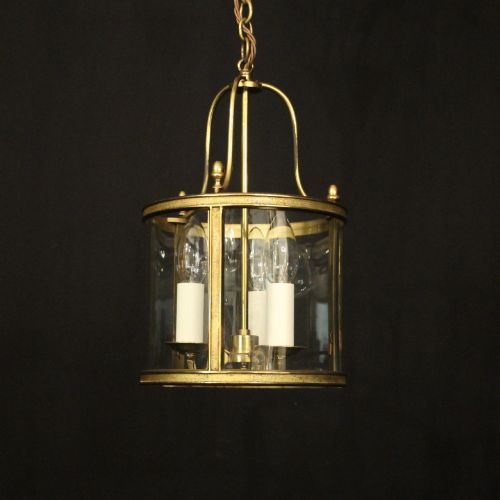
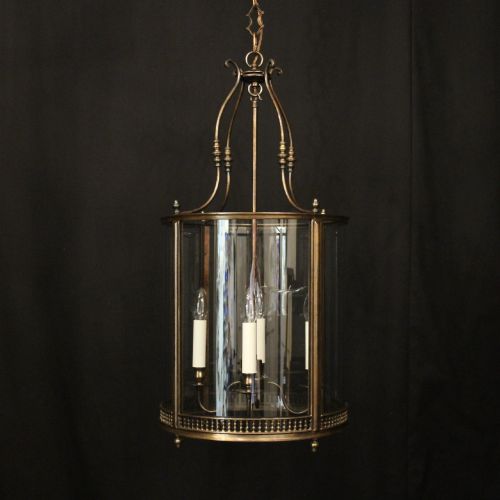
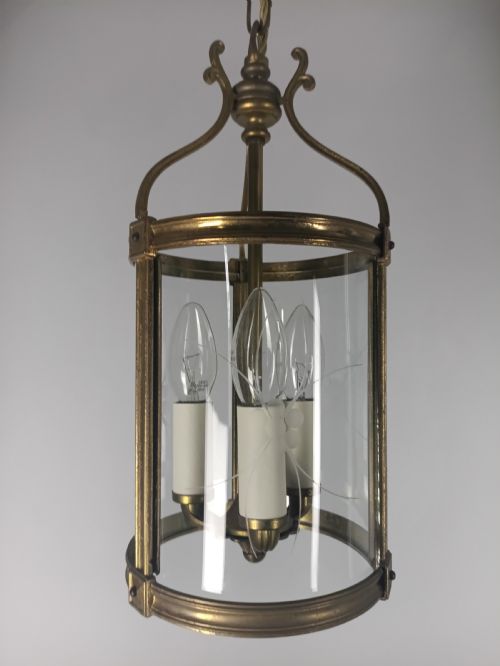
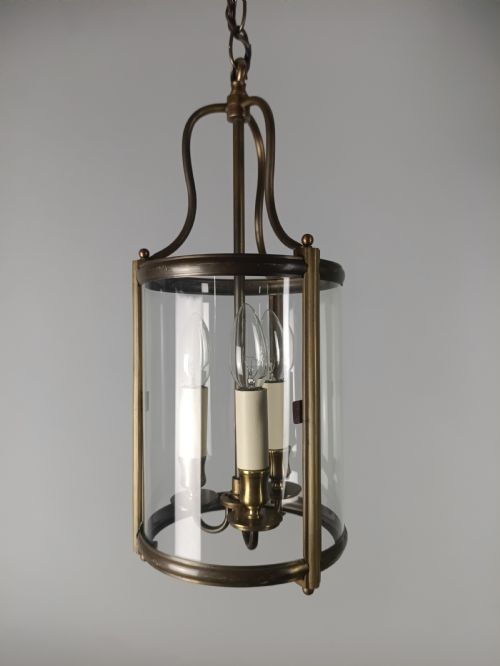
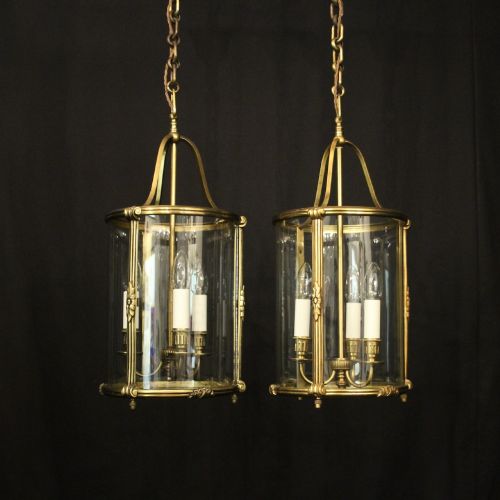
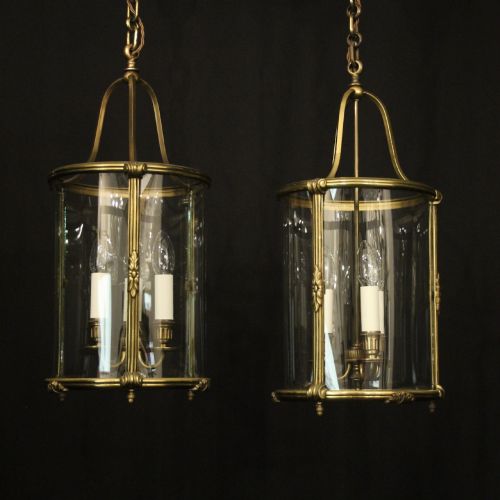
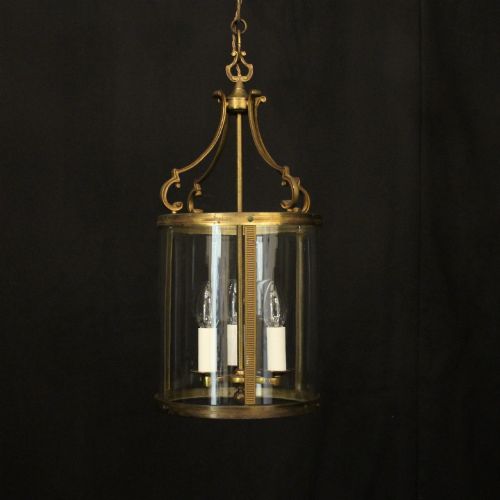
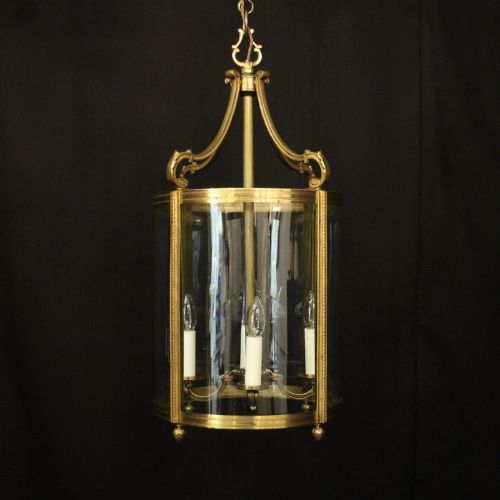


Curved Glass Hall Lantern
These curved glass hall lantern pieces bring a clear, welcoming glow to entranceways, shaped by decades of French and English design.
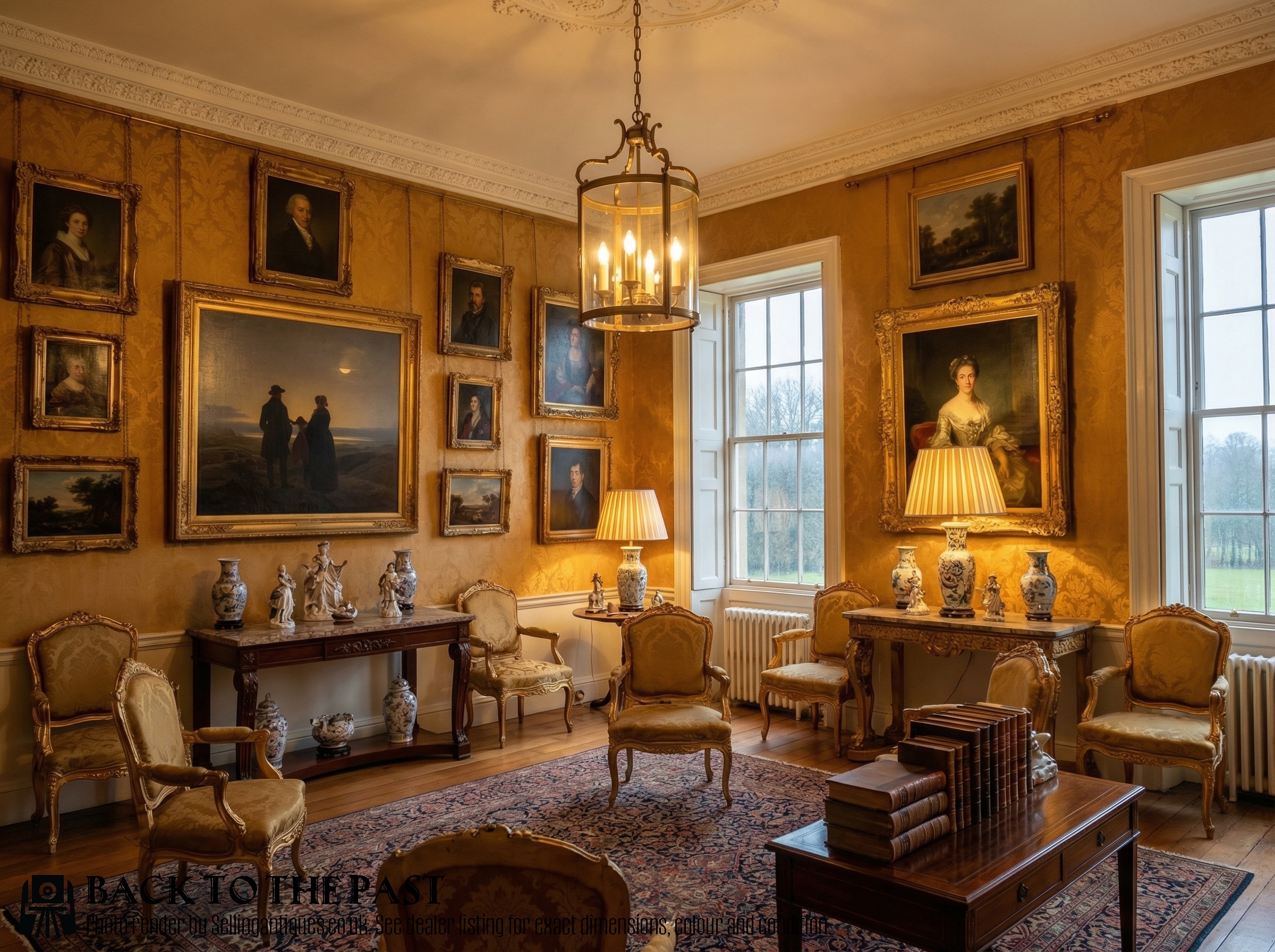
Curved Glass Hall Lantern
A curved glass hall lantern is a ceiling light designed to illuminate hallways, stairwells and entrances, hanging from a chain or fixed bracket. When you search for a curved glass hall lantern, you encounter ceiling fixtures shaped by 19th-century and early 20th-century traditions.
Most examples found here originate from French workshops or English makers, spanning the nineteenth century through to the nineteen-thirties. The common form uses bowed or convex glass panels held within a metal framework to diffuse light gently across an interior space.
How they were made
Makers constructed the framework using brass, gilt brass, gilded bronze, or bronze, casting and shaping the metal to support the weight of the glazing. Many of these frames display decorative styles drawing on French Louis designs, Neoclassical motifs or Rococo revival details.
The defining feature is the curved or convex glass, sometimes etched, which required skilled glass-working to achieve a smooth, rounded profile that fit snugly into the metal mounts. Once formed, these glass panels were secured with flanges or pins within the bronze or brass structure.
Electrical components such as lamp holders and wiring were integrated later, often adapting older gas or candle lanterns for modern domestic power supplies.
The listings span the nineteenth century, nineteen-twenty, and nineteen-thirty, uniting French and English design traditions in brass, bronze and glass.
What varies in quality
Quality rests upon the weight and finish of the metalwork, distinguishing heavy cast bronze or gilt brass frames from lighter, simpler brass constructions. The depth of the gilding and the crispness of any chased ornamentation also mark out the finer pieces.
The glass itself plays a major role, where thick, clear, undamaged convex panes demonstrate superior manufacturing compared to replacement glass or panels with surface distortion. Furthermore, the complexity of the internal lighting arrangement, moving from single bulbs to multi-light configurations, changes the character of the piece.
The Curved Glass Hall Lantern Glossary
- Convex glass
- Curved glass panels that bulge outward, designed to soften and spread light evenly from the internal bulbs.
- Gilt bronze
- Bronze metal treated with a thin layer of gold or gold-coloured finish, often calledormolu in French pieces.
- Hall lantern
- A ceiling-mounted lighting fixture specifically proportioned for narrow corridors and entrance halls.
- Rococo revival
- A decorative style popular in the nineteenth century characterised by asymmetrical scrolls, plant motifs and ornate curves.
- Louis XVI style
- A neoclassical design aesthetic featuring straight lines, symmetry, and classical architectural details.
Curved Glass Hall Lantern: Frequently Asked Questions
Where should I hang a hall lantern?
These lanterns suit entrance halls, vestibules and high-ceilinged landings where they can hang freely as a central feature.
Ensure you allow sufficient headroom beneath the lowest point of the glass for family and guests to pass comfortably.
How do I clean curved glass panels?
Remove dust with a soft, dry cloth before wiping the glass with a mild glass cleaner applied to a cloth rather than sprayed directly.
Take care around the metal framework to avoid harsh chemicals damaging the bronze or gilt surfaces.
How do I tell French and English lanterns apart?
French examples often lean towards gilt bronze, ornate Rococo details, and convex glass associated with chateau interiors.
English pieces tend to use brass or bronze with slightly more restrained proportions and classical Regency influences.