


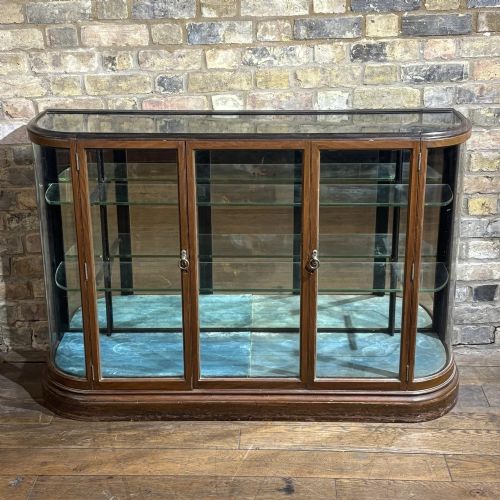


Curved Glass Counter
A curved glass counter is a shop fitting designed to showcase merchandise through sweeping panes, combining commercial utility with period presence.
Curved Glass Counter
A curved glass counter functions as a principal retail showcase, merging a sturdy timber or metal base with rounded transparent housing for goods. When searching for a curved glass counter, buyers encounter practical commercial furniture spanning the late nineteenth century through to the interwar decades.
The most common iterations on this page take the form of substantial shop display cabinets and freestanding counters manufactured in mahogany or oak. These pieces reflect the retail ambitions of their eras, offering generous proportions and glazed viewing areas tailored for customer engagement.
Examples appear across distinct periods including Victorian commercial designs, Edwardian workshops, and Art Deco aluminium framing. This variety demonstrates how shopfitting evolved from heavy timber cabinetry towards lighter metal structures over several decades.
Materials and construction methods
Makers constructed the primary frames of a curved glass counter using dense hardwoods such as mahogany and oak, supplemented by later twentieth-century aluminium. These foundational structures required precise joinery to support the weight of sweeping glass panels without sagging.
Glazing involved bending glass to create continuous curves at the corners or ends of cabinets, mounted within rebated timber frames. Brass hardware often secured doors and fittings, while internal surfaces occasionally featured fabric linings like velvet.
Curved Glass Counter Retail Price Guide 2026
Typical asking prices for curved glass counter among the pieces listed under this phrase on Sellingantiques today, from the lower quarter to the upper quarter. They describe what is for sale here now, not the wider market.
Listings span from the nineteenth century to the nineteen-thirties, featuring materials such as mahogany, oak, and aluminum.
Distinctions in craftsmanship and condition
Quality in a curved glass counter rests upon the precision of the bent glass and the integrity of the timber framing. Superior examples display seamless curves without distortion in the glass and tight, uncompromised joinery in the mahogany or oak base.
The degree of restoration alters the character of these fittings, as professional conservation preserves original brass components and surface patination. Pieces retaining their structural robustness and original glazing configurations sit firmly at the upper end of the range.
F Sage And Co
The Curved Glass Counter Glossary
- Bow end
- A cabinet or counter featuring a rounded, convex termination at one or both ends. This shaping softens the rectangular silhouette of traditional shop fittings.
- Shop display cabinet
- A glazed enclosure utilised by merchants to exhibit stock securely while maintaining full visibility for customers. These units range from countertop versions to large freestanding fixtures.
- Aluminium frame
- A lightweight metal structural system introduced during the twentieth century. It replaced heavier timber skeletons in modernist retail furniture.
- Mahogany
- A durable, reddish-brown tropical hardwood favoured by cabinetmakers for fine commercial furniture throughout the nineteenth and early twentieth centuries.
Curved Glass Counter: Frequently Asked Questions
What is a curved glass counter?
A curved glass counter is a specialised retail display unit featuring rounded glass panels designed to showcase merchandise from multiple angles.
These pieces combine functional commercial storage with decorative period joinery, typically constructed from hardwoods or metal.
How were these counters used?
Merchants utilised these fixtures in shops to present delicate or high-value goods while protecting them behind glass.
The transparent curved housing allowed customers to inspect items clearly without handling the merchandise directly.
How do I date these counters?
Dating relies on identifying the stylistic markers, framing materials, and construction techniques characteristic of different decades.
Victorian and Edwardian examples typically employ heavy mahogany or oak frames, whereas nineteen-thirties pieces introduce aluminium.
Can I use one at home?
These counters integrate well into domestic interiors as display cabinets for collections, tableware, or books.
Their generous proportions and glass viewing areas provide practical storage while adding distinct historical character to a room.