

Curved Front Cupboard
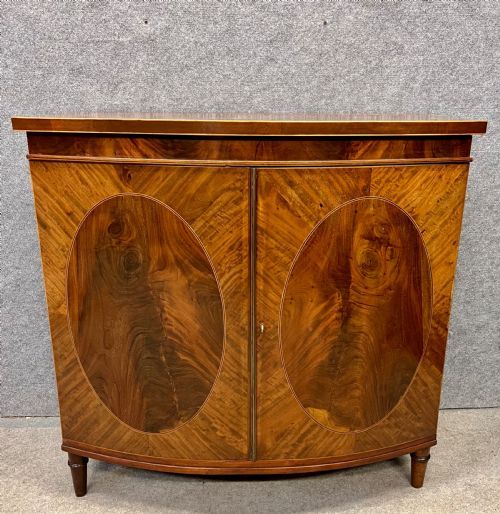
A curved front cupboard brings architectural grace to a room, using gentle sweeps of mahogany, oak, or walnut to soften sharp corners.
Curved Front Cupboard
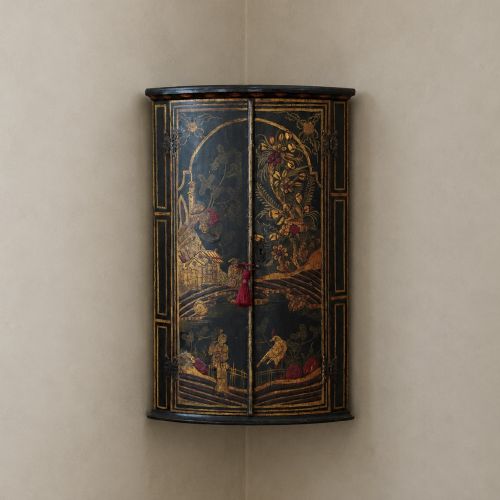
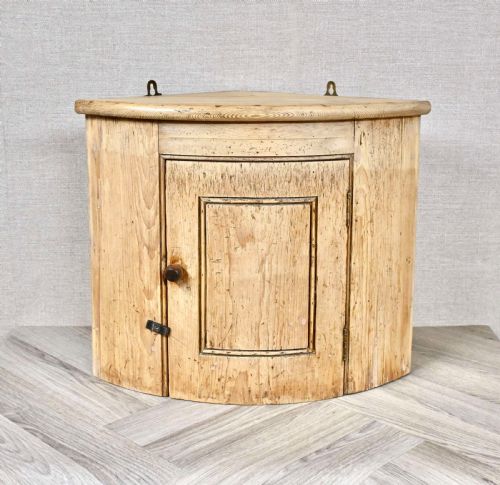
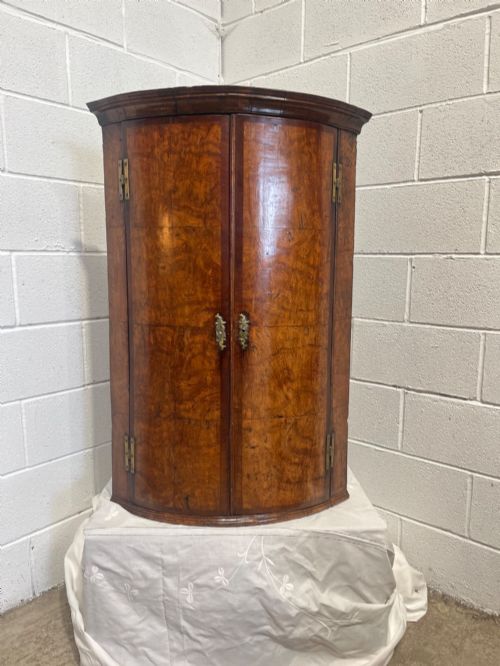
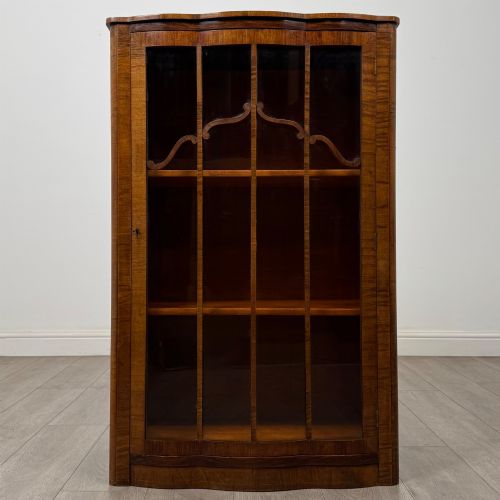
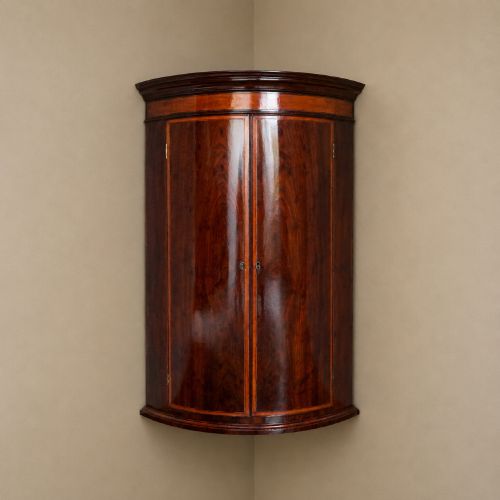
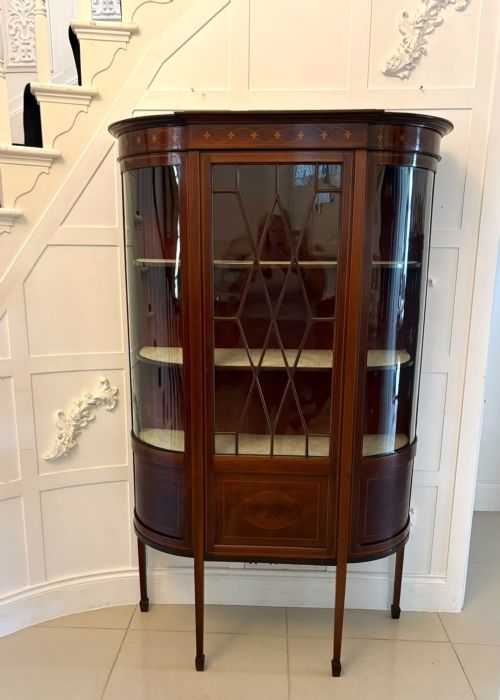
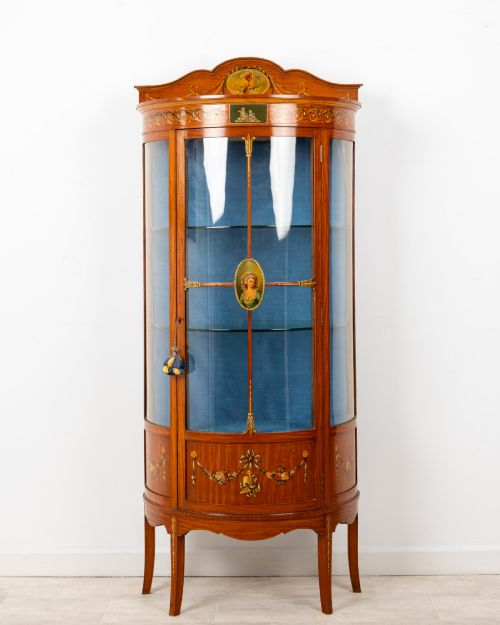
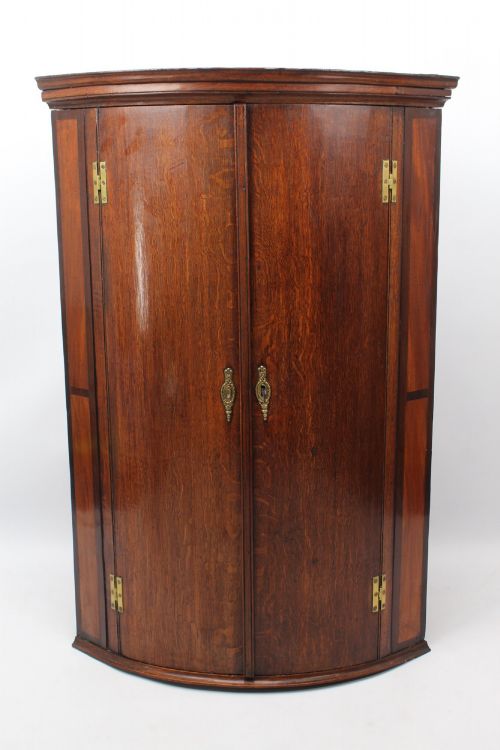
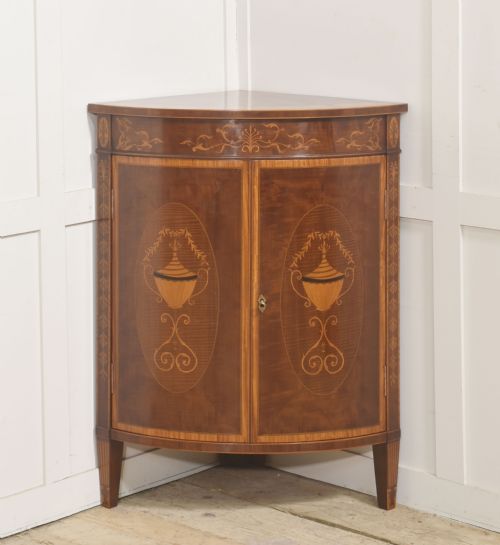
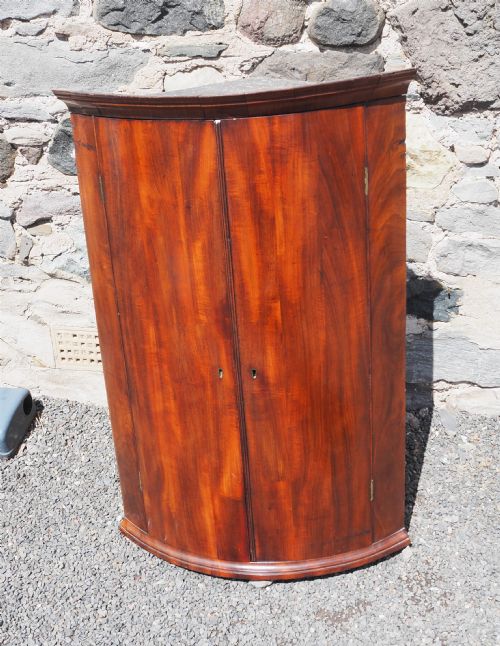
A curved front cupboard takes many forms across the centuries, appearing most frequently as corner cabinets, hanging wall cupboards, and freestanding bedside pieces. These items serve to utilise awkward wall junctions or provide compact storage with a softened profile.
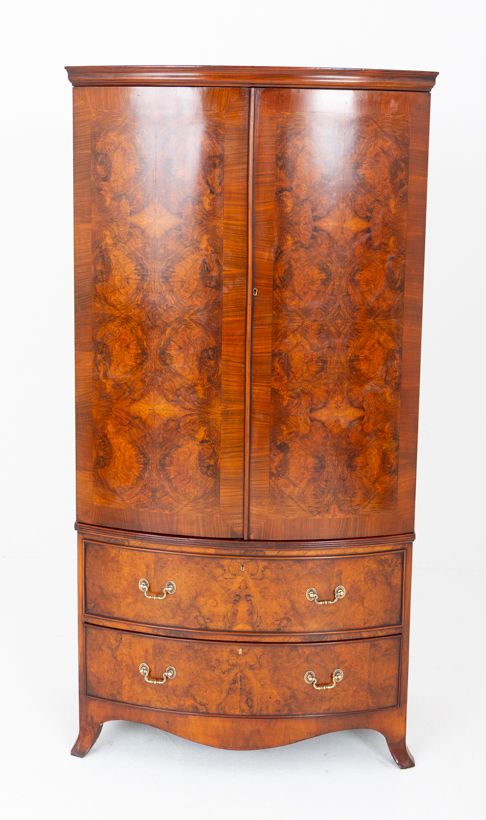
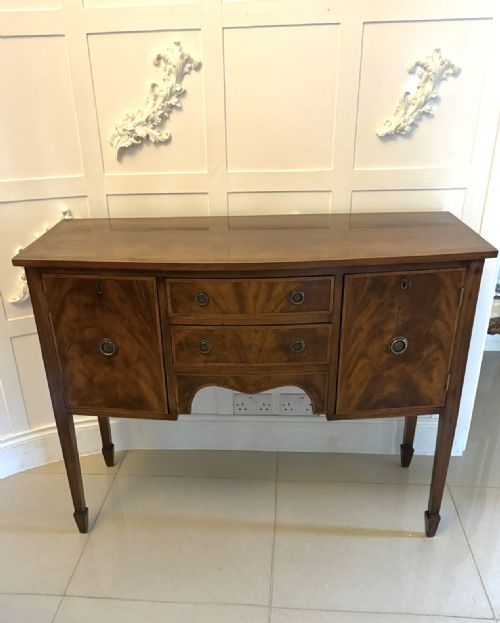
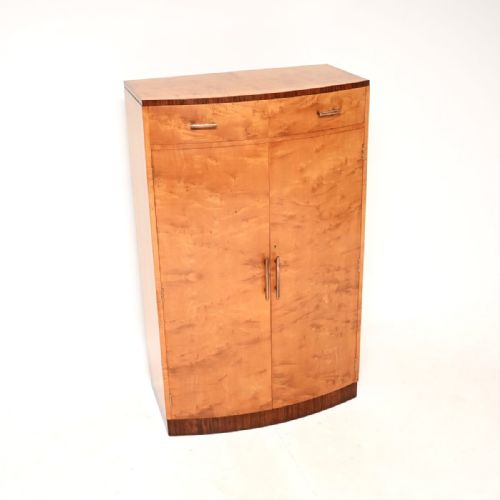
The pieces on this page span the Georgian period, the nineteenth century, and the Edwardian era, alongside later Art Deco examples. Buyers encounter hanging corner units in oak and mahogany alongside grander display cabinets and demi-lune sideboards.
Makers from various periods applied distinct regional tastes, from English country oak to sophisticated London workshop marquetry. Each object reflects the prevailing interior style of its decade, whether geometric Sheraton Revival or exuberant Chinoiserie.
Evaluating the Pieces
Quality rests upon the selection of timber figures and the precision of the curved joinery, where superior examples display seamless veneer matching and stable door alignment. Finer pieces demonstrate restraint and balance in their inlay work and brass mounts.
The integrity of the internal carcass and original backboards separates standard production items from master workshops. Original glass, functioning locks, and undisturbed patination on the timber surface elevate the standing of any piece.
Periods represented range from eighteenth-century Georgian designs through the nineteenth century to Art Deco.
Edwards and Roberts·Gillows·Heal's
The Curved Front Cupboard Glossary
- Bow front
- A convex curved cabinet face that projects outward from the room, softening the rectangular silhouette of the furniture.
- Demi-lune
- A half-moon shape used for tables, commodes, and side cabinets designed to sit flat against a wall.
- Marquetry
- Decorative patterns formed by fitting together contrasting veneers of wood, shell, or ivory onto a structural carcass.
- Plum pudding mahogany
- A highly prized timber grain showing speckled, circular markings resembling the fruit in a traditional pudding.
- Serpentine
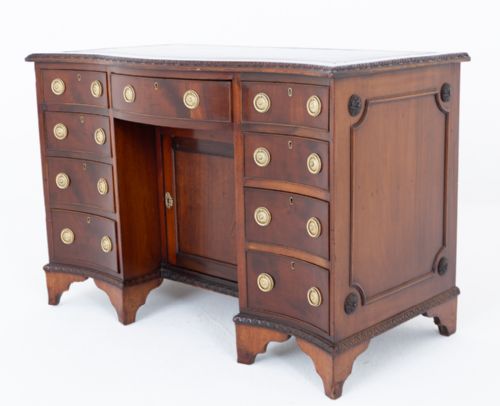
- A shaped furniture front featuring a convex centre flanked by concave curves, creating an undulating movement.
Curved Front Cupboard: Frequently Asked Questions
Where should I place a curved front cupboard?
These cabinets suit corners and alcoves where a standard rectangular piece would block foot traffic. Their rounded profiles draw the eye naturally into dead space.
Larger standing models function well in dining rooms for glassware, while hanging corner versions fit snugly into hallways or bedrooms.
How do I tell Georgian pieces from Edwardian copies?
Georgian pieces generally show native timber construction with hand-cut dovetails and older secondary woods like oak or pine inside. Surfaces carry a softer, wax-fed patination built over centuries of handling.
Edwardian Sheraton Revival pieces often utilise machine-sawn elements, lighter interior linings, and brighter chemical finishes beneath cleaner, more uniform veneers.
What is the difference between a corner cabinet and a display cabinet?
A corner cabinet is specifically engineered to fit into ninety-degree wall junctions, featuring solid or glazed doors that conceal or frame storage shelves. They prioritise spatial efficiency in smaller rooms.
Display cabinets stand flat against walls with extensive glass panels on the front and sides, built primarily to showcase porcelain and decorative objects.
How do I care for antique mahogany and walnut?
Keep wooden surfaces away from direct sunlight and strong heat sources to prevent the veneers from lifting or splitting. Maintain a stable room temperature and humidity level.
Apply a traditional beeswax polish sparingly to nourish the timber and buff gently with a soft cloth to preserve the natural lustre.