




Neoclassical Urn Inlay
Neoclassical urn inlay brings classical architectural motifs into domestic furniture, offering refined floral and urn designs on polished timber.
Neoclassical Urn Inlay
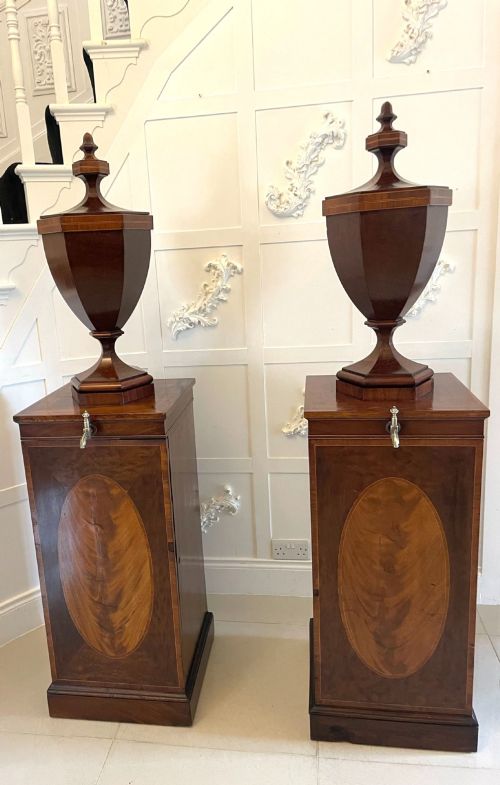
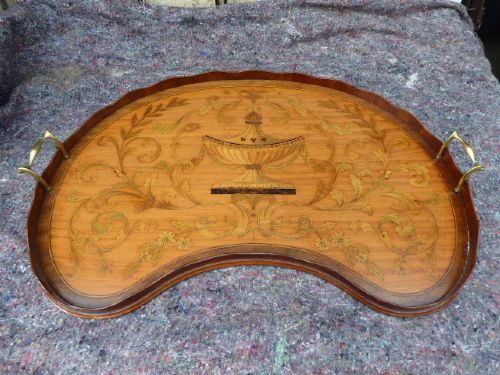
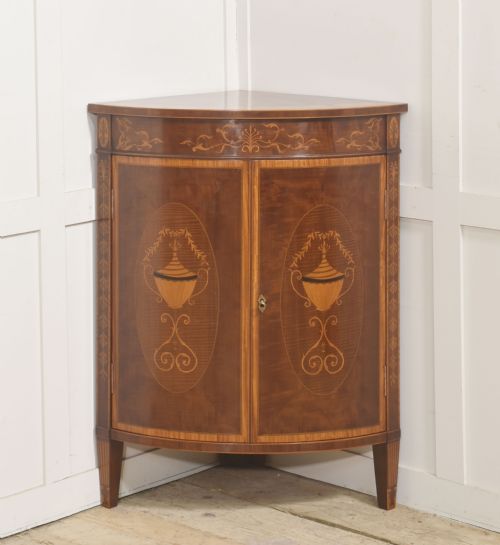
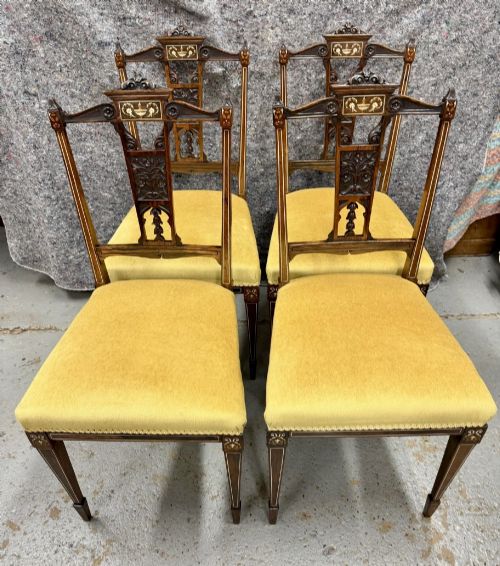
Neoclassical urn inlay appears across a variety of timber forms spanning the Georgian, Victorian, and Edwardian periods, running from the eighteenth century into the early twentieth century. These pieces encompass serving trays, sideboards, corner cabinets, pedestals, and dining chairs decorated with classical ornamentation.
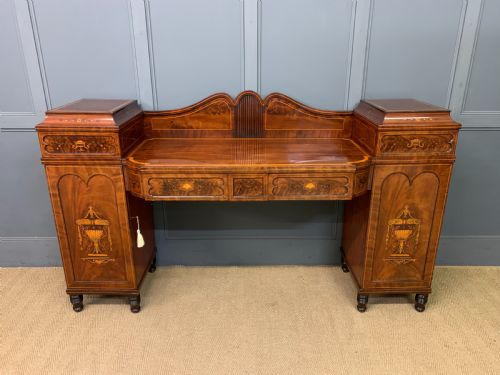
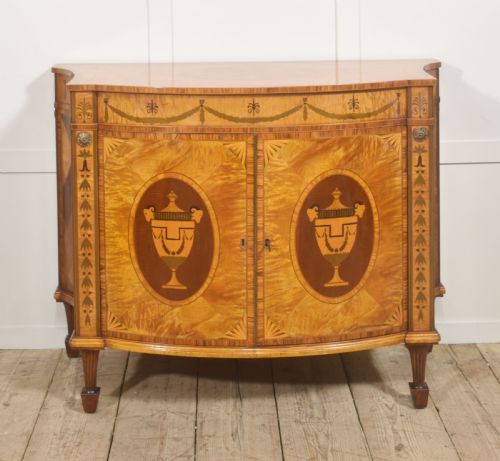
The version most commonly met on this page is the nineteenth-century revival piece, often executed in satinwood or mahogany with delicate contrasting stringing and marquetry. Buyers frequently encounter sideboards, cabinets, and occasional stands carrying the characteristic classical vase or urn motif.
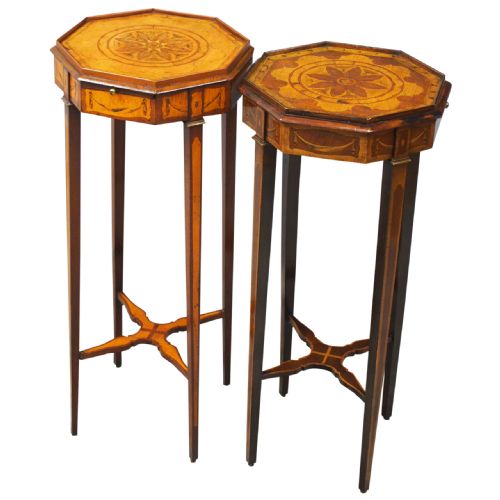
The design vocabulary draws directly on eighteenth-century Sheraton and George III traditions, adapting classical architectural elements for domestic interiors. Craftspeople applied these decorative urns to both large case pieces and smaller tabletop items such as card tables and tea trays.
How they were made
Cabinet makers utilised a foundation of solid mahogany, satinwood, or rosewood, applying contrasting veneers to build up complex pictorial marquetry. Boxwood and various dark timbers provided the tonal range necessary to render the shading of the urns and foliage.
Inlayers cut individual pieces of wood by hand, slotting them into precisely channelled recesses within the primary surface before scraping and polishing the whole. Brass hardware often complemented these wooden elements, securing functional components on sideboards, cabinets, and cutlery urns.
Form categories represented span sideboards, mantel clocks, card tables, corner cabinets, and dining chairs.
What varies in quality
The standard of the marquetry work dictates the visual success of the piece, separating crisp, finely shaded urns from flat or mechanical designs. Precision in cutting and fitting the contrasting woods determines whether the motif appears three-dimensional or merely pasted on.
The choice and figuring of the underlying timber ground, such as select satinwood or dense mahogany, establishes the primary visual weight. Pieces that pair exceptional timber selection with disciplined, harmonious inlay demonstrate the highest level of workshop output.
Edwards and Roberts
The Neoclassical Urn Inlay Glossary
- Marquetry
- The art of creating decorative patterns on furniture using fitted pieces of veneer. This technique allows intricate pictorial designs like urns and swags to be flush-mounted into the surface.
- Satinwood
- A lustrous yellow-gold timber prized for its smooth grain and reflective surface. It served as a favoured background for delicate inlaid motifs during the Georgian and revival periods.
- Sheraton Revival
- A late nineteenth and early twentieth-century design movement inspired by the furniture of Thomas Sheraton. It made extensive use of light woods, classical urns, and tapered legs.
- Cutlery Urn
- A decorative wooden vessel designed to hold flatware, often placed upon pedestals in grand dining rooms. They frequently featured classical urn profiles and fitted interiors.
- Demi-Lune
- A half-moon shape characteristic of certain side tables and cabinets. This form allowed furniture to sit flush against a wall while presenting a curved front.
Neoclassical Urn Inlay: Frequently Asked Questions
What periods do these pieces date from?
The selection encompasses authentic eighteenth-century examples alongside later Victorian and Edwardian revivals. Craftspeople continued to produce pieces in the classical style well into the twentieth century.
Buyers will find dates spanning the Georgian era through to nineteen-ten, reflecting enduring stylistic preferences.
How do I care for inlaid satinwood?
Satinwood and delicate marquetry require protection from direct sunlight and excessive humidity to prevent timber movement and fading. Regular dusting with a soft, dry cloth preserves the polished surface.
Avoid placing items near direct heat sources, which can dry out the wood and loosen small veneer inlays.
Where were these items placed originally?
Cutlery urns and matching pedestals flanked grand dining room sideboards to serve during formal meals. Cabinets and card tables occupied principal reception rooms and parlours.
Smaller items like serving trays and kettle stands functioned as portable accessories for domestic hospitality.
How can I tell revival work from earlier pieces?
Examinations of construction techniques, timber preparation, and interior secondary woods reveal the period of manufacture. Eighteenth-century pieces display specific joinery methods distinct from later revival equivalents.
Makers' marks, where present, help attribute specific works to established nineteenth-century London firms.