

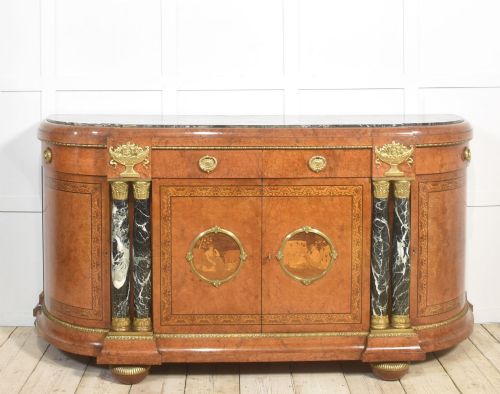


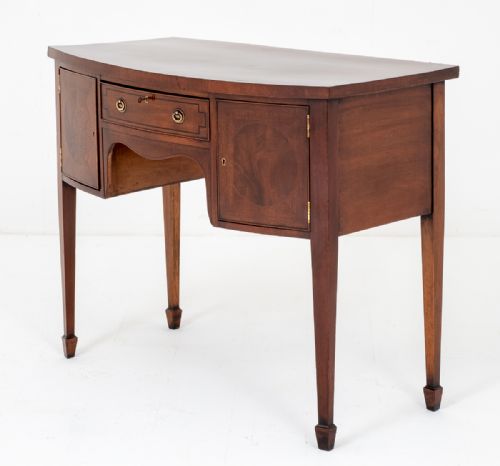


Curved Front Buffet
These curved front buffet pieces are substantial dining room timber storage furniture designed to hold silver and linen, offering a graceful focal point for any interior.
Curved Front Buffet
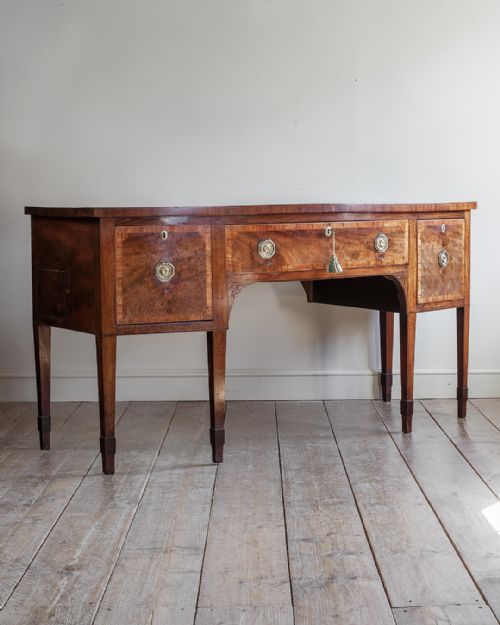
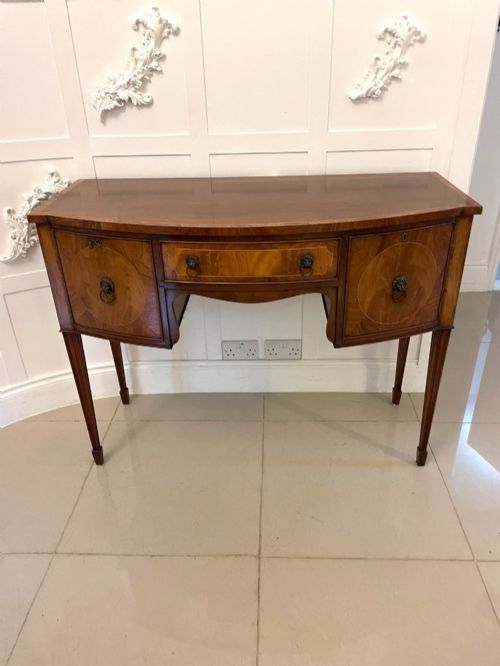
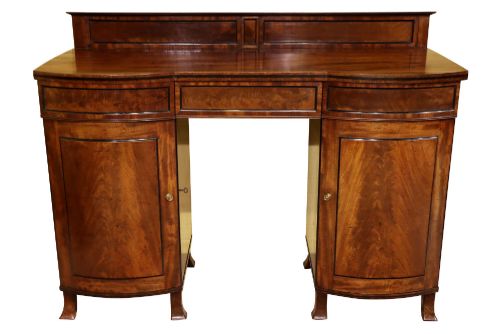
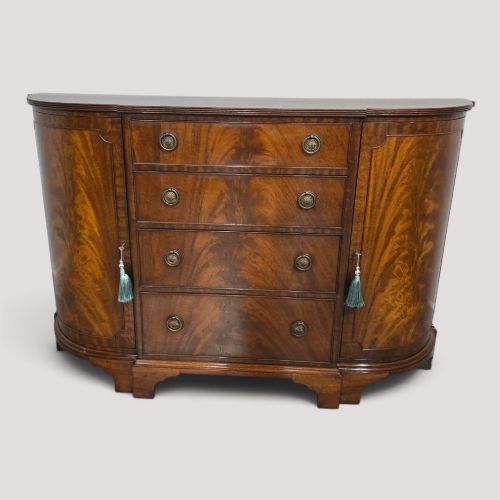
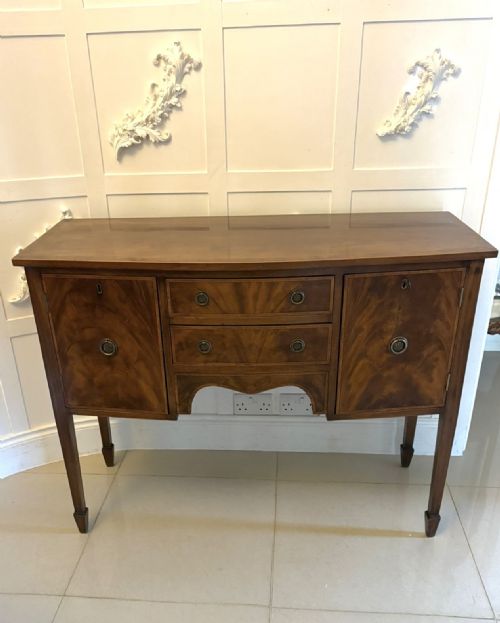
A curved front buffet brings together sideboards, credenzas, and serving tables that share a sweeping or bowed elevation. When you search for a curved front buffet, you encounter formats spanning the eighteenth, nineteenth, and twentieth centuries.
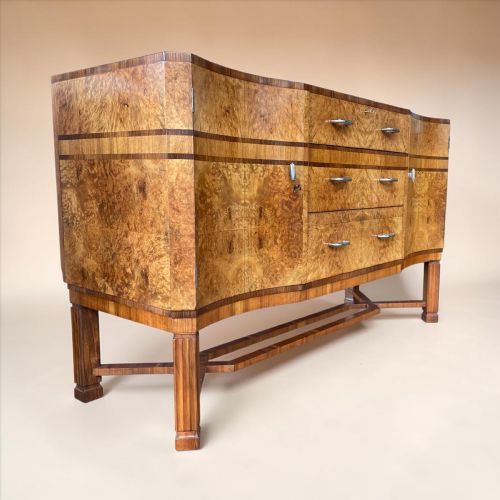
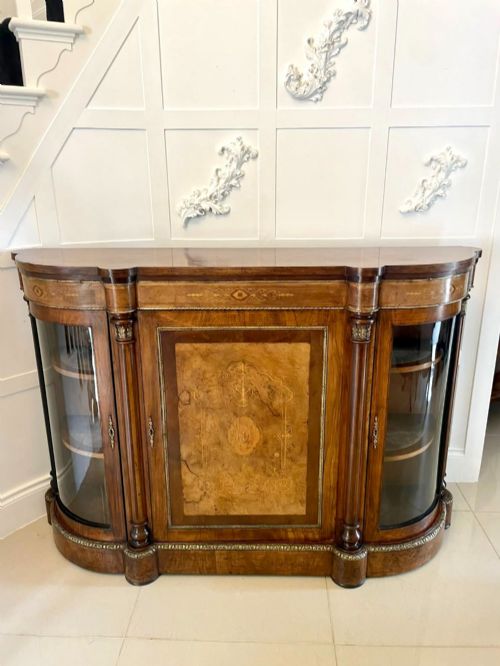
The selections on this page predominantly feature mahogany and walnut timbers with bow fronts or serpentine shapes. Pieces range from compact Georgian designs to large Victorian credenzas and later Art Deco interpretations.
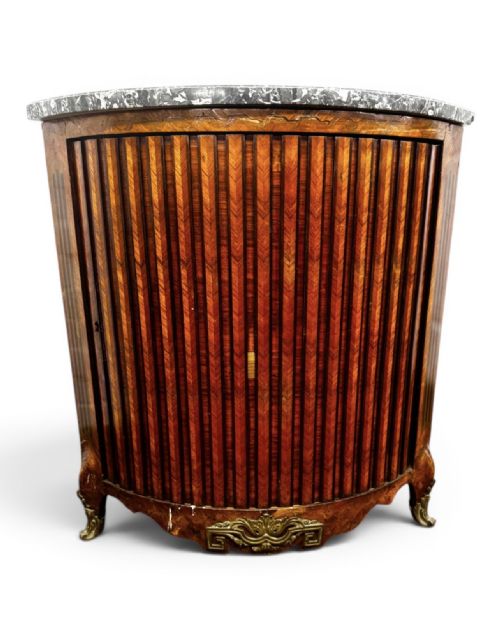
Origin styles vary from British Regency and George III to French Louis XV and Italian marquetry. You will find variations including pedestal layouts, marble tops, and bombe profiles alongside standard cabinet configurations.
Materials and Construction
Cabinet makers built these carcasses using solid timbers such as mahogany and walnut, often applying flame mahogany or burr walnut veneers to the exterior surfaces. Boxwood inlay, ormolu mounts, and brass hardware provide decorative contrast to the rich wood grains.
Curving the timber required skilled woodworking techniques like steam bending or multi-layer laminating to achieve the characteristic bow and serpentine shapes. Surface decoration frequently incorporates detailed marquetry panels and parcel gilding.
Curved Front Buffet Retail Price Guide 2026
Typical asking prices for curved front buffet among the pieces listed under this phrase on Sellingantiques today, from the lower quarter to the upper quarter. They describe what is for sale here now, not the wider market.
Evaluating Quality
Quality rests upon the selection of decorative veneers and the precision of the curved joinery. Superior examples display continuous grain matching across the bowed doors and drawers, alongside refined brass or ormolu mounts.
The integrity of the structural carcass and the fineness of inlaid boxwood or marquetry details distinguish high-end cabinet work from simpler utilitarian pieces.
The Curved Front Buffet Glossary
- Bow front
- A convex curved cabinet front that projects outward in a smooth arc. This shape softens the room and maximises internal storage capacity.
- Serpentine
- A cabinet front featuring a convex centre flanked by concave curves, or vice versa. This complex profile demands advanced carpentry skills.
- Credenza
- A low dining room cabinet often fitted with glass doors or decorative mounts. These pieces frequently incorporate burr walnut and ormolu.
- Flame mahogany
- A wood veneer cut from branches where they join the main trunk, producing a distinctive flickering flame pattern. Cabinet makers reserved this timber for principal facade surfaces.
- Marquetry
- Inlaid patterns created using various coloured wood veneers to form pictorial or geometric designs. Artisans applied this technique to cabinet doors and tops.
Curved Front Buffet: Frequently Asked Questions
Where should I place a curved front buffet?
These pieces suit dining rooms, hallways, or living spaces where a deep timber cabinet functions as a focal storage point.
The curved profile allows the furniture to project gracefully into a room without sharp corners.
How do I distinguish Georgian from Victorian styles?
Georgian pieces tend to rely on understated mahogany construction with subtle boxwood stringing and fine proportions.
Victorian and later examples often introduce heavy burr walnut veneers, elaborate ormolu mounts, and carved serpentine shapes.
What items can I store inside?
The interior compartments accommodate dining linen, silver service, and glassware securely behind timber or glass doors.
Drawer sections suit smaller cutlery and table accessories.
Are marble tops common on these cabinets?
Marble tops appear on specific continental and French influenced sideboards within this selection.
They provide a durable, decorative surface distinct from standard timber tops.