

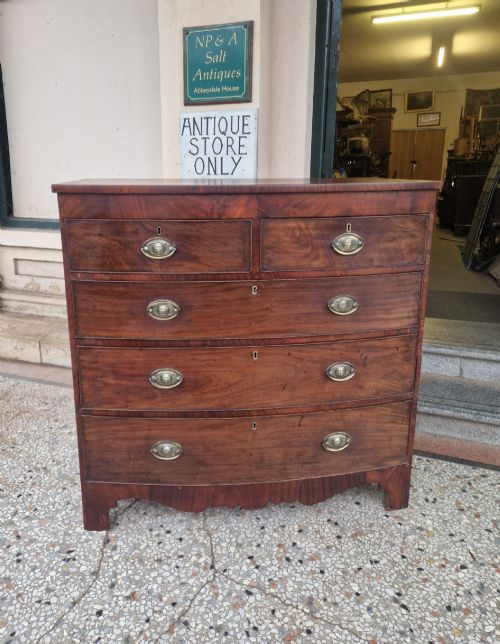
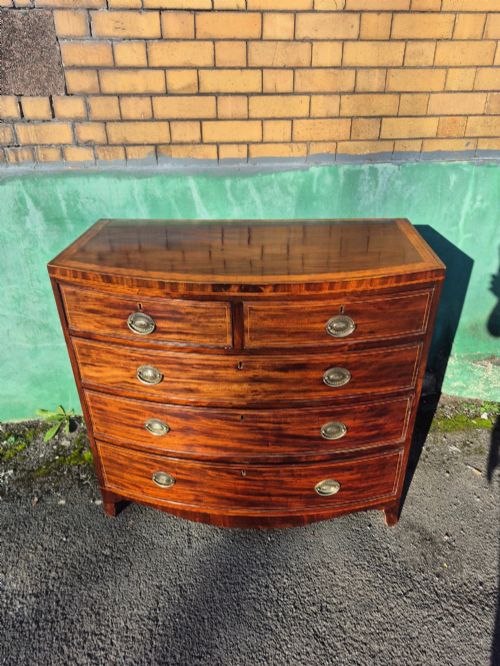
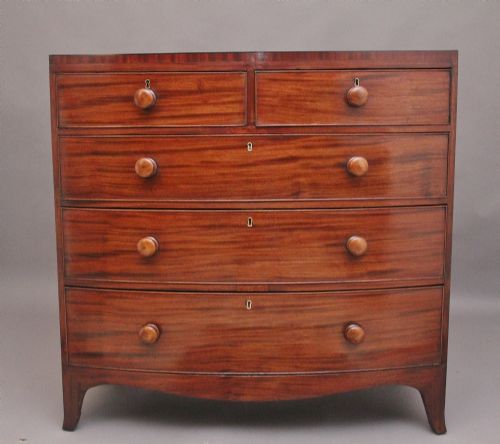
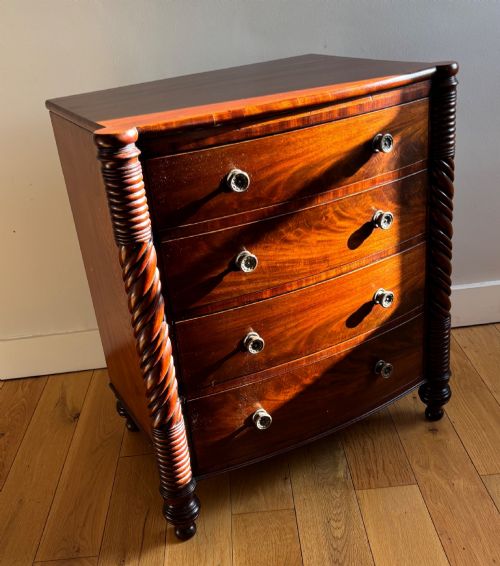
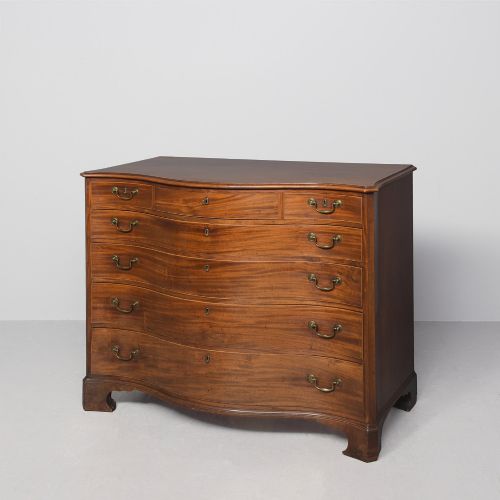
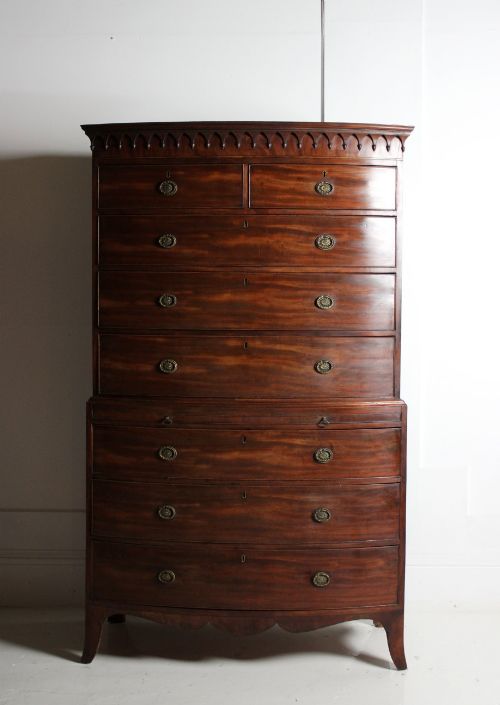
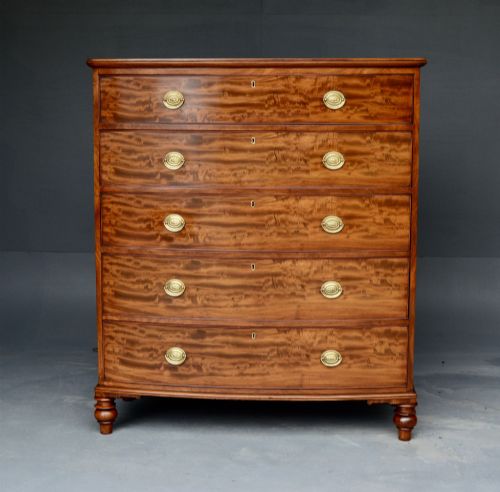
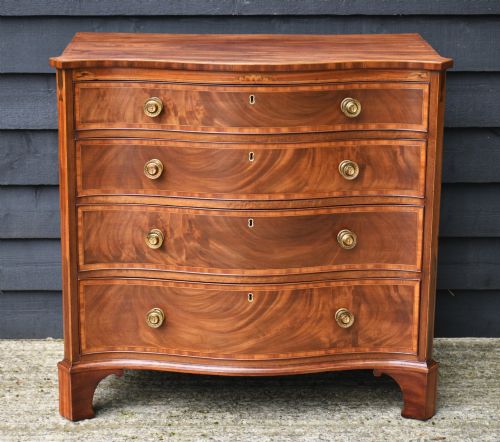
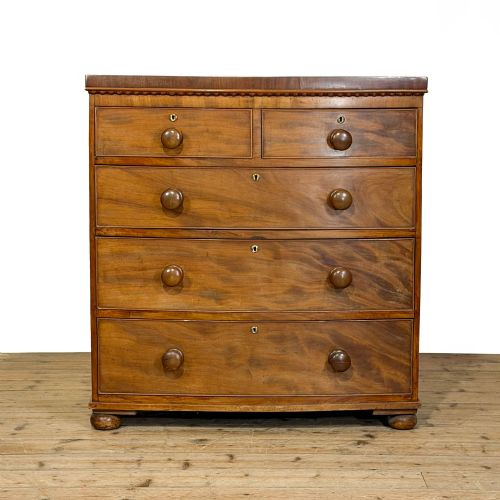
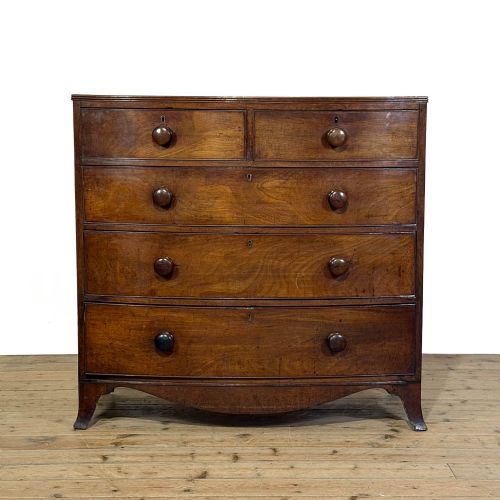
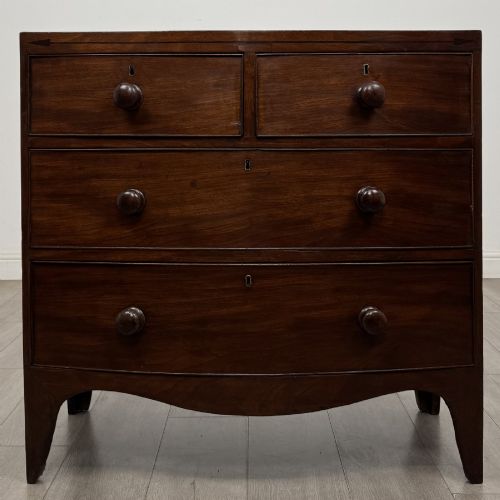
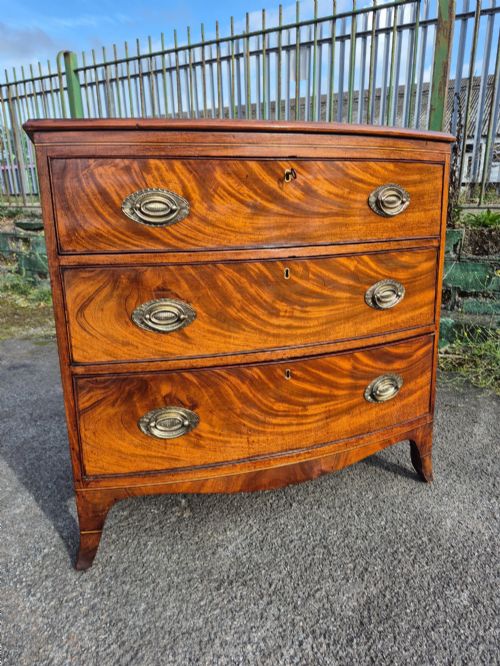
Curved Front Bedroom Chest
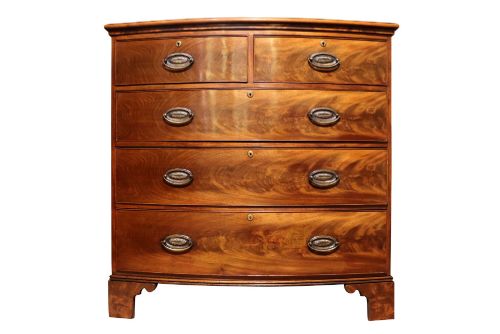
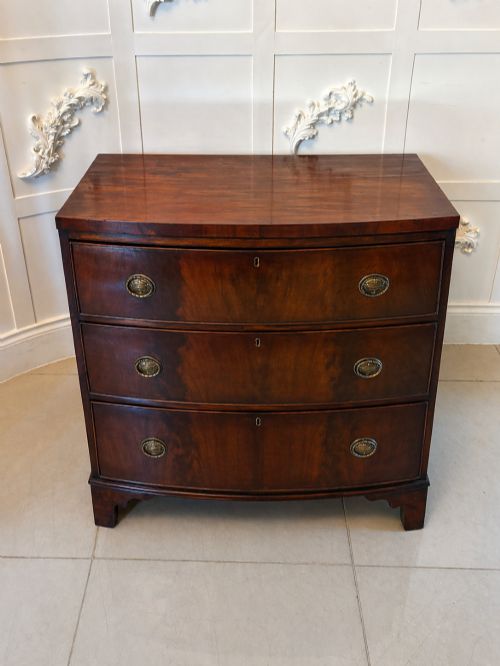
A curved front bedroom chest offers a distinct profile, pairing generous storage with the elegant sweep of a bow or serpentine front.
Curved Front Bedroom Chest
When you search for a curved front bedroom chest, you encounter a variety of traditional storage forms designed to sit against a wall while softening the room's geometry. The pieces on this page span the Georgian, Regency, and Victorian periods, alongside later twentieth-century interpretations.
The most common form is the bow front chest of drawers, alongside larger chest on chest configurations and occasional dressing tables. These items originate primarily from English and French workshops, utilising solid timbers and decorative veneers to create the characteristic rounded facade.
How they were made
Cabinet makers built these pieces using solid hardwoods such as mahogany, walnut, and oak for the structural framing and drawer carcasses. Timber selection played a central role, with figured grains like flame mahogany and walnut chosen for the principal surfaces.
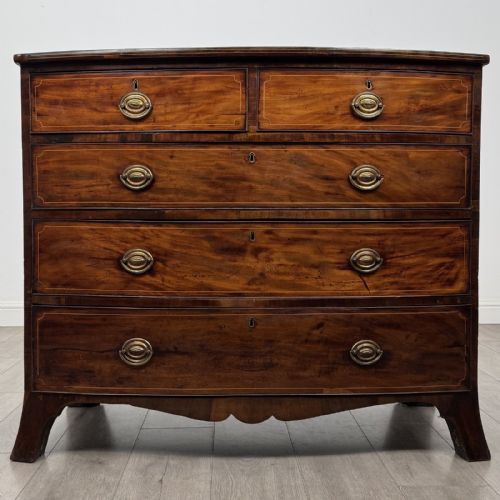
To achieve the rounded facade, craftsmen applied thin wood veneers over shaped cores or bent solid timber to form the sweeping profile. Details such as contrasting satinwood banding, boxwood inlay, and cast brass hardware completed the construction.
Curved Front Bedroom Chest Retail Price Guide 2026
Typical asking prices for curved front bedroom chest among the pieces listed under this phrase on Sellingantiques today, from the lower quarter to the upper quarter. They describe what is for sale here now, not the wider market.
The listings show curved front chests constructed from mahogany, walnut, oak, and painted wood, spanning the Georgian, Regency, and Victorian periods.
What varies in quality
Quality in these chests rests upon the selection of timber and the precision of the veneer work across the curved facade. Grain matching on a bow front requires deliberate skill to ensure the pattern flows naturally around the radius.
The construction of the drawers themselves, including dovetailed joints and smooth running actions, separates standard utility items from finer cabinet work. Original hardware, balanced proportions, and crisp inlay further distinguish the superior examples.
The Curved Front Bedroom Chest Glossary
- Bow front
- A convex curved front projecting outward in a smooth arc. This shape gained popularity during the Georgian and Regency periods to soften room layouts.
- Serpentine
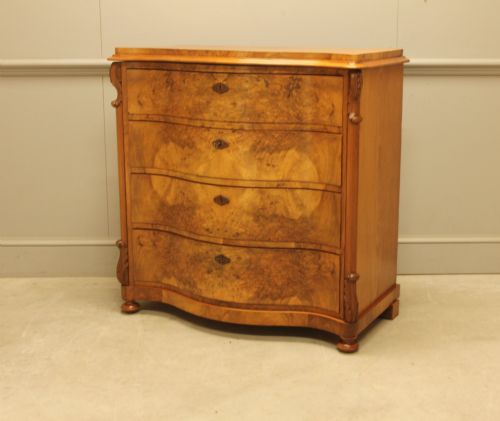
- A curved front featuring a convex centre flanked by concave ends, or vice versa. It requires advanced cabinet making techniques to execute cleanly.
- Veneer
- A thin layer of figured wood applied to a secondary timber base. Flame mahogany and walnut veneers created decorative surface patterns.
- Inlay
- Contrasting strips of wood, such as boxwood or satinwood, inserted into the primary timber surface to form decorative borders.
- Chest on chest
- A tall storage unit comprising one chest stacked directly on top of a larger base chest. This form provides substantial vertical capacity.
Curved Front Bedroom Chest: Frequently Asked Questions
What periods do these chests come from?
The pieces span several centuries, with examples originating from the Georgian, Regency, and Victorian eras. Later twentieth-century reproductions and revivals also appear.
Craftsmen across these different periods adapted the curved front design using prevailing regional woods and decorative styles.
What woods were used to build them?
Mahogany and walnut serve as the primary timbers found across these listings, often enhanced with figured veneers. Secondary woods like oak and pine appear in internal carcase construction.
Decorative accents frequently include boxwood inlay, satinwood banding, and contrasting brass hardware.
Where should I place a curved chest in a bedroom?
These chests function effectively against main bedroom walls or within alcoves where their curved profile prevents sharp corners from jutting into walking space. Their surface provides a practical platform for dressing items or mirrors.
Ensure you measure the depth accurately, as the projecting sweep of the curve extends further than a flat front chest.