


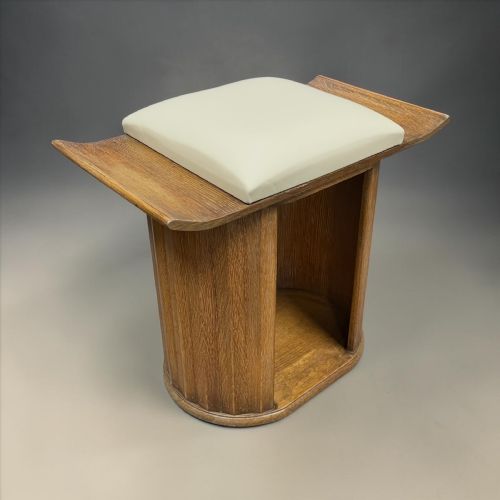


Curved Footstool
A curved footstool brings organic lines and practical comfort to a room, offering low seating or a place to rest tired feet.
Curved Footstool
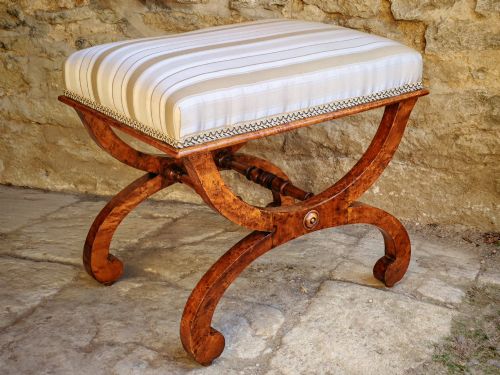
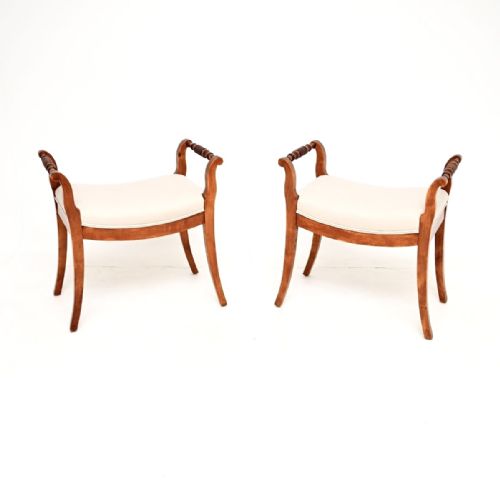
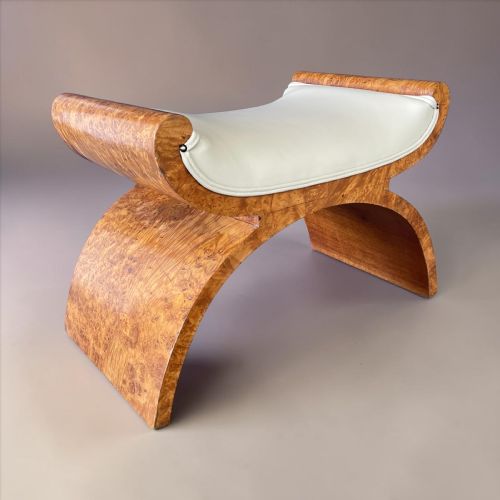
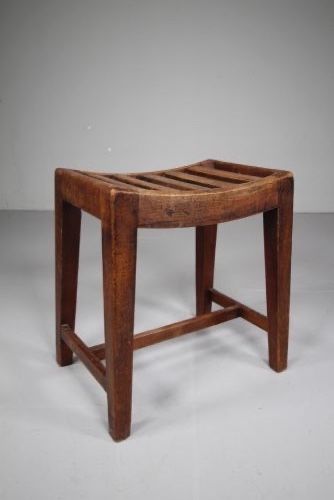
A curved footstool encompasses low seating and rests originating from periods ranging from the eighteenth century through to the art deco era. These items take several structural forms, including rocking gout stools, X-framed seats, saddle-seated designs, and dressing stools.
Origins span English workshops, continental makers, and broader global traditions including African tribal objects and Liberty style productions. Each curved footstool serves as both a functional accessory and a distinct period artefact.
What varies in quality
Quality rests in the precision of the woodwork and the integrity of the original materials, such as figured veneers or carved giltwood. Pieces retaining their original leather, fabric, or woven cane surfaces command higher regard among collectors.
The sophistication of the design, whether an architecturally inspired X-frame or a fluid art deco curve, distinguishes standard utilitarian items from exceptional workshop creations.
Curved Footstool Retail Price Guide 2026
Typical asking prices for curved footstool among the pieces listed under this phrase on Sellingantiques today, from the lower quarter to the upper quarter. They describe what is for sale here now, not the wider market.
Some nineteenth-century gout stools incorporate gentle rocking mechanisms, offering a soothing motion for tired feet while you sit.
Harry and Lou Epstein·Thonet
The Curved Footstool Glossary
- Bergere
- A type of closed upholstered armchair or stool featuring woven cane panels set into wooden frames. This French technique provides a resilient yet lightweight seating surface.
- Gout stool
- A specialised inclined footstool designed to elevate and support the foot or leg of a person suffering from gout. Many examples feature a rocking mechanism to adjust the angle of relief.
- X-frame
- A structural form utilising intersecting diagonal supports shaped like the letter X to form the base of the stool. This classical configuration appears in Regency and Queen Anne revivals.
- Biedermeier
- A central European style dating from the nineteenth century prioritising utilitarian comfort and clean lines over excessive ornamentation. It frequently employs native timbers like birch and maple.
- Giltwood
- Timber that has been coated with a thin layer of gold leaf or gold paint for decorative effect. This finish is common on formal nineteenth-century seating.
Curved Footstool: Frequently Asked Questions
What is a curved footstool used for?
These items serve primarily as low seats or supports for resting the feet while seated in a chair. Historically, specialised variants like gout stools were utilised to elevate limbs for medical relief.
Today, they function effectively as movable accent seating or decorative furniture within living spaces and dressing rooms.
How do I identify the period of a curved footstool?
Dating relies on observing the timber species, upholstery materials, and stylistic ornamentation characteristic of specific eras. For instance, satin birch and clean geometric lines point toward nineteenth-century Biedermeier, while burr maple and streamlined forms suggest art deco design.
Construction techniques visible on the underside also provide clues regarding age and workshop origin.
How should I care for antique leather and wood?
Maintain wooden frames by dusting regularly with a dry cloth and applying appropriate wax polish sparingly to nourish the grain. Protect antique leather surfaces from direct sunlight and excessive heat to prevent cracking.
Avoid commercial liquid cleaners that might strip historic finishes or damage original upholstery.
Are these footstools suitable for daily use?
Many solid wood and sturdy frame designs remain robust enough for regular sitting or foot resting in a modern household. Pieces featuring delicate carved giltwood or fragile original cane require more mindful placement to preserve their condition.
Assessing the internal framing and joint stability helps determine appropriate everyday placement.