

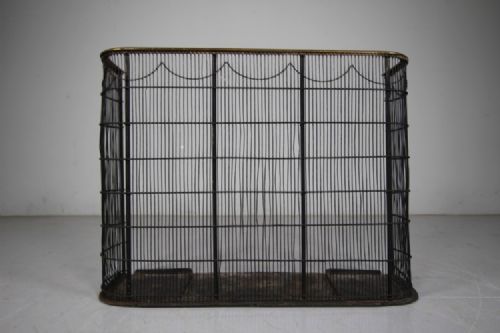


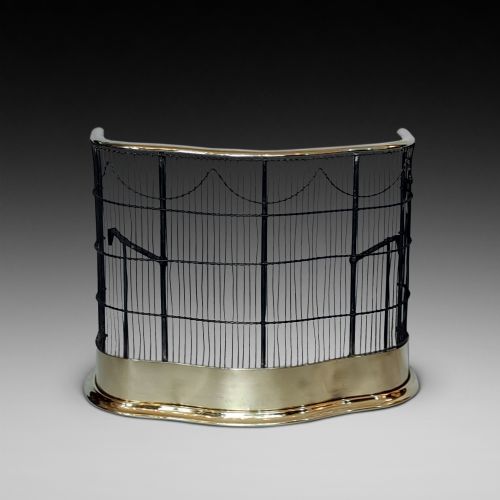


Curved Fireplace Fender
A curved fireplace fender frames the hearth with a sweeping line, keeping stray embers in check while anchoring the fireplace.
Curved Fireplace Fender
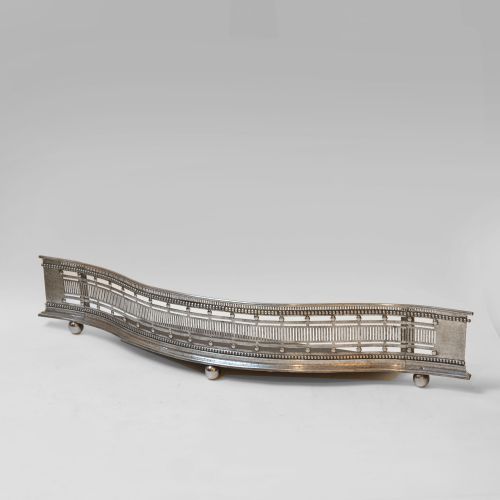
A curved fireplace fender sits directly on the floor around the hearth to contain ashes and protect the room from stray sparks. The pieces found here follow graceful bowed, serpentine, and bowfront outlines designed to match the projection of period fireplaces.
Most examples date from the nineteenth century, taking Victorian, Georgian, and Regency forms. Buyers encounter low metal kerbs alongside taller nursery guards fitted with wire mesh for extra protection.
How they were made
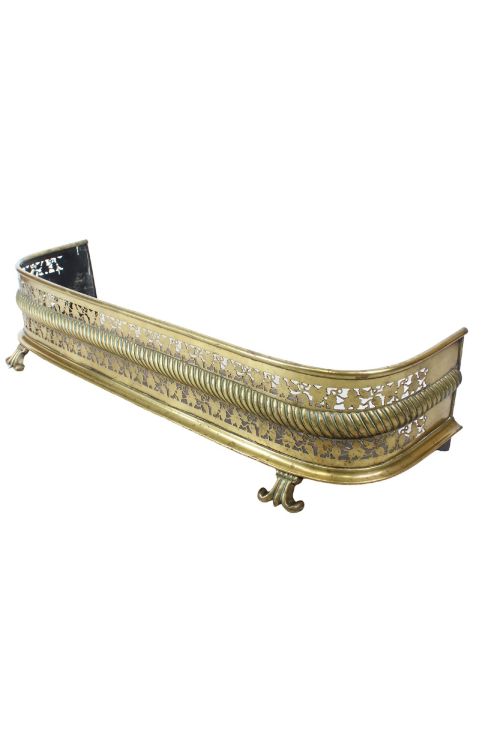
Blacksmiths and metalworkers shaped steel, iron, and wrought iron to form the structural frames of these guards and kerbs. Brass featured heavily for decorative top rails, rims, and perforated panels.
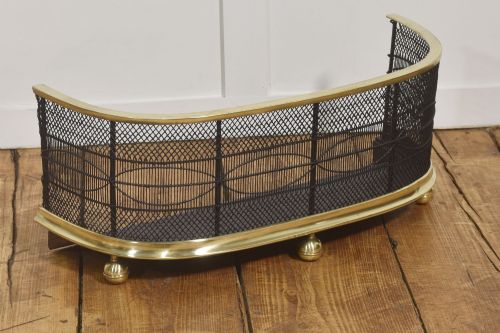
Fine woven iron wire and wire mesh were soldered or fitted into metal frames to construct the protective barriers seen on nursery fenders.
Listings feature items spanning the Georgian, Regency, Victorian, and Edwardian eras, constructed in brass, iron, steel, and wire mesh.
What varies in quality
The sophistication of the metalwork defines the better pieces, particularly where hand-piercing and decorative serpentine shaping require precise skill. Solid brass rims and heavy gauge iron show superior substance compared to lighter constructions.
The integrity of the woven wire mesh and the snug fit of the curved joints determine how well a piece maintains its original form over decades of hearthside service.
The Curved Fireplace Fender Glossary
- Serpentine front
- A convex central section flanked by concave curves, creating an undulating line along the hearth.
- Nursery fender
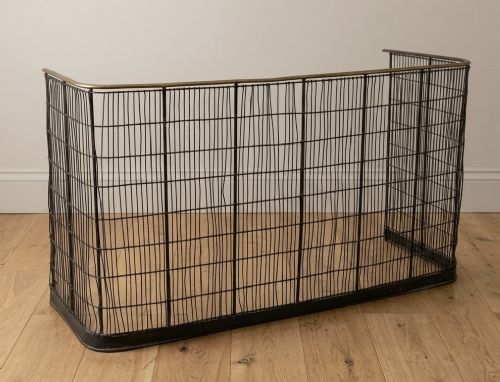
- A taller protective enclosure, frequently incorporating wire mesh, designed to keep children safely away from the fire.
- Bowfront
- A rounded, outward-curving front profile that softens the angular look of a standard fireplace surround.
- Kerb fender
- A low metal barrier that sits directly on the floor around the hearth edge to contain embers.
- Wirework
- Metal wire shaped and interlaced to form protective grilles or decorative panels.
Curved Fireplace Fender: Frequently Asked Questions
What is a curved fireplace fender used for?
These metal guards and kerbs sit around the hearth to prevent logs, coals, and sparks from rolling out onto the floorboards or carpets. They also provide a physical barrier to keep children and pets at a safe distance from the open fire.
Taller nursery versions fully enclose the hearth area with wire mesh panels, while lower kerb styles focus on framing the fireplace opening neatly.
How do I tell Victorian from Georgian fenders?
Georgian and Regency examples tend to feature sleek steel with precise pierced decoration and serpentine lines. Victorian pieces frequently combine polished brass frames with woven iron wire or mesh for nursery protection.
The weight of the metal and the style of any pierced ornamentation offer clear clues to the period of manufacture.
Are all curved fenders made of brass?
Makers utilised a range of metals depending on the function and date of the piece. Steel and wrought iron provided sturdy structure for hearth kerbs, while brass was favoured for decorative top rails and rims.
Wire mesh and woven iron wire appear frequently on taller guards intended to block sparks while maintaining visibility of the fire.
How do I measure for a curved fender?
Measure the width of the fireplace opening and the maximum depth the hearth projects into the room. The curved frame needs to sit comfortably around these dimensions without crowding the hearth space.
Check the internal radius of the bow or serpentine curve to ensure it matches the sweep of your fireplace surround.