




Wire Mesh Fire Screen
A wire mesh fire screen keeps stray embers in the hearth while letting the warmth through, and these vintage guards bring genuine period protection to a working fireplace.
Wire Mesh Fire Screen
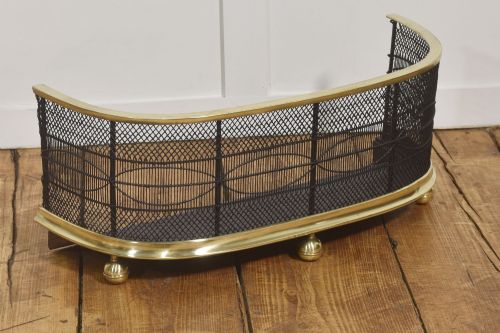
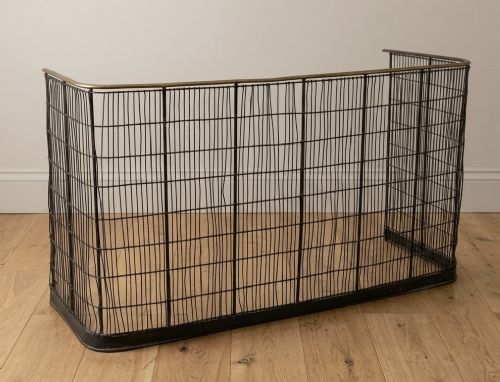
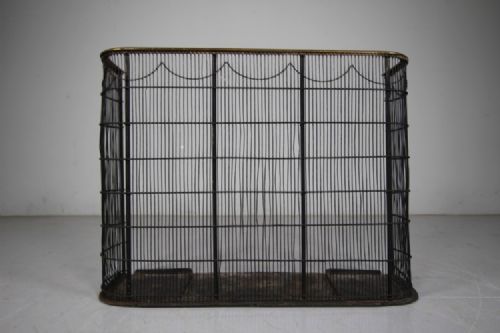
When you search for a wire mesh fire screen, you are looking at functional hearth protection that spans the Regency, Victorian, and Edwardian eras. The listings here show these pieces most commonly taking the form of nursery fenders and spark guards designed to enclose the fireplace opening safely.
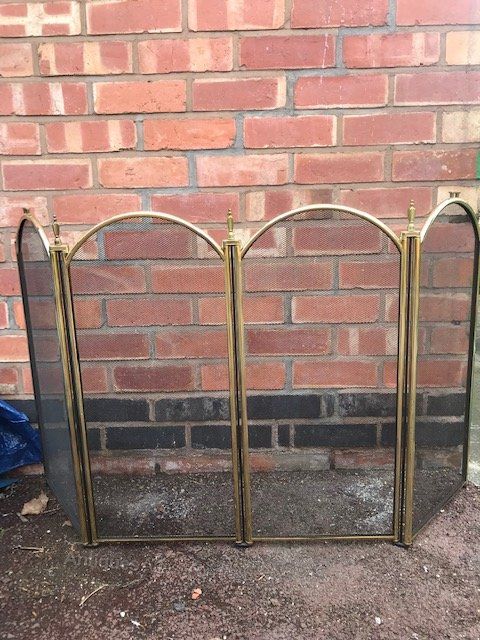
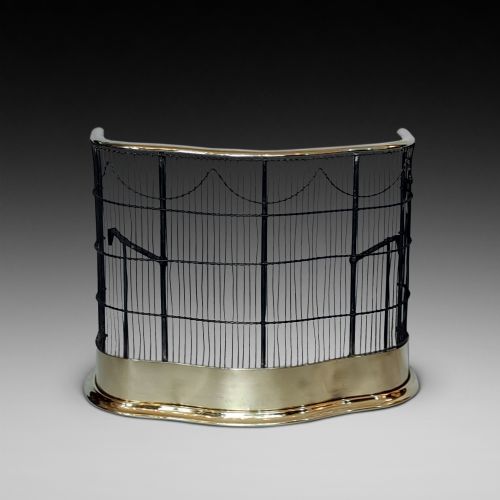
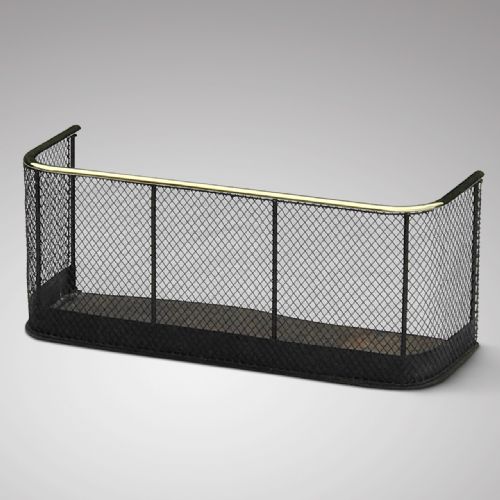
You will frequently meet Victorian and 19th-century examples featuring sturdy brass frames combined with woven iron wire or steel wire mesh. These range from simple folding sections to bowed nursery fenders equipped with top rails.
The styles recorded on this page stretch from formal Regency wirework to relaxed English Country House accessories. Alongside these, specific variations include embossed brass fire screens and versions that incorporate clothes rails.
Materials and construction methods
Makers constructed these pieces using durable metals suited to the intense heat of a coal or wood fire. Brass frames provide rigid structure and decorative polish, while iron mesh and woven iron wire form the protective barrier against sparks.
Craftsmen shaped the metal into serpentine curves, bowed fronts, and multi-section folding frames to fit around different hearth sizes. Details like brass top rails and embossed brass panels give finished pieces their distinct period character.
Some nineteenth-century nursery fenders thoughtfully included built-in clothes rails for drying damp garments by the hearth.
Judging quality and craftsmanship
Quality in a wire mesh fire screen shows in the rigidity of the frame and the tightness of the wire weave. Superior examples use heavy gauge brass and securely fixed mesh that withstands daily handling without sagging.
The refinement of the metalwork separates standard utility guards from finer decorative pieces. Better specimens feature cleanly soldered joints, substantial brass rims, and well-balanced folding sections that stand firmly on the hearth.
The Wire Mesh Fire Screen Glossary
- Nursery fender
- A protective barrier designed to surround an open fireplace completely, keeping children and pets at a safe distance. These often feature an elevated brass top rail.
- Spark guard
- A screen placed directly in front of the fireplace opening to catch flying embers. They utilise fine wire mesh to stop sparks while preserving the view of the fire.
- Wirework
- Metal construction formed from twisted, woven, or welded wire. In fireplace accessories, this technique creates both the protective mesh panels and decorative frames.
- Serpentine
- A gentle curving shape that undulates outward and inward. This profile is frequently seen on the brass rims of Victorian fire guards.
- Companion set
- A collection of fireplace tools such as pokers, tongs, and shovels, often housed alongside a screen or fender. They share matching brass or iron finishes.
Wire Mesh Fire Screen: Frequently Asked Questions
What is a wire mesh fire screen used for?
These pieces serve primarily to catch spitting embers and sparks from an open fire, preventing them from damaging flooring or upholstery. They also act as a physical barrier to keep children and pets away from hot grates.
Beyond pure safety, they function as permanent decorative furnishings for the hearth. Even when the fire is unlit, they provide architectural presence in a room.
How do I tell a Victorian screen from a Regency one?
Victorian pieces on this page frequently combine heavy brass rims with dark iron mesh, often taking the form of enclosed nursery fenders with top rails. They tend to be robust and functional.
Regency examples lean more towards delicate wirework construction. The style reflects the neoclassical tastes of the early nineteenth century with lighter framing.
Can I use these with a modern fireplace?
Most of these screens are designed to sit on the hearth in front of an open fireplace, making them adaptable to various hearth dimensions. You simply measure your fireplace opening and floor space to ensure a stable fit.
Folding versions and bowed guards offer flexibility for different hearth layouts. They require no permanent installation and can be moved easily.
How do I care for brass and wire mesh?
Brass frames respond well to gentle dusting and occasional cleaning with a mild metal polish to maintain their lustre. Avoid abrasive cleaners that might strip the aged surface character.
The wire mesh requires careful brushing or vacuuming with a soft attachment to remove soot and dust. Keeping the metal dry prevents corrosion over time.