

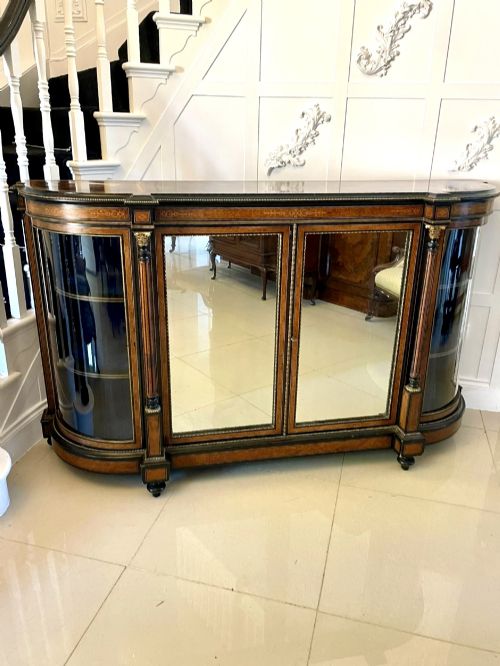
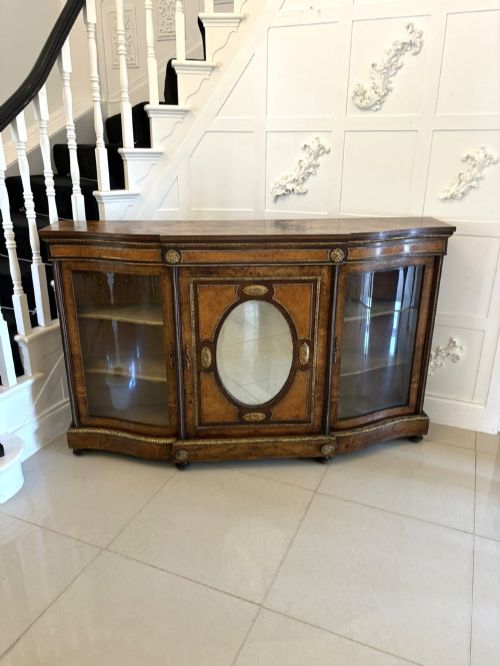
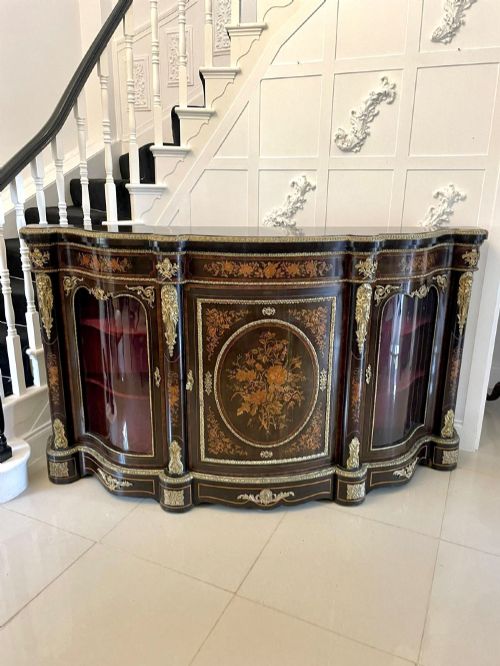


Curved Door Display Cabinet
A curved door display cabinet brings together shaped glass and figured timbers to showcase prized possessions in any room.

Curved Door Display Cabinet
The Victorian era dominates the selection, bringing substantial burr walnut and ebonised timber framing to the room. Alongside these, Georgian oak and later painted examples offer alternative proportions and lighter tones for display.
Interior storage combines with glass-fronted visibility across these furniture types, housing books, ceramics, and ornaments behind curved timber or metal frames. The integration of mirror backs and adjustable shelving enhances the optical depth within each cabinet.
Materials and construction methods
Construction relies heavily on burr walnut and plain walnut veneers laid over solid carcases, often enhanced by floral marquetry and contrasting stringing. Ebonised wood and oak provide alternative structural frames for specific regional and period styles.
Glazing takes curved forms using bent or concave glass panels held within rebated timber doors. Ormolu mounts, brass stringing, and velvet linings complete the decorative scheme across multiple periods.
Curved Door Display Cabinet Retail Price Guide 2026
Typical asking prices for curved door display cabinet among the pieces listed under this phrase on Sellingantiques today, from the lower quarter to the upper quarter. They describe what is for sale here now, not the wider market.
Listings feature walnut, burr walnut, ebonised wood, and oak across Victorian and Georgian periods.
Judging quality and craftsmanship
Quality reveals itself in the selection of burr walnut veneer and the precision of floral marquetry inlaid across the curved surfaces. Superior examples display seamless grain matching and crisp casting in the ormolu mounts.
The structural integrity of the curved doors and the clarity of the original glass panels dictate the preservation standard. Finer specimens maintain original velvet interior linings and intact brass or ebonised details without replacement.
The Curved Door Display Cabinet Glossary
- Credenza
- A sideboard or display cabinet originating in the Victorian period, frequently featuring glazed side doors and central cupboards. These pieces often incorporate elaborate ormolu mounts and marquetry.
- Serpentine
- A furniture front characterised by a double-curved shape, convex in the centre and concave at the ends. This contour requires advanced woodworking skill to achieve.
- Ormolu
- Gilt bronze ornamentation applied to furniture, popular in Victorian cabinet making. It provides bright metallic contrast against dark walnut timbers.
- Marquetry
- Decorative veneer patterns formed by fitting together small pieces of different coloured wood. Floral motifs appear commonly across these cabinet designs.
- Bow front
- A convexly curved front on a cabinet or sideboard. It softens the room's angles while increasing internal display depth.
Curved Door Display Cabinet: Frequently Asked Questions
What periods do these cabinets come from?
The selection spans the Georgian, Victorian, and later nineteenth-century eras. Victorian examples represent the highest proportion of available stock.
Specific decades like the 1860s and 1870s appear frequently among the recorded manufacture dates.
How were curved glass doors made?
Makers heated glass sheets and slumped them over curved moulds to achieve the concave or bowed profiles required. This specialised technique allowed clear visibility into the cabinet interior.
Fitting these panels into shaped wooden frames demanded exact carpentry.
Where should I place a credenza?
These cabinets suit dining rooms, living spaces, and hallways where glazed display space is useful. Their finished backs and detailed fronts often allow for freestanding placement against a wall.
Consider the door swing and natural light levels when positioning curved glass.
How do I care for velvet linings?
Vacuum velvet gently with a soft brush attachment to remove dust accumulation over time. Avoid harsh cleaning agents or direct sunlight to preserve the fabric colour.
Internal linings often benefit from professional textile conservation if worn.